 Owner’s manual
 Error Codes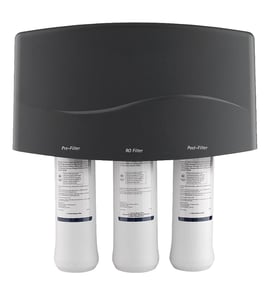




How much does it cost to install a whole house reverse osmosis system?
A whole-house reverse osmosis system typically costs $2,000 to $10,000+ installed, depending on system capacity, pretreatment needs (softener, sediment, carbon, UV), and plumbing complexity. The Whirlpool WHER12 is a point-of-use reverse osmosis drinking water system, so whole-house pricing does not apply to this model. See the WHER12 owner's manual for installation planning details.
Typical cost breakdown (whole-house RO)
- Equipment: $1,000 to $4,800+ (higher for larger gallons-per-day capacity)
- Pretreatment: $300 to $3,000+ (softener, sediment filtration, carbon, UV as needed)
- Professional installation: $1,000 to $3,000+ (plumbing, drain routing, electrical for pumps/UV)
- Ongoing maintenance: $200 to $800+ per year (filters, membrane, sanitizing service)
What changes the price the most
Whole-house RO costs swing widely because the system has to treat all incoming water, not just drinking water.
- Water source and quality: well water and high minerals often need more pretreatment
- Flow demand: more bathrooms and higher peak usage require larger systems
- Drain and space constraints: routing concentrate drain lines and locating tanks can add labor
- Pressure requirements: low pressure may require a booster pump
- Permits and code requirements: varies by area and can add time and materials
How WHER12 installation costs are different
WHER12 installs under a sink and feeds a dedicated RO faucet and storage tank. The manual calls out planning items like location requirements, tools, and supply/drain connections.
| System type | Typical use | Typical installed cost |
|---|---|---|
| Point-of-use RO (like WHER12) | Drinking water at sink | Lower; usually a few hundred to about $1,500+ |
| Whole-house RO | All household water | Higher; usually $2,000 to $10,000+ |
Why it matters
Sizing and pretreatment drive performance and long-term cost. For example, the WHER12 manual notes RO performance is best on softened water and that chlorine can shorten membrane life, which is why correct filtration and on-time cartridge changes matter.
Last updated: February 2026
Is a whole house reverse osmosis system worth it?
A whole-house reverse osmosis (RO) system is worth it when you need high-level contaminant reduction at every tap; for most homes, a point-of-use RO like the Whirlpool WHER12 delivers the biggest benefit for drinking and cooking water with lower cost, simpler upkeep, and less wastewater. Use the WHER12 owner's manual to understand how RO works and what routine maintenance looks like.
How we decide: whole-house vs point-of-use
Start with a water test, then match the system to the problem you are solving.
- Choose whole-house RO for confirmed, serious contamination you want treated throughout the home.
- Choose point-of-use RO when your main goal is better drinking and cooking water.
- For chlorine taste/odor, a carbon filter is often the right first step.
- Whole-house RO increases operating cost because RO sends some water to the drain as concentrate.
- Plan for ongoing filter and membrane replacements to keep performance consistent.
What the Whirlpool WHER12 is designed to do
The WHER12 is a drinking-water treatment unit that uses household water pressure to push water through a semi-permeable membrane; clean water goes to the faucet or storage tank and impurities go to the drain. It also uses replaceable prefilter and postfilter cartridges to reduce sediment, chlorine, and remaining taste or odor.
| Feature | What you get | Why it matters |
|---|---|---|
| RO membrane + pre/post filters | High-quality water at one faucet | Targets TDS and improves taste/odor for drinking and cooking |
| Storage tank (about 2.3 gallons, pressure-dependent) | Water on demand even though RO is slow | Helps cover normal kitchen use |
| Automatic shutoff valve | Stops production when tank is full | Helps reduce unnecessary wastewater |
Maintenance and cost reality check
- Keep supply water within the manual’s specifications.
- Replace prefilter, postfilter, and membrane as needed for your water conditions.
- Test performance at least every 6 months if you do not have a monitor faucet.
- Clean with soap and water only; acid-based cleaners can degrade RO parts.
Why it matters
Whole-house RO is a major investment and is often overkill if your main need is better drinking water. The WHER12 focuses purification where you use it most, while keeping installation and maintenance more manageable.
Last updated: February 2026
Is there a downside to drinking reverse osmosis water?
Yes. With the Whirlpool WHER12 reverse osmosis drinking water system, the main downside is that RO removes many dissolved minerals along with impurities, and it also sends some water to the drain as waste water during normal operation. For most households, RO water is safe for drinking and cooking.
What changes with RO water (and what that means)
Reverse osmosis pushes water through a semi-permeable membrane; many minerals and impurities are filtered out, and the rejected contaminants go to the drain. That can affect taste and how you plan your water use.
- RO water often tastes “lighter” because total dissolved solids (TDS) are reduced.
- You may prefer adding minerals back through your diet (food is the primary source for most people).
- RO systems produce waste water as part of the filtration process.
- Production is slow, so the system relies on a storage tank for peak demand.
- RO is for potable, disinfected water supplies; it is not intended to make unsafe water safe.
Common downsides customers notice
Here are the most common tradeoffs we see with under-sink RO systems like the WHER12:
| Potential downside | What you may notice | Practical fix |
|---|---|---|
| Lower mineral content | Flatter taste vs. tap or spring water | Use mineral-rich foods; consider a remineralizing option if desired |
| Water waste to drain | More drain flow while making water | Keep filters maintained; avoid unnecessary continuous draws |
| Slower output | Limited flow during heavy use | Let the tank refill; check tank performance |
| Maintenance cost | Periodic filter and membrane replacement | Follow the schedule in the WHER12 owner’s manual |
Why it matters
RO is excellent for improving taste and reducing many dissolved solids, but understanding the mineral reduction and waste water tradeoff helps you set expectations and keep the system performing well.
When to check parts (taste, leaks, or low flow)
If performance changes, these model-matched parts are commonly involved:
- Waterworks reverse osmosis system storage tank 7205326 if you run out of water quickly or pressure seems low
- Water filtration system filter o-ring 7223633 if you see drips at the filter housing
- Flow control 7265766 if drain flow or production rate seems abnormal
Last updated: February 2026
What are the parts of a reverse osmosis system?
A Whirlpool WHER12 reverse osmosis drinking water system is built around a prefilter and postfilter, an RO membrane, a storage tank, and valves/fittings that control flow to the faucet, plus a drain line for wastewater. For the complete component list and layout, use the WHER12 owner's manual.
Core parts you will typically find
Most RO systems (including the WHER12) use these components to treat water and deliver it to a dedicated faucet:
- Cold water feed connection (water supply fitting/adapter)
- Prefilter cartridge (sediment and carbon) to protect the membrane
- RO membrane (the main filtration stage)
- Postfilter cartridge (taste and odor “polishing”)
- Automatic shutoff valve (closes when the tank is full and faucet is off)
- Storage tank (holds treated water because RO makes water slowly)
- RO faucet (dispenses product water)
- Drain adaptor and drain tubing (carries reject water to the drain)
- Flow control and check valve (regulate membrane flow and prevent backflow)
WHER12 parts you may replace during repairs
These are common service parts we see tied to leaks, low flow, or installation issues on this model:
- Waterworks reverse osmosis system storage tank 7205326 (loss of air charge, poor draw, physical damage)
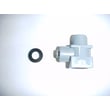
- Reverse osmosis system water supply adapter 7227310 (feed connection leaks or fitment issues)
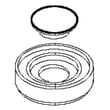
- Reverse osmosis system filter housing 7221128 (cracks, stripped threads, persistent seepage)
- Water filtration system filter o-ring 7223633 (housing drips after filter changes)
- Flow control 7265766 (poor production rate or incorrect drain flow)
Quick “what it does” reference
| Component | What it does | Common symptom when it fails |
|---|---|---|
| Prefilter/postfilter | Removes sediment/chlorine; improves taste | Bad taste, reduced flow, short membrane life |
| RO membrane | Removes dissolved solids (TDS) | High TDS, slow production |
| Automatic shutoff valve | Stops waste when tank is full | Constant drain flow, won’t shut off |
| Storage tank | Stores product water | Small draw, pressure drops fast |
| Flow control/check valve | Sets drain ratio; prevents backflow | Noisy drain, low output, backflow issues |
Why it matters
Knowing which part does what helps you troubleshoot faster. For example, the WHER12 uses a flow control in the red drain tubing to regulate membrane flow, and it uses an automatic shutoff valve to reduce water waste when the tank is full.
Last updated: February 2026
What cannot be removed by reverse osmosis?
Reverse osmosis on the Whirlpool WHER12 reduces many dissolved solids (TDS) and some organic matter, but it does not remove every contaminant. Dissolved gases and some chemicals can pass through, and RO filtration does not disinfect water; maintenance and sanitizing in the WHER12 owner's manual matter.
What RO typically does not remove well
Even when installed on the cold water line and operated within the system’s water specifications, these are common limitations:
- Dissolved gases (for example, hydrogen sulfide odor).
- Some VOCs and solvents (varies by compound).
- Some pesticides and herbicides (often needs effective carbon contact time).
- Microorganisms: RO is filtration, not a “kill” step.
- Anything introduced after filtration (dirty faucet, tank, or tubing).
How the WHER12 stages affect “what gets through”
The WHER12 uses a prefilter, RO membrane, and postfilter; each stage has a different job.
| Stage | Primary job | Key limitation to know |
|---|---|---|
| Prefilter (sediment-carbon) | Reduces sediment and chlorine before the membrane | If overdue, chlorine can break through and shorten membrane life |
| RO membrane | Reduces dissolved solids and some organic matter | Not all small molecules and gases are captured equally |
| Postfilter | Polishes taste and odor | Not a substitute for disinfection or source-water correction |
Why it matters
If your water has odor, taste issues, or a specific contaminant concern, the right solution depends on what is actually in the source water. Testing plus on-schedule filter changes keeps the WHER12 performing as designed.
Practical next steps
- Verify your incoming water temperature and quality are within the WHER12 limits listed in the manual.
- Replace pre and postfilters on schedule to protect the membrane and maintain taste.
- Sanitize and purge the system after service or long downtime.
- If you see seepage at a housing or fitting, inspect seals; the water filtration system filter o-ring 7223633 is a common sealing part.
Last updated: February 2026
What is the best reverse osmosis system on the market?
The “best” reverse osmosis (RO) system depends on your water quality, space, and flow needs; if you already own the Whirlpool WHER12, it is a strong under-sink choice because it uses a multi-stage design (prefilter, RO membrane, postfilter) and includes a pressurized storage tank for faster faucet flow. For model-specific operating limits and maintenance, use the WHER12 owner's manual.
How we recommend choosing the best RO system
- Installation style: under-sink (most common) vs. countertop.
- Tank vs. tankless: tank systems deliver faster bursts of water; tankless can save space.
- Water pressure compatibility: many RO systems need adequate cold-water pressure to perform well.
- Contaminants of concern: match the system to what you want reduced (TDS, taste/odor, specific contaminants).
- Ongoing maintenance: filter and membrane replacement schedule and cost.
WHER12 performance and operating specs that matter
The WHER12 is designed to run on cold water and relies on household pressure to push water through the membrane. Key specs from the manual:
| Spec | Whirlpool WHER12 guidance |
|---|---|
| Supply water pressure | 40 to 100 psi |
| Water temperature | 40°F to 100°F |
| Storage tank capacity | Up to 2.3 gallons |
| Tank air precharge (dry side) | 5 to 7 psi |
When “best” means “best for your home”
Use this quick match-up to decide what to prioritize:
| If you want... | Prioritize... | Typical fit |
|---|---|---|
| Faster glass-to-glass dispensing | Storage tank, correct tank air charge | Under-sink tank RO (like WHER12) |
| More space under the sink | Tankless design | Tankless under-sink RO |
| Lower hassle over time | Easy filter access, common fittings | Either style, depending on layout |
Why it matters
RO systems make water slowly by design; the storage tank and automatic shutoff help you get usable flow at the faucet while limiting waste when the tank is full. Keeping supply pressure and temperature in range helps protect the RO membrane and maintain water quality.
Last updated: February 2026
What is the life expectancy of a reverse osmosis system?
A Whirlpool reverse osmosis drinking water system like model WHER12 typically lasts 10 to 15 years with normal use. The key is routine maintenance: the prefilter and postfilter are replaced at least every 6 months, and the RO membrane is replaced when TDS rejection drops or the red indicator flashes (see the WHER12 owner's manual).
Typical lifespan by component
The system body, fittings, and bracket can last many years, but the treatment components wear out on a schedule.
- Prefilter and postfilter cartridges: replace at least every 6 months (or when the yellow LED flashes)
- RO membrane cartridge: replace when TDS rejection is below spec (or when the red LED flashes)
- Batteries (monitor faucet models): replace once per year
- Tubing and push-in fittings: replace if they leak, kink, or won’t seal
| Component | What it affects | Replace when |
|---|---|---|
| Prefilter/postfilter | Taste, odor, flow rate, membrane protection | Every 6 months or yellow LED |
| RO membrane | TDS reduction (water quality) | Low rejection, red LED, or lab test results |
| Storage tank | Delivery pressure and volume | Won’t hold pressure, internal bladder failure |
What shortens (or extends) RO system life
Good supply water within the specifications helps the WHER12 membrane and filters last longer; poor water quality and missed filter changes shorten life.
- High sediment (sand, silt, rust) loading the prefilter
- High chlorine exposure if prefilter changes are skipped
- Low household water pressure (slower production, more strain)
- Heavy daily usage (more gallons processed)
- Not testing water performance at least every 6 months if your faucet does not monitor TDS
Why it matters
An RO system can still “run” when filters or the membrane are worn out, but water quality and production rate drop. Staying on the 6-month filter schedule protects the RO membrane and keeps TDS reduction where it should be.
Last updated: February 2026