Error Codes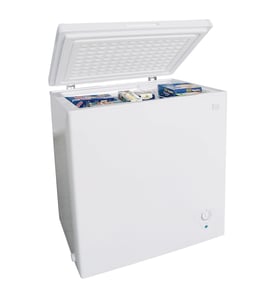



How to reset a Frigidaire chest freezer?
To reset your MFC05M1FW1 chest freezer, we recommend doing a power reset: unplug it for 1 to 5 minutes, then plug it back in and allow time for the compressor to restart and temperatures to stabilize.
Quick reset steps (power reset)
- Turn the temperature control to a mid setting.
- Unplug the freezer from the wall outlet.
- Wait 1 to 5 minutes (this clears the control and lets pressures equalize).
- Plug the freezer back in.
- Wait 10 minutes for the compressor to attempt a normal restart.
- Allow 12 to 24 hours for the freezer to pull down to set temperature.
If it still will not restart or cool
These checks help separate a simple reset issue from a start or airflow problem:
- Confirm the outlet has power (try a lamp or small appliance).
- Make sure the lid is closing fully and the gasket area is clean.
- Verify the temperature control is not set to OFF.
- Listen for a click every few minutes (often points to a start issue).
- Check for heavy frost or blocked interior airflow around stored items.
- Clean dust from the condenser area if accessible and safe to reach.
Common symptoms and what they usually mean
| What you notice | What it often indicates | What to do next |
|---|---|---|
| No sound at all | No power or control set to OFF | Recheck outlet, cord, and control setting |
| Clicking, then silence | Compressor start components or overload tripping | Inspect start components; consider replacing the overload protector 216100113 |
| Runs but not cold | Airflow restriction, dirty condenser, or sealed-system issue | Improve airflow, clean condenser; if unchanged, service may be needed |
| Restarts after a long wait | Normal pressure equalization delay | Use the 1 to 5 minute unplug wait before restarting |
Why it matters
A short unplug reset clears minor control glitches and gives the compressor time to equalize pressure. That reduces nuisance tripping and helps the freezer restart normally without stressing start components.
Last updated: February 2026
What is the life expectancy of a Frigidaire chest freezer?
A Frigidaire chest freezer like model MFC05M1FW1 typically lasts 12 to 20 years. Consistent temperatures, good airflow around the cabinet, and keeping the lid seal tight are the biggest factors that help you reach the high end of that range.
Typical lifespan and what affects it
Most chest freezers fail early due to heat buildup, poor sealing, or heavy cycling from warm loads.
- Ventilation and heat: blocked airflow makes the compressor run hotter and longer
- Lid gasket condition: air leaks cause frost, longer run times, and temperature swings
- Cleaning and dust: dirt on the condenser area reduces heat transfer
- Usage habits: frequent openings and adding warm food increases run time
- Power quality: repeated outages or low voltage can stress start components
Maintenance that extends life
These steps are simple and make a measurable difference in compressor run time and frost control.
- Keep the freezer at 0°F (about -18°C)
- Leave a few inches of clearance around the freezer for airflow
- Defrost when frost buildup reaches about 1/4 inch
- Wipe the lid sealing surface clean and dry so it closes tightly
- Avoid overloading with warm items; cool food first when possible
Quick troubleshooting guide (when aging shows up)
If your freezer is warming, running constantly, or clicking on and off, these checks help you decide what to do next.
| Symptom | Common cause | What we recommend |
|---|---|---|
| Runs all the time | Warm room, lid leak, heavy load | Improve airflow, check seal, reduce warm loading |
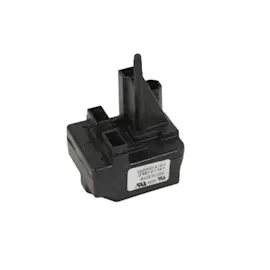
| Clicking, won’t start | Start device or overload issue | Consider checking the ptc starter 5304410953 and overload protector 216100113 |
| Frost buildup | Lid not sealing, frequent openings | Clean sealing surfaces, defrost, limit openings |
Why it matters
A chest freezer is most efficient and reliable when it can hold temperature without long run cycles. Reducing heat and air leaks protects the sealed system and helps you get closer to the full 12 to 20 year life.
Last updated: February 2026
What does the MFC05M1FW1 stand for?
MFC05M1FW1 is the model number used to identify your Universal/Multiflex (Frigidaire) chest freezer; it tells us the exact design version so we can match the correct replacement parts and diagrams for service.
What the model number helps us do
When you use model number MFC05M1FW1, we can narrow parts down to the exact freezer configuration (lid, wiring, sealed system, and hardware) instead of guessing by size or appearance.
- Match the correct parts list and exploded-view diagrams
- Reduce the risk of ordering the wrong screw, panel, or electrical part
- Identify compatible cosmetic parts (like the lid outer panel)
- Confirm sealed-system components used on this build
- Speed up troubleshooting when symptoms point to a specific subsystem
A practical breakdown (how model numbers are typically structured)
Manufacturers often encode details like product family, capacity class, and revision level into a model number. For MFC05M1FW1, the most reliable takeaway is that the full string is the identifier you should use when shopping parts or checking fit.
| Portion | What it usually indicates | How to use it |
|---|---|---|
| MFC | Product family/series | Helps group similar chest freezer designs |
| 05 | Size or capacity class | Useful for general comparison, not exact fit |
| M1 / FW1 | Design and revision codes | Critical for correct part compatibility |
Why it matters when ordering parts
Small differences between revisions can change mounting holes, wire connectors, or panel fit. Using the full model number helps ensure the part you buy matches your freezer.
Common examples for this model include:
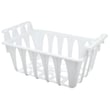
- Storage components like the basket 216848200
- Electrical start components like the ptc starter 5304410953
- Cosmetic/fit parts like the kelvinator freezer lid outer panel (white) 216106014
Last updated: February 2026
Is a Frigidaire a good chest freezer?
Yes. Frigidaire chest freezers are a solid choice for long-term frozen storage because they typically hold temperature well, run efficiently, and offer simple, reliable manual-defrost operation. For the Universal/Multiflex (Frigidaire) MFC05M1FW1 chest freezer, keeping the sealed system and lid seal in good shape matters most for performance.
What “good” means for a chest freezer
A good chest freezer usually delivers these basics consistently:
- Stable temperatures (fewer warm swings when the lid stays closed)
- Efficient operation (chest designs generally waste less cold air than uprights)
- Simple controls (fewer features to fail)
- Good storage usability (basket(s), easy access, manageable organization)
- Durable lid and hinges (tight seal, smooth closing)
What to check before you buy or keep using one
These quick checks tell you whether a chest freezer is meeting expectations:
| Check | What you want to see | Why it matters |
|---|---|---|
| Lid seal | Even contact all the way around | Prevents frost and temperature rise |
| Frost buildup | Slow, even buildup over time | Heavy frost can reduce cooling efficiency |
| Run behavior | Long steady cycles, not rapid clicking | Short cycling can signal a start or compressor issue |
| Storage | Basket fits and slides easily | Helps prevent “lost food” and lid-open time |
Parts that support long-term reliability
If cooling performance drops, the most important systems are the compressor start and sealed system. These model-matched parts are commonly involved in cooling or service repairs:
- Ptc starter 5304410953 (compressor start relay; helps the compressor start)
- Overload protector 216100113 (protects the compressor from overheating)
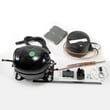
- Compressor 5304443412 (main cooling component)
- Filter drier 5303305677 (sealed-system component used during refrigerant service)
- Freezer basket 216848200 (organization; reduces lid-open time)
Why it matters
A chest freezer’s “goodness” is mostly about temperature stability and low operating cost. When the lid seal is tight and the compressor start components are healthy, a chest freezer like the MFC05M1FW1 is well-suited for bulk food storage and long holds.
Last updated: February 2026
Why is my Frigidaire chest freezer not working?
If your MFC05M1FW1 chest freezer is completely dead or not cooling, the most common causes are a power issue, a control setting problem, poor airflow from dirty condenser areas, or a failed compressor start circuit. We recommend checking the simple items first, then testing the start components.
Quick checks (most fixes start here)
- Confirm the outlet has power (try a lamp) and the plug is fully seated.
- Make sure the temperature control is not set to OFF or the warmest setting.
- Verify the lid is closing fully and the gasket is sealing all the way around.
- Allow time after moving or plugging in; most chest freezers need several hours to pull down to temperature.
- Listen for the compressor area: a steady hum is normal; repeated clicking usually points to a start problem.
What the symptoms usually mean
| What you notice | Most likely cause | What to do next |
|---|---|---|
| No lights/sound at all | No power, bad cord/outlet | Verify outlet, reset breaker, try a different outlet |
| Clicking every few minutes, not cooling | Start device or overload tripping | Inspect/replace start components such as ptc starter 5304410953 or overload protector 216100113 |
| Runs but won’t get cold | Dirty condenser area, sealed-system issue | Clean airflow paths; if still warm, sealed-system service is needed |
| Frost/ice buildup and weak cooling | Lid not sealing, warm air leaks | Check gasket contact and lid alignment |
Parts that commonly relate to “not working”
If your freezer is clicking, overheating at the compressor, or starting then stopping, these parts are the typical suspects for model MFC05M1FW1:
- Ptc starter 5304410953 (compressor start relay)
- Overload protector 216100113 (opens when the compressor overheats or draws too much current)
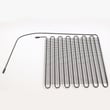
- Freezer condenser coil 5300120779 (restricted/dirty condenser area can raise pressures and reduce cooling)
Why it matters
A chest freezer that cannot start reliably can overheat the compressor and lead to food loss. Catching a failing start relay or overload early often restores normal cooling without replacing major sealed-system components.
Last updated: February 2026