Owner’s manual
 Error Codes



How do you get the bottom shelf out of a Samsung refrigerator?
To remove the bottom glass shelf in a Samsung RF263TEAESG refrigerator, we lift the front edge, slide the shelf forward to clear the rear supports, then angle it out through the door opening. If the shelf is locked into side rails, we release the rail tabs first.
- Unplug the refrigerator or switch off power at the breaker.
- Remove food and bins that block the shelf path.
- Use cut-resistant gloves; tempered glass edges can be sharp.
- Work slowly to avoid cracking the shelf or gouging the side walls.
- Clear space: Take out the crisper drawers and any deli drawer below the shelf if they prevent the shelf from tilting.
- Lift the front: Grasp the shelf with both hands and lift the front edge about 1 to 2 inches.
- Slide forward: Pull the shelf straight toward you until the back edge clears the rear shelf supports.
- Angle and remove: Tilt one side up slightly and rotate the shelf out through the refrigerator door.
- If it will not budge: Look for side rail locks/tabs. Press the tabs inward (a flat screwdriver can help) while lifting the shelf.
| What you notice | Likely cause | What we do |
|---|---|---|
| Shelf lifts but will not slide | Rear edge still under supports | Lift front higher, then pull forward evenly |
| Shelf slides a little then binds | Side rails not fully seated or locked | Press rail tabs, then slide out |
| Shelf will not tilt out | Drawers/bins blocking the angle | Remove drawers first, then retry |
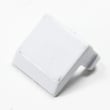
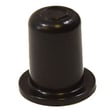
| Loud rubbing | Shelf support/end cap shifted | Inspect and reseat the refrigerator shelf support end cap DA61-04809A |
Removing the shelf the right way prevents cracked glass, broken shelf supports, and air leaks that can cause temperature swings and frost issues.
For shelf and drawer removal diagrams specific to your unit, follow the steps in the RF263TEAESG owner's manual.
Last updated: February 2026
Is it really necessary to replace a refrigerator water filter?
Yes. On a Samsung RF263TEAESG refrigerator, replacing the water filter on schedule is necessary to keep water tasting clean, maintain normal dispenser flow, and reduce sediment buildup that can strain the water system. Most households replace the filter about every 6 months.
An overdue filter usually causes performance and taste issues first, then can contribute to dispenser and ice maker problems.
- Water tastes or smells off (chlorine, musty, metallic)
- Slower water dispensing or smaller ice cubes
- Cloudy water or visible particles
- Filter indicator stays on or returns quickly after reset
- Increased load on the water inlet valve and filter housing
Use time plus symptoms. If your water is heavily used or has more sediment, you may need to replace sooner.
| Replace based on | Typical trigger | What you notice |
|---|---|---|
| Time | About every 6 months | No obvious symptoms yet |
| Flow | Any clear drop in flow | Slow dispenser, hollow ice |
| Taste/odor | Any change | Off taste or smell |
| Water quality | Sediment or hard water | More frequent clogging |
For model-specific filter location and reset steps, follow the RF263TEAESG owner's manual.
A clogged filter can restrict water flow and make other components work harder.
- Refrigerator water inlet valve DA62-04027A (may buzz or fail to open fully under restriction)
- Refrigerator water filter housing DA97-12661A (can leak if seals are disturbed during repeated resets/installs)
A fresh filter protects water quality and helps the dispenser and ice maker operate at the correct pressure and flow. That means better-tasting water, more consistent ice production, and fewer nuisance issues like slow dispensing.
Last updated: February 2026
What is the difference between force defrost FD and RD?
On the Samsung RF263TEAESG, RD is a targeted defrost for the refrigerator (fresh food) section, while FD (force defrost) is a broader manual defrost that’s used to clear heavier frost conditions across more of the cooling system (often including the freezer and ice room area). For exact button sequences and timing, use the RF263TEAESG owner's manual.
- RD (refrigerator defrost): Use when the fresh food section has frost buildup symptoms (warm fridge, restricted airflow, noisy fan from ice contact).
- FD (force defrost): Use when icing is more widespread (freezer performance issues, repeated ice maker/ice room icing, airflow problems that affect multiple compartments).
- Both are service-style defrost modes intended to melt frost faster than a normal automatic defrost cycle.
| Mode | Primary target area | Best for | What you’ll notice after running it |
|---|---|---|---|
| RD | Fresh food evaporator area | Fridge-only frost and airflow restriction | Improved fridge airflow and more stable fridge temps |
| FD | Broader system defrost | Heavy icing affecting cooling and ice production | More water to the drain pan, longer recovery to set temps |
- Confirm doors are closing fully and gaskets seal all the way around.
- Make sure vents are not blocked by food packages.
- If you see water under the crisper or recurring ice buildup, check the drain path; a clogged or damaged drain tube can contribute (see refrigerator cabinet drain tube assembly DA97-04049H).
- If the unit is warm or fans are noisy, listen for the condenser fan and verify the back area is not packed with dust.
- After any forced defrost, allow several hours for temperatures to stabilize.
Using RD when the problem is system-wide can leave ice in other areas and the symptoms come back quickly. Using FD for a small fridge-only frost issue can create unnecessary downtime and temperature swings. Picking the right mode helps restore airflow and cooling faster.
Last updated: February 2026
What water filter do I need for my Samsung bespoke refrigerator?
For the Samsung RF263TEAESG refrigerator, the correct water filter is the one specified for that exact model in the RF263TEAESG owner's manual. “Bespoke” is a Samsung product line name, but the filter you need is determined by the model number and the filter housing used in your refrigerator.
Use these quick checks to avoid buying the wrong cartridge:
- Match the refrigerator model number exactly: RF263TEAESG
- Check the filter location (typically inside the fresh food compartment on Samsung French door units)
- Compare the filter shape and locking style (twist-in vs push-in)
- If the filter will not seat and lock smoothly, stop and re-check compatibility
- If you have low flow after a new filter, flush the filter and check for trapped air
If filters keep leaking, will not lock in, or the filter head looks cracked, the housing can be the root cause. For this model, a common related part is the refrigerator water filter housing DA97-12661A.
| Symptom | Most likely cause | What we recommend |
|---|---|---|
| Water leaks at filter area | Damaged housing or mis-seated filter | Inspect housing, reinstall filter, replace housing if cracked |
| Very slow water dispensing | Clogged filter or low supply pressure | Replace filter, flush lines, verify household water pressure |
| Filter will not lock in | Wrong filter type or worn housing tabs | Verify model-based filter, inspect housing tabs |
Using the correct filter for your RF263TEAESG helps protect the water inlet valve, improves taste and odor reduction, and prevents leaks that can damage shelves, drawers, and internal trim.
Last updated: February 2026