Owner’s manual
 Error Codes



What are the dimensions of a Kenmore Elite?
For the Kenmore Elite bottom-mount refrigerator model 59676572601, the exact height, width, and depth depend on the specific configuration and door style listed for that model. Most Kenmore Elite bottom-mount refrigerators are approximately 30 to 33 inches wide, 67 to 70 inches tall, and 33 to 36 inches deep (including handles); confirm the exact specs in the 59676572601 owner's manual.
These ranges help you plan a cabinet opening and delivery path when you do not have the spec page in front of you:
- Width: 30 to 33 inches (most common is around 33 inches)
- Height: 67 to 70 inches (varies with hinge and leveling legs)
- Depth: 33 to 36 inches including handles (shallower without handles)
- Door swing clearance: often needs extra space beyond cabinet width
- Ventilation gap: leave space above and behind for airflow
Use a tape measure and record three numbers for each dimension.
- Measure width at the widest point (often the hinge side)
- Measure height from floor to top of hinge cover (leveling legs affect this)
- Measure depth in three ways: cabinet only, to door, and to handle
- Measure door swing: open the doors and check clearance to walls/cabinets
- Measure your delivery path: doorways, hallways, and tight turns
| Measurement | Include handles? | Why it matters |
|---|---|---|
| Width | No | Cabinet opening fit |
| Height | No | Overhead clearance and leveling |
| Depth | Yes (recommended) | Walkway clearance and door swing |
Correct dimensions prevent installation problems like doors hitting walls, drawers not pulling out fully, or poor airflow that can affect cooling performance.
Last updated: January 2026
What are the common problems with Kenmore Elite refrigerators?
Common problems on the Kenmore Elite 59676572601 bottom-mount refrigerator include warm temperatures from airflow issues, frost buildup from defrost or door-seal problems, and “new” noises that are actually normal operating sounds. We use the troubleshooting steps in the 59676572601 owner's manual to narrow down the cause before replacing parts.
- Not cooling or weak cooling: dirty condenser coil, evaporator fan not moving air, damper not opening, or a compressor start issue
- Frost or ice buildup: defrost heater failure, door gasket leak, or doors left ajar
- Noisy operation: normal buzzing (water valve), pulsating (fans/compressor adjusting), or hissing/rattling (refrigerant movement)
- Runs “all the time”: warm room, frequent door openings, large food load, or recent installation (cooldown period)
- Ice or water issues: water supply problem or a new filter that needs flushing
- Confirm the controls are on and power is good (outlet, breaker/fuse).
- If it is a new installation, allow 24 hours to cool completely.
- Make sure doors close fully and nothing blocks vents.
- Clean dust from the condenser area (improves cooling efficiency).
- If you replaced the water filter, flush the system to reduce discoloration in ice.
| Symptom | Common part to check | Example part for this model |
|---|---|---|
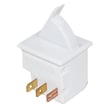
| Warm fresh food section | Airflow control | Refrigerator damper control WPW10196393 |
| Frost buildup | Defrost heat circuit | Refrigerator defrost heater WP67002493 |
| Clicking/buzzing, won’t start | Compressor start protection | Refrigerator overload release W10613606 |
Cooling and frost problems usually start as airflow or sealing issues; fixing them early helps protect food, reduce run time, and prevent strain on the compressor.
Last updated: January 2026
Why is my refrigerator not getting cold at the bottom?
If your Kenmore Elite refrigerator model 59676572601 is warmer at the bottom, the most common causes are restricted airflow (blocked vents or an iced-up evaporator area) or poor heat removal from dirty condenser coils. Start with vent checks and coil cleaning, then confirm the temperature controls and allow a full 24 hours after changes (see the 59676572601 owner's manual).
- Make sure food packages are not blocking interior air vents; blocked vents can prevent cold air from circulating.
- Set controls back to the recommended settings; turning colder than recommended does not cool faster.
- After adjusting controls or after a power outage, wait 24 hours for temperatures to stabilize.
- Clean condenser coils (typically underneath or behind); dust and pet hair can reduce cooling.
- Confirm doors close and seal fully; warm air leaks can create uneven temperatures.
- Airflow and frost pattern: If the freezer is cold but the fresh-food bottom is warm, airflow is usually the issue.
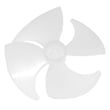
- Evaporator fan operation: A weak or broken fan blade can reduce circulation.
- Damper control: If the damper is stuck closed, less cold air reaches the refrigerator section.
- Condenser area: Dirty coils or a blocked grille can make the whole system struggle.
| Symptom | Most likely area | What you can do first |
|---|---|---|
| Freezer OK, fridge bottom warm | Air vents or damper | Clear vents; verify damper movement |
| Frost buildup, temps swing | Defrost system | Check for heavy frost; inspect heater and airflow |
| Whole fridge warm | Condenser coils or compressor start components | Clean coils; listen for compressor cycling |
Only replace parts after basic airflow and coil cleaning checks.
- Refrigerator damper control WPW10196393: Controls cold-air flow into the refrigerator compartment.
- Evaporator motor WPW10128551: Drives the evaporator fan that circulates cold air.
- Refrigerator defrost heater WP67002493: Helps prevent the evaporator from icing over and blocking airflow.
Bottom-warm conditions usually mean cold air is not moving correctly. Fixing airflow (vents, fan, damper, defrost) restores even temperatures, helps food stay safe, and reduces compressor run time.
Last updated: January 2026
Why is my Kenmore Elite refrigerator leaking water out of the bottom?
Water leaking from the bottom of your Kenmore Elite refrigerator model 59676572601 is usually caused by water not draining where it should, most often from a clogged defrost drain or a loose water line connection near the base grille. Use the troubleshooting steps in the 59676572601 owner's manual to pinpoint whether the leak is from defrost water or the dispenser/ice maker supply.
- Defrost drain clog: Melted frost should flow to the drain pan; if the drain is blocked, water can overflow and end up on the floor.
- Dispenser/door water line connection: If water is on the floor near the base grille, the manual points to tightening the dispenser tube connections.
- Filter or recent service: After a new installation or filter change, flushing the water system can reduce drips and spurts.
- Door left open or heavy use: More frost melt during defrost can increase water flow to the drain pan.
- Ice maker water supply line movement: Normal operation includes water valve fill sounds and water movement; a shifted line can drip where it should not.
| What you see | Most likely source | What to do first |
|---|---|---|
| Clear water pooling at the front near the grille | Dispenser/ice maker tubing or connection | Check and snug tube connections; then flush water system |
| Water appears after a defrost cycle, sometimes with gurgling sounds | Defrost drain/drain pan path | Clear the drain path and confirm water reaches the drain pan |
| Slow drip only right after dispensing | Normal dispenser “after-drip” | Hold the glass under the dispenser 2 to 3 seconds after releasing |
- Unplug the refrigerator before inspecting behind panels or near wiring.
- Check the base grille area for wet tubing and fittings; tighten connections if damp.
- Flush the water system if the unit is newly installed or the filter was recently changed.
- Inspect door closure; a door not sealing can increase frost and defrost water.
- If you suspect a cooling-air issue contributing to excess frost, inspect the evaporator fan area; a damaged blade can cause airflow problems (see refrigerator evaporator fan blade WP2169142).
Leaks can damage flooring and also point to airflow, defrost, or water-supply issues that affect ice production and temperature stability. Catching the source early helps prevent repeat leaks.
Last updated: January 2026