



What is a good PSI for a gas pressure washer?
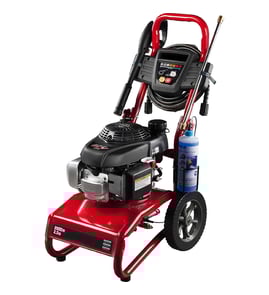
For most home cleaning with a gas pressure washer like Craftsman model 580752490, a good working range is about 1,300 to 2,800 PSI. Use the lowest PSI that gets the job done to avoid damaging wood, paint, siding, and seals.
Quick PSI guide by task
- 1,300 to 2,000 PSI: cars, patio furniture, grills, delicate surfaces
- 2,000 to 2,800 PSI: driveways, sidewalks, decks (with care), fences
- 2,800 to 3,500 PSI: heavy concrete stains and tough prep work (more risk of damage)
- Over 3,500 PSI: typically pro-grade use; requires more technique and safety control
Match PSI with flow (GPM) for real cleaning power
PSI is the “force”; GPM (gallons per minute) is the “rinse and speed.” For many homeowners, a balanced setup cleans faster than high PSI alone.
| What you’re comparing | What it affects most | What to prioritize for home use |
|---|---|---|
| Higher PSI | Stripping power, risk of surface damage | Moderate PSI with the right nozzle |
| Higher GPM | Faster cleaning, better rinsing | As much GPM as your unit supports |
| Nozzle choice | Effective pressure at the surface | Start with a wider fan tip |
Tips to get better results without cranking pressure
- Start with a wider fan nozzle and step down only if needed.
- Keep the spray moving; avoid holding the jet in one spot.
- Increase distance from the surface before increasing PSI.
- Use detergent (when appropriate) instead of extra pressure.
- If pressure pulses or drops, check for kinks, leaks, or a restricted inlet.
Why it matters
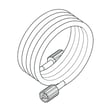
Using the right PSI helps you clean effectively while protecting surfaces and your pressure washer’s pump, seals, and fittings. A worn or leaking hose can also reduce performance; replacing it with the correct part for your model helps restore steady pressure (see pressure washer hose 84006753).
For ordering model-matched parts and accessories, use the parts list for Craftsman 580752490, or search by model on Sears PartsDirect.
Last updated: February 2026
Is it worth it to repair a pressure washer?
Yes, repairing a pressure washer is worth it when the problem is a common wear item (hose, seals, nozzles) or a simple leak, especially on a solid unit like the Craftsman 580752490; it is less worth it when the pump or engine has major internal damage and the repair cost approaches half the price of a comparable replacement.
Quick decision checklist
- Repair if the engine starts and runs normally but pressure is low or inconsistent.
- Repair if the issue is a leak at a fitting, gun, or hose connection.
- Repair if the fix is a straightforward replacement part and you can do it safely.
- Replace if the pump has severe internal wear (metal in oil, seized pump, cracked head).
- Replace if the engine has low compression, heavy smoke, or won’t stay running after basic tune-up.
- Replace if multiple major components are failing at the same time.
Typical repair costs vs. replacement value
| Issue type | What you usually see | Typical path |
|---|---|---|
| External water leak | Drips at couplers, hose, gun | Repair (often quick and affordable) |
| Low pressure | Surging, weak spray, pressure drops | Repair first (unloader, inlet restriction, nozzle, hose) |
| Pump failure | Grinding, seized, oil contamination | Replace pump or replace unit (depends on cost) |
| Engine failure | No start, knocks, smokes heavily | Often replace unit unless engine repair is clearly economical |
Parts on this model that commonly make repair worthwhile
If your Craftsman 580752490 is leaking, pulsing, or losing pressure, start with the simplest, most failure-prone items:
- Pressure washer hose 84006753 (cracks, bulges, damaged couplers, internal collapse)
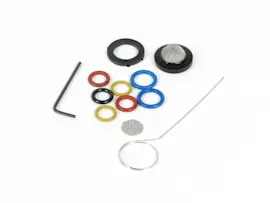
- Kit 772235 (useful when you need a matched set of service items for a specific repair)
Why it matters
A pressure washer that is otherwise healthy can often be restored with a targeted part replacement, which saves money and avoids downtime. On the other hand, sinking money into a worn pump or failing engine usually leads to repeat breakdowns and higher total cost.
Buying parts
We list replacement parts for the Craftsman 580752490 on this page; for broader model-based parts searching, use Sears PartsDirect.
Last updated: February 2026
Can I use SAE 30 instead of 10W30 in my pressure washer?
Yes. For a Craftsman 580752490 gas pressure washer engine, SAE 30 is a normal substitute for 10W-30 as long as you use detergent small-engine oil (not non-detergent). Choose the viscosity based on your typical outdoor temperature so the engine starts easily and stays protected.
What oil to use (practical guidance)
- Use detergent oil rated for small engines.
- SAE 30 works well in warm weather.
- 10W-30 is a good all-around choice across changing temperatures.
- 5W-30 is best when you need easier cold starts.
- Avoid non-detergent oil; it does not protect small engines the same way.
Quick temperature guide
| Outdoor temperature | Recommended viscosity | Why it helps |
|---|---|---|
| Above about 40°F | SAE 30 | Stable protection in heat |
| Mixed temps (spring/fall) | 10W-30 | Better flow when cool, still protects when warm |
| Near or below freezing | 5W-30 | Easiest starting and fastest lubrication |
Tips to prevent oil-related problems
- Check oil level before each use; small engines can run low quickly.
- Change oil on schedule; dirty oil accelerates wear.
- If the engine smokes after an oil change, verify you did not overfill.
- If you see oil leaks, inspect the hose routing and fittings so oil does not get sprayed or contaminated; replace a damaged pressure washer hose 84006753 if it is leaking or cracked.
Why it matters
Oil viscosity affects how fast oil flows at startup and how well it maintains a protective film when the engine is hot. Using the right detergent oil helps reduce wear, improves starting, and supports consistent pressure washer performance.
If you need replacement parts for your Craftsman 580752490, we list model-matched parts on this page, and you can also search by model number on Sears PartsDirect.
Last updated: February 2026
Can you put 87 gas in a pressure washer?
Yes. For the Craftsman 580752490 gas pressure washer, regular unleaded gasoline with an 87 octane rating is the standard, safe choice for normal operation. Use fresh fuel and avoid mixing in oil unless your engine specifically requires it.
What fuel to use (and what to avoid)
- Use fresh, regular unleaded 87 octane from a busy station.
- Higher octane (89 to 93) is fine, but it typically does not improve cleaning power.
- Avoid old gas (more than 30 days in the can) because it can cause hard starting and surging.
- Avoid E85 (high-ethanol fuel) because it can create running problems and fuel system damage.
- If your area sells E15 (88 octane), most small engines run best on E10 or less; choose the lowest ethanol option available.
Quick checklist before you fill the tank
- Shut the engine off and let it cool.
- Fill outdoors; do not overfill.
- Wipe up spills before starting.
- If the washer has been stored, drain stale fuel and refill with fresh 87.
Common symptoms of bad fuel
| Symptom | What it usually points to | What to do next |
|---|---|---|
| Starts then dies | Stale fuel or clogged carburetor jet | Drain fuel; refill with fresh 87 |
| Surging at idle | Water in fuel or varnish buildup | Replace fuel; consider cleaning carb |
| Won’t start | Old fuel, fouled plug, or no fuel flow | Refresh fuel; check spark and fuel line |
Why it matters
Using the right gasoline helps your pressure washer start easily, run smoothly under load, and protects the carburetor and fuel lines from deposits that lead to expensive repairs.
Parts that often get replaced when fuel issues show up
If fuel problems lead to leaks or poor performance, we often see customers also replace wear items like the pressure washer hose 84006753. For additional parts for model 580752490, you can also search by model number on Sears PartsDirect.
Last updated: February 2026
How many PSI is a Craftsman 580752490 pressure washer?
The Craftsman 580752490 gas pressure washer is rated for up to 2,900 max PSI. Actual pressure at the spray tip is often lower because nozzle size, water supply flow, and hose condition all affect how much pressure the pump can build under load.
What changes the PSI you actually get
- Spray tip/orifice size: smaller orifice increases pressure; larger reduces it
- Water supply flow (GPM): restricted supply causes low pressure and surging
- High-pressure hose condition: kinks, leaks, or internal wear reduce pressure (see pressure washer hose 84006753)
- Inlet screen and fittings: debris or air leaks at the inlet reduce pump performance
- Pump/unloader wear: worn seals or a sticking unloader lowers peak pressure
Quick checks if pressure seems low
- Verify strong garden-hose flow at the spigot before connecting to the washer
- Clean the inlet screen and confirm the inlet connection seals tightly
- Try a different spray tip; clear debris from the tip opening
- Inspect the high-pressure hose for bulges, soft spots, or seepage
- Purge air: run water through the system with the engine off until flow is steady
What “max PSI” means (practical expectations)
| Spec term | What it describes | What you’ll notice |
|---|---|---|
| Max PSI | Peak pressure capability under ideal conditions | Strong recoil, tight spray pattern with the correct tip |
| Working PSI | Typical pressure while cleaning | Varies by tip, surface, and water supply |
Why it matters
Using the right tip and maintaining good water flow helps your 580752490 clean faster and prevents pump damage from running starved for water. A worn or leaking hose can also be a safety issue, so replacing it when damaged is important.
Ordering the right parts
We list model-matched replacement parts for Craftsman 580752490 on this page; you can also search by model number on Sears PartsDirect.
Last updated: February 2026