Owner’s manual
 Error Codes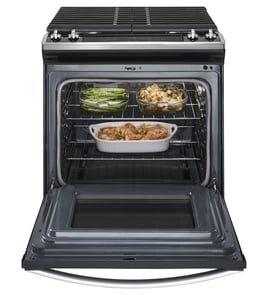




How long should a Kenmore gas stove last?
A Kenmore gas range like model 79071349706 typically lasts 15 years with normal household use. Keeping burners clean, ensuring proper ignition, and preventing heat loss at the oven door are the biggest factors that help you reach that lifespan.
Typical lifespan and what affects it
Most gas ranges reach their full service life when routine cleaning and a few key wear parts are handled early.
- Cooking frequency (daily cooking shortens life compared to occasional use)
- Grease and spill cleanup (especially around burner heads and igniters)
- Oven door seal condition (heat loss makes components work harder)
- Proper flame and ignition performance (steady blue flame, reliable lighting)
- Ventilation and airflow (reduces heat and grease buildup around controls)
Quick maintenance checklist (high impact)
Use these habits to reduce common failures like weak ignition, uneven baking, and overheating controls.
- Clean and dry the cooktop and burner areas after boilovers
- Keep burner ports clear; avoid pushing debris into the orifice area
- Avoid slamming the oven door; it can damage hinges and loosen fasteners
- Check for a worn or torn oven gasket and replace if heat leaks
- If the oven takes too long to light, address it early to prevent gas valve and igniter stress
Common “wear items” that can shorten life
If performance drops, these parts are often involved on gas ranges.
| Symptom | Common cause | Example part for this model |
|---|---|---|
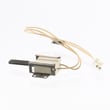
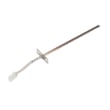
| Oven won’t heat or takes long to ignite | Weak igniter | Tappan range oven burner igniter 316489403 |
| Oven temperature swings or bakes unevenly | Sensor drifting out of range | Frigidaire range oven temperature sensor 316490000 |
| Heat escaping around oven door | Worn gasket | Range oven door seal 5304498835 |
Why it matters
A gas range can “still work” while running inefficiently. Fixing ignition and sealing issues early helps your 79071349706 heat faster, bake more evenly, and reduces strain on the gas valve, wiring, and controls.
For model-specific care and cleaning guidance, follow the 79071349706 owner's manual.
Last updated: February 2026
What model is my Kenmore gas range?
Your Kenmore gas range model number is printed on the appliance’s rating label. On Kenmore ranges like model 79071349706, the label is most often found in the oven door jamb area or on the frame behind the storage/warming drawer. Use the exact model number to match parts and manuals.
Where to look on a Kenmore gas range
Check these common label locations (in order):
- Oven door jamb or frame behind the oven door (open the door and look along the front frame)
- Behind the bottom storage drawer or warming drawer (pull the drawer out and look on the frame)
- Back of the range near the upper vent area
- Side panel near the lower rear corner
What the model label looks like
Most labels include a few key fields. Here is what to copy down:
| Label item | What to write down | Why it matters |
|---|---|---|
| Model number | Full model (example: 79071349706) | Ensures correct part fit and diagrams |
| Serial number | Full serial | Helps identify production run details |
| Gas type | Natural gas or LP | Impacts regulator/orifice setup |
Tips to avoid ordering the wrong part
Small differences in the model number can change the igniter, burner, or control parts that fit.
- Copy the model number exactly, including all digits
- Take a clear photo of the label before it wears off
- If the label is hard to read, use a flashlight and wipe dust/grease off first
- Match parts by model number first, then confirm by part name and diagram
Why it matters
Kenmore ranges often share a similar look across multiple models, but internal components (like an oven igniter, temperature sensor, or gas valve) can vary by model series. Using the correct model number keeps troubleshooting and parts selection accurate.
For model-specific label location details and identification info, use the 79071349706 owner's manual.
Last updated: February 2026
How to know if a gas stove regulator is bad?
On a Kenmore 79071349706 gas range, a failing pressure regulator typically shows up as burner flames that are weak, oversized, noisy, yellow/orange, or inconsistent across burners. Because the regulator controls gas pressure to the surface burners and oven, any sudden change in flame behavior is a strong indicator.
Common symptoms to watch for
- Flames are very low even with the knob on high
- Flames are too high and hard to control
- Yellow/orange flames or heavy soot on cookware (after cleaning burner ports)
- Burners light slowly, go out, or surge up and down
- A roaring sound or fluttering flame
- Gas odor near the range (treat as urgent)
Quick checks you can do safely
We recommend these basic checks before replacing parts:
- Confirm other gas appliances in the home are working normally (helps rule out a supply issue)
- Make sure burner caps are seated correctly and burner heads are clean
- Try multiple burners; regulator issues usually affect more than one burner
- If the oven has ignition problems too, compare symptoms with the bake system
- Review the gas and safety guidance in the 79071349706 owner’s manual
Regulator vs. other likely causes
| Symptom | More likely regulator | More likely something else |
|---|---|---|
| All burners weak or surging | Yes | Less likely |
| One burner weak only | No | Clogged burner head, valve, or igniter issue |
| Yellow flames after cleaning | Possible | Air shutter/mixing issue, dirty burner |
| Oven won’t ignite but surface is fine | Sometimes | Igniter or gas valve |
If the oven burner will not light or takes a long time to ignite, also check the oven igniter system; the range pressure regulator 5304521339 is the correct regulator part listing for this model.
Why it matters
Incorrect gas pressure can cause poor cooking performance, soot buildup, and unsafe operating conditions. Getting the flame pattern back to a steady blue flame improves heat control and helps protect internal components like the oven gas valve and igniters.
Last updated: February 2026
How to tell if a gas stove igniter is bad?
A bad igniter on your Kenmore 79071349706 gas range usually shows up as slow ignition, no ignition, or a gas smell because the igniter is too weak to open the oven gas valve. If the igniter does not glow bright or the burner lights late with a “whoosh,” the igniter is the first part we check.
Quick signs the igniter is failing
- Oven takes longer than about 60 to 90 seconds to light
- Igniter glows dim orange instead of bright yellow-white
- Burner never lights but you can smell gas
- Burner lights after repeated attempts, sometimes with a delayed “whoosh”
- You see cracks, white spots, or heat damage on the igniter body
Confirm it with a simple test (safe, practical checks)
Before testing, shut off power to the range at the breaker. For model-specific access steps and panel removal, follow the 79071349706 owner's manual.
What we look for:
- Glow test: Igniter should glow bright and the burner should light promptly.
- Current draw test (best confirmation): A weak igniter can glow but still not pull enough amps to open the gas valve.
| Test | What you do | What “bad” looks like |
|---|---|---|
| Visual/glow | Start Bake and watch the igniter | No glow, or dim glow with no flame |
| Time-to-ignite | Time from Bake start to flame | Consistently over ~90 seconds |
| Amp draw (clamp meter) | Measure igniter current while heating | Typically below ~3.0 to 3.3 amps (common failure range) |
Parts that commonly fix “won’t light” or delayed ignition
If your symptoms match, these are common replacements for this model:
- Tappan range oven burner igniter 316489403 (bake ignition problems)
- Range oven igniter 5304506545 (often used for broil ignition problems)
Why it matters
A weak igniter can allow gas flow without immediate ignition, causing delayed lighting, poor baking performance, and repeated no-heat complaints. Replacing the correct igniter restores normal flame ignition timing and steadier oven temperatures.
Last updated: February 2026
What are the most common stove parts to replace?
On the Kenmore 79071349706 gas range, the most commonly replaced parts are ignition and heating-related components (oven igniters, burner parts, and sensors), plus wear items like door seals and light bulbs. These parts take the most heat and use, so they fail first and cause no-heat, weak flame, or temperature problems.
Most common replacements for this model
- Oven igniter (bake or broil) when the oven will not light or takes too long to ignite
- Surface burner head when flames are uneven, yellow, or one burner will not light
- Oven temperature sensor when baking temperatures are inaccurate
- Oven door seal when heat leaks and cooking becomes uneven
- Appliance light bulb when the oven light stops working
Quick symptom-to-part guide
| Symptom | Most likely part to check | Example part for this model |
|---|---|---|
| Oven will not ignite, or ignites slowly | Oven burner igniter | Tappan range oven burner igniter 316489403 |
| Oven temperature is off | Oven temperature sensor | Frigidaire range oven temperature sensor 316490000 |
| One surface burner has a poor flame pattern | Surface burner head | Range surface burner head 316212400 |
| Heat escaping around oven door | Door seal | Range oven door seal 5304498835 |
| Oven light out | 40-watt bulb | Appliance light bulb, 40-watt 316538904 |
Why these parts fail most often
Gas ranges like this Kenmore model put a lot of stress on a few key components:
- Igniters cycle on and off with every bake or broil start
- Burner heads clog from spills and boil-overs
- Sensors drift over time, leading to underbaking or overbaking
- Door seals harden and flatten from repeated high heat
- Light bulbs burn out from heat and vibration
Before you buy a part (fast checks)
- Confirm whether the issue is bake, broil, or a surface burner; it narrows the part quickly.
- Clean and dry burner caps/heads; moisture and debris can mimic an ignition failure.
- If the oven is slow to light, watch for a glowing igniter; a weak igniter can glow but still not open the gas valve reliably.
- Use the wiring diagram and troubleshooting steps in the 79071349706 owner's manual to match symptoms to the correct circuit and component.
Why it matters
Replacing the right “high-failure” part first saves time and prevents repeat repairs, especially with ignition and temperature-control problems that affect cooking results and safe operation.
Last updated: February 2026