Owner’s manual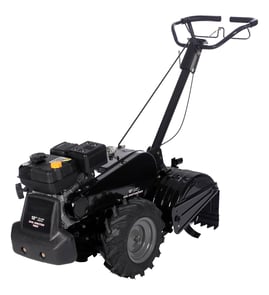



How to lubricate a tiller?
For the Craftsman 917294250 rear-tine tiller, lubrication mainly means keeping the engine properly oiled and greasing the transmission as scheduled. The manual calls for seasonal transmission grease service and regular engine oil checks to prevent wear in gears, bearings, and moving linkages.
What to lubricate on this tiller
- Engine crankcase oil: Check before starting and after every 5 hours of continuous use; change about every 25 hours or at least yearly.
- Transmission gear case: Once a season, lubricate the right-hand gear case grease fitting with 1 oz. of EP #1 grease.
- Control and pivot points (general): Lightly lubricate pivots and moving joints so controls move smoothly (avoid getting oil/grease on belts or pulleys).
- Tines and shields (clean, not greasy): Keep soil buildup off; lubrication is not typically applied to tines.
Quick steps (safe, clean, and effective)
- Park the tiller on a level surface; let the engine cool.
- Disconnect the spark plug wire before working near moving parts.
- Check engine oil level; top off with SAE 30 (or equivalent) as needed.
- Once per season, add 1 oz. EP #1 grease to the right-hand gear case grease fitting.
- Wipe off excess grease and keep grease away from the drive belt and pulley surfaces.
Lubricant guide
| Area | What to use | How often |
|---|---|---|
| Engine | SAE 30 motor oil (API SF-SJ) | Check often; change about every 25 hours or yearly |
| Transmission grease fitting | EP #1 grease (1 oz.) | Once a season |
Why it matters
Proper lubrication reduces friction and heat, which helps protect the transmission gears and engine from premature wear. It also helps the drive controls operate smoothly so the tiller engages and disengages predictably.
For diagrams and the exact maintenance schedule for the Craftsman 917294250, use the 917294250 owner's manual.
Last updated: January 2026
Where is the model number on a Craftsman rear tine tiller?
On the Craftsman rear-tine tiller model 917294250, the model number is printed on the product identification label. On most rear-tine tillers, that label is typically placed on the tine shield/guard area or on the frame near the engine and controls; confirm the exact location using the 917294250 owner's manual.
Common places to check on a rear-tine tiller
Look for a sticker or metal tag with the model number and serial number in these spots:
- On the tine shield (tine guard) near the tines
- On the main frame rails, usually near the engine mount
- Near the handle/control panel area
- On or near the engine shroud area (frame tag, not the engine model tag)
- Around the transmission/gearcase housing area
What the label looks like (and what to write down)
The ID label usually includes more than just the model number. We recommend recording:
- Model number (example format: 917.294250)
- Serial number
- Product type (rear-tine tiller)
- Sometimes an engine model number (separate from the tiller model)
| Item on label | Why it matters |
|---|---|
| Model number | Matches the correct parts diagrams and parts list |
| Serial number | Helps confirm production version when parts changed |
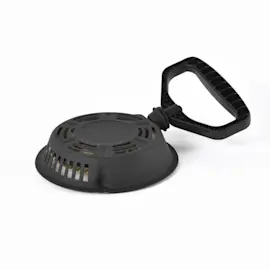
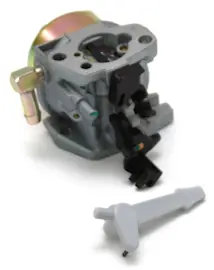
| Engine model | Used for engine-specific parts like carburetor or recoil starter |
Why it matters
Using the exact model number helps us match the correct Craftsman 917294250 parts, such as the drive system and tine assembly components, so you do not end up with the wrong belt, cable, or hardware.
Last updated: January 2026
What tiller is made in the USA?
For Craftsman model 917294250, the owner’s documentation focuses on safe operation, maintenance, and warranty coverage, not country of manufacture. If you’re specifically shopping for a tiller made in the USA, Mantis tillers are commonly identified as designed, engineered, and manufactured in the United States.
How to confirm where a tiller is made
The most reliable way is to verify the specific unit you’re buying (even within the same brand, manufacturing locations can vary by model and production run).
- Check the product data plate on the tiller frame (often near the engine mount or transmission housing)
- Look for “Made in …” wording on the carton or original paperwork
- Confirm the exact model number and compare it to the manufacturer’s published specs
- Review safety and maintenance details in the 917294250 owner’s manual to match the correct model before ordering parts
Why this matters when buying parts
Country of manufacture does not usually change routine service parts, but the exact model number does. For the Craftsman 917294250 rear-tine tiller, matching the model helps ensure the correct belt, cable, chain, and hardware fit.
| What you’re checking | Where to find it | Why it helps |
|---|---|---|
| Model number (917294250) | ID plate, manual cover | Ensures correct parts diagrams and fit |
| Engine model/type | Engine shroud label | Helps match tune-up parts like spark plug |
| “Made in …” statement | ID plate or packaging | Confirms origin for “Made in USA” shopping |
Related maintenance note for this model
Our manual for the Craftsman 917294250 lists common wear items (for example, tines, spark plugs, air cleaners, and belts) as normal maintenance items. Keeping up with these helps the tiller perform consistently.
Last updated: January 2026
How often should I change the oil in my tiller?
For Craftsman rear-tine tiller model 917294250, change the engine oil after every 25 hours of operation or at least once a year (if you do not reach 25 hours). Also check the oil level before starting the engine and re-check it during extended use to prevent engine damage.
Oil-change interval for model 917294250
This interval is listed in the maintenance and engine lubrication section of the 917294250 owner's manual.
- Change oil every 25 operating hours
- Change oil at least once per year if you do not reach 25 hours
- Check oil before starting the engine
- Re-check oil after each 5 hours of continuous use
- Change oil more often when operating under heavy load, high ambient temperatures, or dusty conditions
How to change the oil (quick overview)
Follow the same basic process used on most small-engine tillers.
- Park on a level surface and shut the engine off
- Drain oil while it is warm (it drains faster)
- Remove the drain plug and catch oil in a suitable container
- Tip the tiller forward to fully drain
- Reinstall and tighten the drain plug securely
- Refill with the correct oil for your temperature range; then verify the level
Oil type and viscosity (common choices)
The manual calls for high-quality detergent oil meeting API SF-SJ and selecting viscosity by temperature.
| Typical conditions | Common viscosity | What to watch |
|---|---|---|
| Warm weather | SAE 30 | Standard choice for higher temps |
| Mixed temperatures | 10W-30 | Check level more often |
| Cold starts | 5W-30 | Better starting; monitor consumption in warmer temps |
Why it matters
Clean oil reduces friction and heat, protects internal engine parts, and helps prevent damage from running low on oil during long tilling sessions.
Last updated: January 2026