Owner’s manual



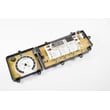
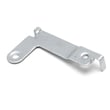
How to find part number for Samsung dryer?
For your Samsung dryer model DV330AGW, the fastest way to get the correct part number is to match the part to your model and serial information from the rating label, then confirm the part name in the parts diagram and list in the DV330AGW owner's manual. This prevents ordering a look-alike part that will not fit.
Where to find the model and serial label
On most Samsung dryers like DV330AGW, the model and serial tag is typically located:
- On the front frame behind the door (open the door and check the cabinet frame)
- If that label is missing or unreadable, check the rear panel of the dryer
- If the dryer was stacked or moved, also check for a label that may be partially covered by brackets or venting
How to get the right part number (step-by-step)
Use this process to avoid mismatches between similar Samsung dryer versions:
- Write down the full model number (DV330AGW) and the serial number
- Identify the failed part by function (for example: “no heat,” “won’t start,” “door won’t latch”)
- Use the parts list/diagram for DV330AGW to match the part name to the location on the dryer
- Confirm whether your dryer is gas or electric before ordering heating-related parts
- If the issue is heat-related, check common safety parts first (thermostats, sensors) before replacing major assemblies
Common “part number” mix-ups to avoid
| What you have | What it means | What to do |
|---|---|---|
| Model number | Identifies the dryer version | Use it to look up the correct parts list |
| Serial number | Production info | Helps confirm the correct revision |
| Part number | Manufacturer’s number (example format: DC47-00017A) | Order using the exact part number |
Why it matters
Samsung often uses similar-looking components across multiple dryer models, but mounting points, wiring connectors, and temperature ratings can differ. Matching the part to DV330AGW helps ensure proper fit, safe operation, and correct drying performance.
Last updated: February 2026
What is the average lifespan of a Samsung dryer?
Most Samsung dryers, including the Samsung DV330AGW, typically last 10 to 15 years with normal household use. Consistent airflow maintenance (lint screen and venting) and avoiding overloads are the biggest factors that push lifespan toward the high end; see the DV330AGW owner's manual for care and safety guidance.
What affects dryer lifespan the most
- Vent restriction and lint buildup (overheats components and increases wear)
- Load size and frequency (heavy, frequent loads shorten life)
- Heat stress on sensors and thermostats (cycling hotter than normal ages parts faster)
- Moisture and corrosion (laundry room humidity can affect electrical connections)
- Door and drum support wear (slamming the door, running with worn supports)
Maintenance schedule we recommend
| Task | How often | Why it matters |
|---|---|---|
| Clean lint screen | Every load | Keeps airflow strong and drying times short |
| Check vent airflow at exterior hood | Monthly | Prevents heat buildup and long dry times |
| Clean vent duct (full run) | Every 6 to 12 months | Reduces overheating and strain on the blower |
| Wipe moisture sensor bars (inside drum) | Monthly | Helps Auto/Sensor cycles end correctly |
Parts that commonly fail as dryers age
If drying performance changes (long dry times, overheating, or temperature errors), these are common wear items on gas dryers like DV330AGW:
- Dryer thermistor DC32-00007A (temperature sensing)
- Dryer high-limit thermostat DC47-00017A (overheat protection)
- Dryer thermal cut-off thermostat DC47-00016A (safety cutoff)
Why it matters
A dryer that is taking longer to dry is not just inconvenient; it runs hotter and longer, which accelerates wear on the motor, blower, and heat-control parts. The manual also warns that crushed or improper venting can trap lint and restrict airflow, which increases fire risk and shortens component life.
Last updated: February 2026
How to tell if a Samsung dryer heating element is bad?
On a Samsung dryer like model DV330AGW, a bad heating element typically shows up as no heat (or weak, inconsistent heat) even though the drum tumbles. We confirm it by safely disconnecting power, then checking the heater for an open circuit and for a short to ground using a multimeter; use the DV330AGW owner's manual for access and safety steps.
Quick symptoms that point to a heater problem
- Dryer runs but clothes stay cold or take much longer to dry
- Heat comes and goes during a cycle (not just normal cycling)
- You smell a hot, “electrical” odor (stop the cycle and unplug)
- The dryer shuts off early because it overheats (often airflow-related, but can be heater-related)
How we test the heating element (multimeter check)
- Unplug the dryer (or switch off the breaker). For gas models, also shut off the gas supply.
- Access the heater terminals as shown in the DV330AGW owner's manual.
- Set the meter to ohms (Ω) or continuity.
- Test terminal-to-terminal:
- Good element: shows continuity (a measurable resistance, not “OL”).
- Bad element: reads OL/infinite resistance (open element).
- Test each terminal to the metal heater housing (ground test):
- Good element: no continuity to metal.
- Bad element: continuity to metal (shorted to ground).
Don’t miss these common “no heat” causes
The DV330AGW manual troubleshooting points to airflow and settings checks that often mimic a failed heater.
- Confirm a heat cycle is selected (not Air Fluff)
- Clean the lint screen; check the vent hood opens freely
- Inspect and clean venting; use 4-inch rigid metal duct when possible
- Check house power (electric dryers need full 240V supply)
- On gas dryers, confirm the gas supply is on
Heater vs. airflow: what’s different?
| What you notice | More likely airflow/venting | More likely heater circuit |
|---|---|---|
| Dryer heats but dries slowly | Yes | Sometimes |
| No heat at all, tumbles normally | Sometimes | Yes |
| Cabinet gets very hot | Yes | Sometimes |
| Lint buildup in ducting | Yes | No |
Why it matters
A failed heating element stops proper drying, but restricted venting can also cause long dry times and overheating. The manual recommends keeping the lint screen clean and having the exhaust duct cleaned periodically to maintain safe airflow.
Last updated: February 2026
Why is my Samsung dryer leaking water underneath?
Water under a Samsung DV330AGW dryer is caused by condensation from a venting problem, water dripping from wet laundry, or a leak from something above or behind the dryer (most often the washer, standpipe, or vent connection). Use the DV330AGW owner's manual to confirm the correct 4-inch exhaust setup and maintenance.
Most common causes on DV330AGW
- Restricted or crushed 4-inch exhaust duct causing moisture to condense and drip
- Exterior vent hood damper stuck closed or clogged with lint
- Loose duct connection letting warm, moist air leak into the cabinet area
- Dryer installed in a cool, damp space (condensation forms faster)
- Water running down from a washer above (stacked setup) or a nearby standpipe
- Wet items dripping during loading or from an overfilled lint screen area
Quick checks we recommend (15 minutes)
- Pull the dryer forward and look for water trails on the back panel and side panels
- Check the vent connection at the dryer outlet; reseat and clamp it securely
- Inspect the full vent run for kinks, sagging flex duct, or heavy lint buildup
- Verify the dryer exhausts outdoors (not into a wall cavity, attic, or room)
- If stacked, run the washer and watch for drips at the washer hoses, drain hose, and standpipe
Symptom-to-cause guide
| What you see | Most likely cause | Best next step |
|---|---|---|
| Puddle after long cycles | Vent restriction and condensation | Clean/shorten vent run; clear exterior hood |
| Water beads on cabinet base | Moist air leaking at duct joint | Reconnect and clamp duct; seal gaps |
| Water appears only on wash days | Washer or standpipe leak above | Inspect washer hoses, drain, and standpipe |
| Damp lint area and musty smell | Poor airflow and lint buildup | Clean lint screen and venting thoroughly |
Why it matters
A venting-related moisture problem increases dry times and heat stress on components, and water on the floor can damage flooring. Correct venting also helps the dryer run efficiently and safely.
Last updated: February 2026