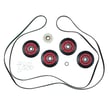
Installation guide

Can I search for Whirlpool parts by model?
Yes. For Whirlpool commercial dryer model CGM2761TQ0, searching parts by the full model number is the most accurate way to match compatible replacement parts because it ties your results to the correct diagrams, revisions, and component list for that exact dryer.
How to search parts by model number (best practice)
- Use the complete model number exactly as shown on the model tag: CGM2761TQ0.
- Match the appliance type too (commercial gas dryer vs. electric dryer).
- Use the parts diagram categories to narrow down (cabinet, drum, burner, door, wiring).
- When a symptom points to a specific system, search within that system first (heat, drum drive, door switch).
- Confirm the part ID before ordering; Whirlpool often has similar-looking parts across models.
Common examples for CGM2761TQ0
If you already know what area is failing, model-based search helps you land on the right part fast:
| Symptom | Likely system | Example part for this model |
|---|---|---|
| Drum squeaks or thumps | Drum support/rollers | Support WPW10314173 |
| Drum will not turn | Belt/idler drive | Dryer idler pulley 279640 |
| No heat or intermittent heat (gas) | Ignition/burner | Igniter 279311 or dryer gas valve coil kit 279834 |
| Dryer will not start when door closes | Door circuit | Door switch WPW10237959 |
Why it matters
Commercial dryers like the Whirlpool CGM2761TQ0 can have model-specific venting, electrical, and gas setup requirements, and those details affect which parts and configurations apply. We recommend checking the CGM2761TQ0 installation guide for the correct setup and specifications before troubleshooting or replacing components.
Last updated: February 2026
What is the average lifespan of a Whirlpool dryer?
A Whirlpool dryer typically lasts 10 to 13 years. For a commercial Whirlpool dryer like CGM2761TQ0, consistent maintenance (especially lint and venting) is what most often determines whether it stays reliable closer to the low end or reaches the high end of that range.
Typical lifespan ranges
These are practical expectations we see for Whirlpool dryers in real-world use.
| Usage pattern | Typical lifespan | What usually shortens life |
|---|---|---|
| Light residential use | 12 to 15 years | Poor venting, overheating |
| Average residential use | 10 to 13 years | Heavy loads, skipped cleaning |
| Commercial or high-cycle use | 7 to 12 years | Continuous operation, wear parts |
What extends the life of a CGM2761TQ0 dryer
- Clean the lint screen every load; keep the lint screen grille area clear.
- Keep the exhaust venting within recommended limits and use rigid metal venting when possible.
- Avoid crushing or kinking the 4-inch exhaust duct behind the dryer.
- Do not overload; overloading strains the drive motor, belt, and drum support system.
- Fix squealing, thumping, or slow drum start quickly; those symptoms often point to wear items.
Maintenance items that commonly decide “repair vs. replace”
On Whirlpool dryers, these parts often wear before the cabinet or drum does:
- Drum support rollers (rumbling or thumping)
- Idler pulley (squeal, belt slack)
- Lint ducting and seals (restricted airflow, longer dry times)
- Gas ignition components on gas models (no heat or intermittent heat)
If you are already hearing noise or seeing longer dry times, a roller or pulley service is a common first step; the support WPW10314173 and dryer idler pulley 279640 are examples of wear parts used on this model.
Why it matters
A dryer that runs hot because of lint buildup or restricted venting ages faster; it also dries slower and puts extra stress on the drive motor and gas or electric heating system. Following the clearance and venting guidance in the CGM2761TQ0 installation guide helps protect performance and lifespan.
Last updated: February 2026
What are the common problems with Whirlpool dryers?
For Whirlpool commercial dryers like model CGM2761TQ0, the most common problems are no-start issues, the drum not turning, poor or slow drying from vent restrictions, and gas-heat ignition problems. Many symptoms trace back to airflow, door-switch safety circuits, or wear parts in the drum and drive system.
Most common symptoms and likely causes
- Dryer will not start: power supply issue, door not fully closed, failed door switch
- Drum not spinning: worn belt system components such as the idler pulley or drum support rollers
- Long dry times or overheating: crushed/long vent run, clogged lint path, restricted exhaust hood
- No heat or heat cuts in and out (gas models): weak gas valve coils, failed igniter, failed radiant sensor
- Unusual squealing or thumping: worn drum support rollers, worn drum seals, loose drum support hardware
Airflow and venting problems (very common)
Restricted venting is one of the biggest causes of poor drying and overheating. The installation instructions include maximum vent length limits based on 4-inch venting and the number of 90-degree turns. Use the vent chart in the CGM2761TQ0 installation guide to confirm your setup is within spec.
| What you notice | What to check first | Typical fix |
|---|---|---|
| Clothes take too long to dry | Vent length, number of elbows, hood type | Shorten/straighten vent, clean lint buildup |
| Dryer runs hot | Blocked exhaust, restricted airflow | Clean venting and lint path |
| Lint around dryer | Leaky duct connections | Reseat and secure vent joints |
Parts that commonly fail on this model
When the symptom matches, these are common replacement parts we see for CGM2761TQ0:
- Drum support wear/noise: support WPW10314173
- Belt tension or squeal: dryer idler pulley 279640
- Gas ignition cycling/no heat: dryer gas valve coil kit 279834
- No heat (ignition failure): igniter 279311
- Heat shuts off or no flame sensing: dryer radiant sensor WP338906
- Won’t run with door closed: door switch WPW10237959
Why it matters
On a commercial dryer, small airflow restrictions and worn drive parts quickly turn into longer dry times, higher operating costs, and repeat shutdowns. Keeping venting within the installation limits and replacing wear parts early helps protect the motor, drum, and gas burner system.
Last updated: February 2026