Owner’s manual
 Error Codes




What's the average lifespan of a KitchenAid refrigerator?
KitchenAid refrigerators typically last 12 to 15 years on average, and 10 to 17 years is a normal real-world range. For your KitchenAid KBFS20ECBL00 bottom-mount refrigerator, consistent maintenance (clean airflow paths, good door sealing, and timely filter changes) is what most directly affects service life.
Most refrigerators fail from a few high-wear systems rather than the cabinet itself.
- Compressor and sealed system: longest-life components, but most expensive when they fail
- Evaporator fan and motor: common wear items that affect cooling consistency
- Electronic controls and sensors: can cause temperature swings or no-cool symptoms
- Door gaskets: wear leads to warm temps, frost, and longer run times
- Water system parts (filter, valve, filter head): affect ice and water performance
| Component | Typical service life | What you notice when it’s failing |
|---|---|---|
| Compressor | 10 to 20 years | Warm fridge/freezer, long run times, clicking/humming |
| Evaporator fan motor | 5 to 12 years | Warm fridge section, noisy fan, weak airflow |
| Door gasket | 5 to 10 years | Moisture, frost, warm spots, door not sealing |
| Water filter | 6 months | Slow water, bad taste/odor, small ice |
These steps reduce run time and prevent temperature stress on the sealed system.
- Keep condenser area clean and unobstructed (pet hair and dust are major culprits)
- Confirm doors close fully and seal tightly; fix gaps promptly
- Set stable temps (avoid frequent changes); aim for 37°F fresh food and 0°F freezer
- Replace the water filter on schedule; use the correct filter for fit and flow
- Avoid overpacking; leave space for airflow at vents and along the back wall
If you are troubleshooting cooling, sealing, or water issues on KBFS20ECBL00, these model-matched parts are often involved:
- Refrigerator water filter EDR4RXD1
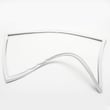
- Refrigerator door gasket W10443320
- Refrigerator evaporator motor W11024089
- Refrigerator thermistor W10316760
A refrigerator that runs longer to hold temperature (from a weak door seal, restricted airflow, or a struggling fan) puts extra load on the compressor and can shorten overall lifespan.
For model-specific care, cleaning, and operating guidance, follow the owner's manual.
Last updated: February 2026
What is the most common problem with KitchenAid refrigerators?
For KitchenAid refrigerators like model KBFS20ECBL00, the most common issues we see are cooling and ice maker performance problems. These usually trace back to restricted airflow (dirty condenser coils or a weak evaporator fan), water supply or filter restrictions, or temperature sensing/control problems.
- Refrigerator section is warm but freezer seems OK
- Ice maker is slow, makes small cubes, or stops making ice
- Frost buildup on the back wall or in the freezer
- Water dispenser flow is weak or sputters
- Unusual fan noise, rattling, or intermittent humming
- Condenser coils: Clean dust and pet hair; poor heat release causes warm temps and long run times.
- Airflow inside: Make sure vents are not blocked by food packages.
- Water filter and water flow: A clogged filter can reduce dispenser flow and affect ice production; replace the refrigerator water filter EDR4RXD1 on schedule.
- Door sealing: A leaking gasket lets in warm, moist air that drives frost and temperature swings.
- Fan operation: If the evaporator fan is noisy or not moving air, cooling suffers.
| Symptom | Common cause | Parts often involved for KBFS20ECBL00 |
|---|---|---|
| Fresh food warm, freezer OK | Air not moving from freezer to fridge | Refrigerator electronic damper WPW10594329, refrigerator evaporator motor W11024089 |
| Weak water flow, slow ice | Restricted filtration or supply | Refrigerator water filter EDR4RXD1, refrigerator water inlet valve assembly WPW10420083 |
| Temps swing, runs too long | Sensor/control issue | Refrigerator thermistor W10316760, refrigerator electronic control board WPW10317076 |
Cooling and ice maker complaints often share the same root causes: airflow, sealing, and water flow. Fixing the basic maintenance items first prevents unnecessary part replacement and helps the refrigerator hold steady temperatures.
- Use the owner's manual for temperature settings, control features, and maintenance intervals.
- For filter steps, follow how to replace the water filter in a KitchenAid refrigerator.
Last updated: February 2026
How to remove bottom grill from KitchenAid refrigerator?
On the KitchenAid KBFS20ECBL00 bottom-mount refrigerator, the bottom grill (toe kick plate) pulls straight forward to release from the lower frame. Once it pops free, lift it away; to reinstall, align the tabs and snap it back into place. See the KBFS20ECBL00 owner's manual for toe-kick attachment details.
- Unplug the refrigerator or switch off power at the breaker (recommended).
- Open the fresh food door for easier access to the lower front edge.
- If needed, pull the freezer drawer open slightly to give your hands more room.
- Grasp the toe kick at both ends near the corners.
- Pull straight forward with steady pressure until the clips/tabs release.
- Work one side loose, then the other; avoid twisting the panel.
- Check for screws at the ends or underneath (some versions use screws).
- Clear tape, debris, or buildup along the top edge of the grill.
- Reposition your grip closer to the ends to prevent bending.
- Pull straight out; rocking gently side-to-side helps release tight clips.
- Line up the grill tabs with the slots on the lower frame.
- Press evenly on the left and right sides until it snaps in.
- Confirm it sits flush and does not rub the freezer drawer.
| Check | Correct result | If not |
|---|---|---|
| Removal | Releases with a firm, straight pull | Look for screws or obstructions |
| Reinstall | Sits flush with even gaps | Re-seat tabs; press both sides evenly |
A properly seated toe kick helps protect the condenser area from dust buildup and reduces rattles or vibration noise during normal compressor and fan operation.
Last updated: February 2026
How wide is a 20.6 cubic foot refrigerator?
A 20.6 cubic foot refrigerator is typically about 36 inches wide. For the KitchenAid KBFS20ECBL00 bottom-mount refrigerator, plan on an exterior cabinet width in the 35 to 36 inch class, then confirm the exact cabinet width and required side clearances in the KBFS20ECBL00 owner's manual.
Use these ranges when comparing styles and checking your opening:
- Bottom-mount / French door (standard depth): 35 to 36 inches
- Bottom-mount / French door (counter-depth): 30 to 33 inches
- Top-freezer: 29 to 33 inches
- Side-by-side: 32 to 36 inches
We recommend measuring both the refrigerator and the cabinet opening:
- Opening width at the front and back (walls can be out of square)
- Cabinet width (case only, not handles)
- Door swing clearance next to walls or an island
- Drawer clearance for the bottom freezer pull-out
- Ventilation clearance at sides, top, and rear
| Measurement | Target for planning | Why it matters |
|---|---|---|
| Refrigerator width class | ~36 inches | Determines cabinet opening needs |
| Opening width | Refrigerator width + clearance | Prevents rubbing and airflow restriction |
| Door/drawer swing space | Extra space beyond width | Ensures doors and freezer drawer open fully |
A refrigerator can match the opening width and still not work if doors hit a wall, the freezer drawer binds, or airflow clearance is too tight; that can affect cooling performance and energy use.
Last updated: February 2026