 Owner’s manual


How do I find the part number for my dryer?
For your Kenmore dryer model 11072942100, the fastest way to get the correct part number is to use the model number and the appliance’s model and serial number plate; then match the part by name in the parts list for that model. The 11072942100 owner's manual shows where to find the model and serial number plate.
Where to find the model and serial number
On Kenmore dryers like 11072942100, the model and serial numbers are printed on the model and serial number plate. We recommend writing both down before you start shopping or disassembling anything.
- Check the dryer cabinet opening around the door area
- Look for a label or plate that lists Model No. and Serial No.
- Record the full model number (all digits) and the serial number
- Keep the information with your purchase records for future reference
How to match the correct part number
Once you have the model number, use the model-specific parts list to identify the exact replacement. Many dryer parts look similar across Kenmore models, so matching by model prevents ordering the wrong item.
- Find the part by section (drum and blower, burner, controls, door, etc.)
- Match by part name first, then confirm the part number
- Compare your old part to the diagram and description when possible
- If multiple versions exist, match any markings on the old part (stamps, connector style, mounting holes)
Common examples for model 11072942100
| What you’re fixing | Part you may need | Example part ID on this model |
|---|---|---|
| Dryer will not start (common electrical safety failure) | Thermal fuse | Dryer thermal fuse WP3390719 |
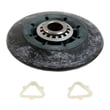
| Squealing or thumping drum | Drum support roller kit | Support kit WPW10314173 |
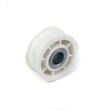
| Drum not turning smoothly | Idler pulley | Dryer idler pulley 279640 |
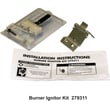
| No heat on a gas dryer (ignition system) | Igniter | Igniter 279311 |
Why it matters
Using the correct part number for Kenmore 11072942100 helps ensure proper fit, safe operation, and a repair that lasts. It also reduces returns caused by ordering a similar-looking part for a different model.
Last updated: February 2026
Is it worth repairing an old Kenmore dryer?
Yes, repairing an older Kenmore dryer like model 11072942100 is usually worth it when the failure is a common wear item (heat, airflow, or drum support). If the repair involves high-cost assemblies, compare the total repair cost to the value of the dryer and your expected remaining lifespan.
Quick way to decide
We use this simple rule: repair it when the fix is straightforward and parts are reasonably priced; replace it when multiple major components are failing or the repair cost approaches the cost of a dependable replacement.
- Repair first if the dryer:
- Runs but will not heat (often ignition or safety parts)
- Stops mid-cycle or will not start (often a fuse or switch)
- Squeals, thumps, or has a loose drum (often rollers or idler parts)
- Has poor airflow due to lint buildup (maintenance issue)
- Consider replacement if the dryer:
- Needs a drive motor plus additional major parts
- Has repeated overheating from chronic venting problems
- Has extensive wiring damage or multiple intermittent electrical issues
Common repairs that are often worth it (this model)
These are frequent, high-impact fixes for Kenmore gas dryers and are available for model 11072942100:
| Symptom | Likely part to check | Why it matters |
|---|---|---|
| Dryer will not start or stops | Dryer thermal fuse WP3390719 | A blown fuse cuts power to protect against overheating |
| Drum squeals or thumps | Support kit WPW10314173 | Worn rollers cause noise and uneven drum support |
| Drum will not turn smoothly | Dryer idler pulley 279640 | A seized pulley can prevent proper belt tension |
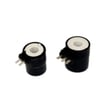
| No heat or heat cuts in and out | Igniter 279311 or dryer valve coil kit 279834 | Ignition and gas valve coils are common no-heat causes |
Why it matters
A dryer that overheats or has restricted airflow can repeatedly blow safety parts and shorten the life of components like the motor and gas burner system. The manual also emphasizes routine care such as cleaning the lint screen and keeping the exhaust area clear; that maintenance directly affects drying time, safety, and repair frequency. See the owner's manual for operating, care, and troubleshooting guidance.
Before you spend money on parts
- Clean the lint screen and check airflow at the exterior vent hood
- Inspect the vent duct for crushing, kinks, or heavy lint buildup
- Listen for mechanical noise (rollers, idler) versus electrical symptoms (no start)
- If you smell gas, follow the safety steps in the owner's manual and stop using the dryer
Last updated: February 2026
What size is a Kenmore Model 11072942100 dryer?
Kenmore dryer model 11072942100 is a 27-inch wide gas dryer. The installation section of the manual also provides the dryer height and the recommended clearances you need to plan for venting and door swing; use the diagram in the 11072942100 owner's manual when measuring your space.
Dimensions and clearances to plan for
These are the key fit items we use when helping customers size a laundry space:
- Cabinet width: 27 inches (this model is a 27-inch wide dryer)
- Overall height: shown in the manual’s “Dryer dimensions” diagram (use that value for exact planning)
- Space behind the dryer: allow room for the exhaust vent and elbow; the manual lists a recommended clearance behind the dryer
- Side and top clearances: follow the manual’s recessed and closet spacing guidance
- Door swing: the location must be large enough to fully open the dryer door
Quick reference table
| Measurement | What to use for model 11072942100 | Where to confirm |
|---|---|---|
| Width | 27 inches | Manual cover and model description |
| Height | Use the “Dryer dimensions” diagram value | Manual installation section |
| Installation clearances | Use the “Recommended/Minimum clearances” chart | Manual installation section |
Why it matters
Dryer “size” is more than cabinet width. Vent routing space, closet clearances, and door swing determine whether the dryer fits safely and vents properly, which directly affects drying performance and helps prevent overheating.
Measuring tips before you buy a pedestal, shelf, or install in a closet
- Measure the opening at the front and back; walls are often not perfectly square.
- Measure depth to the wall, then account for the vent connection and gas line routing.
- If installing in a closet, match your space to the manual’s recessed/closet clearance requirements.
- Verify the model number on the model and serial number plate so you use the correct diagram.
Last updated: February 2026








