

How often should I change the oil in my tiller?
For the Craftsman 917295551 rear-tine tiller, we recommend changing engine oil after the first few hours on a new or rebuilt engine, then about every 25 to 50 hours of use or at least once per season (once per year), depending on how hard and how dusty you run it.
Recommended oil-change schedule
Use this as a practical baseline for most gas-powered rear-tine tillers:
- New engine or fresh rebuild: change oil after the first 5 hours
- Normal home use: every 50 hours or once per season
- Heavy load, hot weather, dusty soil: every 25 hours
- Long storage (end of season): change oil before storage so acids and debris are not sitting in the crankcase
Quick schedule table
| How you use the tiller | Oil change interval | Why |
|---|---|---|
| Light, occasional garden beds | 50 hours or yearly | Oil stays cleaner longer |
| Regular weekly use | 25 to 50 hours | More heat and fuel dilution |
| Dusty, sandy soil | 25 hours | Dirt ingestion accelerates oil contamination |
| First run after engine work | 5 hours | Break-in debris collects early |
How to tell it is time (even if hours are unknown)
If you do not track hours, oil condition is a reliable trigger:
- Oil looks dark, gritty, or sludgy on the dipstick
- Oil smells strongly of gasoline
- Engine runs hotter than normal or surges under load
- You see metallic shimmer in drained oil
Why it matters
Clean oil protects the crankshaft, piston, and bearings from wear. On a rear-tine tiller, the engine often runs at high load and low ground speed, so oil breaks down faster than it does in many other yard machines.
Related DIY help
If you are also troubleshooting performance issues after maintenance, use tiller common questions to match symptoms like hard starting, rough running, or poor tilling to the most likely causes.
Last updated: January 2026
What is the bar on the back of a tiller for?
On the Craftsman rear-tine tiller model 917295551, the bar on the back is the depth stake (drag bar). We use it to control how deep the tines dig and to steady the tiller so it does not lunge forward or “run away” in hard soil.
What the depth stake does
- Sets tilling depth by limiting how far the tines can pull the machine downward
- Adds resistance so the tiller moves at a controlled pace
- Helps keep the tiller stable and reduces bouncing in rocky or compacted ground
- Improves soil finish by letting the tines work the same depth consistently
How to adjust it (typical rear-tine setup)
- Park on level ground, shut the engine off, and let all moving parts stop.
- Pull the retaining pin(s) and reposition the stake up or down.
- Reinstall the pin(s) fully and confirm the stake is locked before starting.
If your stake will not hold position, inspect the pin holes and the retaining hardware for wear.
Quick adjustment guide
| Goal | Depth stake position | What you will notice |
|---|---|---|
| Break new ground | Lower (more drag) | Slower travel, deeper bite |
| Mix compost or re-till | Mid position | Balanced depth and speed |
| Shallow cultivation | Higher (less drag) | Faster travel, lighter bite |
Parts that commonly affect depth control
If the bar is loose, missing, or hard to adjust, these model-matched parts are worth checking:
- Depth stake 532102156 (bent stake, worn holes, missing hardware)
- Rally tiller depth stake spring pin 532008393 (won’t lock, keeps popping out)
Why it matters
A correctly set depth stake protects the drivetrain (belt, chain, gear case) from shock loads, improves traction, and helps you get an even tilling depth without fighting the machine.
Last updated: January 2026
What are the common problems with lawn tillers?
Common problems on lawn tillers (including the Craftsman 917295551 rear-tine tiller) are no-start conditions, tines or wheels not driving, poor tilling performance, and oil or fuel leaks. Most issues trace back to fuel quality, ignition, drive belt or clutch adjustment, or worn drive components.
Most common symptoms and what usually causes them
- Engine will not start: old fuel, clogged fuel line or filter, dirty carburetor, fouled spark plug
- Engine runs rough or stalls: stale fuel, restricted airflow, carburetor varnish, ignition tune-up needed
- Tines will not turn (or slip under load): loose or worn drive belt, stretched clutch cable, worn chain or gear case issues
- Wheels drive but tines do not (or vice versa): clutch linkage out of adjustment, damaged chain, internal drive wear
- Oil or fuel leaking: worn seals, loose fittings, cracked fuel line, overfilled crankcase
Quick checks we recommend first (fast and low-cost)
- Fuel: Drain old gas and refill with fresh fuel; clean the tank cap vent if it is plugged.
- Spark: Inspect the spark plug; replace if fouled, worn, or fuel-soaked.
- Drive engagement: Confirm the clutch lever fully engages and returns smoothly.
- Belt and cable: Look for a glazed, cracked, or loose belt; check for slack in the clutch cable.
- Leaks: Wipe the unit clean, run briefly, then pinpoint the leak source.
Parts that commonly fix drive and engagement problems
If the tiller runs but does not move or the tines do not bite, these model-matched parts are frequent fixes:
- V-belt 532132672 (drive belt that transfers power)
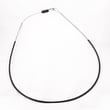
- Tiller clutch cable 532110675 (controls engagement and tension)
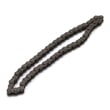
- Tiller chain, #25-50 532102134 (transfers drive through the drivetrain)
- Gear case 532407383 (houses gears and internal drive components)
Symptom-to-fix guide
| What you notice | Most likely area | Typical fix |
|---|---|---|
| Engine starts, tines do not | Belt/cable/chain | Adjust cable, replace belt or chain |
| Tines turn but tilling is weak | Depth setting/tines/soil conditions | Reduce depth, make multiple passes |
| Oil around drivetrain | Seals/gear case | Replace seal, inspect gear case |
| Engine surges or dies | Fuel/carburetion | Fresh fuel, clean carburetor |
Why it matters
A tiller that is slightly out of adjustment can quickly wear the belt, clutch cable, and drivetrain. Catching slippage early helps protect higher-cost assemblies like the gear case.
For step-by-step troubleshooting by symptom, use rear tine tiller troubleshooting tips wheels and tines.
Last updated: January 2026
Where is the model number on a Craftsman rear tine tiller?
On Craftsman rear-tine tiller model 917295551, the model and serial numbers are on the model plate attached to the top of the transmission. This is the primary identification tag we use to match the correct parts diagrams and replacement parts.
Where to look on model 917295551
Check these spots in order; the first one is the correct location for this model:
- Top of the transmission (model plate location)
- Around the transmission housing where the plate is mounted
- Nearby frame surfaces that face upward and stay protected from tine debris
How to find it quickly
A dirty transmission case can hide the plate. Use this approach:
- Turn the engine off and let hot parts cool
- Brush off loose soil around the transmission top
- Wipe the area with a rag and mild degreaser
- Use a flashlight to read the stamped or printed numbers
| What you need | Where it’s found | Why we need it |
|---|---|---|
| Model number (917295551) | Model plate on top of transmission | Matches the correct parts list and diagrams |
| Serial number | Same model plate | Helps confirm the exact production version |
Why it matters
Craftsman tillers can have small design changes within the same series. Using the model plate information prevents ordering the wrong drive, tine, or transmission-related parts.
If you’re ordering parts after you find the tag
Once you have the model number, match wear items by the diagram for your exact build. For example, if you’re diagnosing drive engagement issues, the tiller clutch cable 532110675 is one of the common control parts you may see listed for this model.
Last updated: January 2026