Owner’s manual
 Error Codes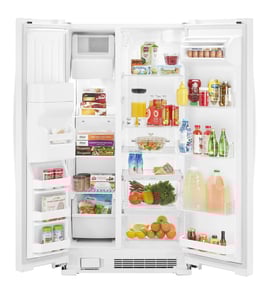


Where is the model number on a Kenmore side by side refrigerator?
On Kenmore side-by-side refrigerator model 10656823603, the model number is printed on the appliance identification label (the same label that also lists the serial number). Check the label first before ordering parts or looking up troubleshooting steps in the owner's manual.
Common places to check on a side-by-side refrigerator
Look for a paper or foil label in one of these spots:
- Inside the fresh food (refrigerator) compartment on a side wall
- Along the ceiling of the fresh food compartment near the light housing
- On the frame around the fresh food door opening (near the hinges)
- Inside the freezer compartment on a side wall
- Behind the base grille or near the lower front frame (less common)
What you should see on the label
The label typically includes both a model number and a serial number.
| Item on label | What it’s used for | Example format |
|---|---|---|
| Model number | Matching parts and diagrams | 10656823603 |
| Serial number | Production info and service history | Letters and numbers |
Why it matters
We use the model number to match the exact configuration of your refrigerator (shelves, ice maker, water filter system, door parts). That helps you avoid ordering a part that looks similar but does not fit.
Quick tip for parts that commonly require the model number
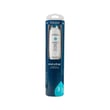
If you are replacing a water filter, confirm the model number first, then match the filter style. For this model, a common replacement is the genuine Kenmore refrigerator water filter EDR3RXD1.
Last updated: February 2026
What is the actual width of a 36 inch refrigerator?
A “36-inch” refrigerator is a nominal size; the actual cabinet width is typically about 35 3/4 inches (often 35 1/2 to 35 7/8 inches) so it can slide into a standard 36-inch opening. For your Kenmore 10656823603 side-by-side refrigerator, confirm the exact dimensions and required clearances in the 10656823603 owner's manual.
What to measure (so it fits the first time)
Use a tape measure and check these points before ordering or installing:
- Cabinet width: the metal box, not including door handles
- Overall width: cabinet plus handles (often the tightest fit)
- Depth: cabinet only vs. depth with doors and handles
- Height: floor to top hinge cover (and any leveling leg adjustment)
- Door swing clearance: space needed so doors open fully
Clearance guidelines that matter for this model
Our Kenmore 10656823603 manual calls out ventilation and door-swing spacing that can affect the “real-world” space you need:
- Allow about 1/2 inch of space on each side and the top for ventilation.
- If installed next to a fixed wall, allow about 2 inches minimum on the wall side (depending on layout) so the door can swing open.
- If the unit has an ice maker, allow extra space at the back for the water line connection.
Quick reference: label size vs. typical actual size
| What you see advertised | Typical actual cabinet width | What can change it |
|---|---|---|
| 36-inch refrigerator | ~35 3/4 inches | Handles, hinges, trim, door design |
Why it matters
A refrigerator that is even 1/4 inch wider than your opening can bind, rub cabinets, or prevent proper ventilation. Measuring cabinet width plus handle depth also helps avoid door clearance problems and makes leveling and alignment easier.
Last updated: February 2026
Who makes Kenmore 10656823603?
Kenmore is a brand name, and the 10656823603 side-by-side refrigerator is part of the Kenmore 106 model family that is commonly manufactured for Kenmore by Whirlpool. For model-specific details (features, filter type, and service information), use the owner's manual.
How to tell who built a Kenmore refrigerator
We use a few reliable identifiers to match a Kenmore model to its manufacturing source:
- The model prefix: Kenmore models starting with 106 are Whirlpool-built in most cases
- The data plate: it lists the full model number and serial number (usually inside the fresh food compartment)
- The parts used: many 106-series refrigerators use Whirlpool-style part IDs and assemblies
- The manual and parts list: they typically align with the manufacturer’s design family
What this means for parts and repairs
Even when Whirlpool builds the unit, you still order parts by the Kenmore model number 10656823603 to ensure fit.
Common maintenance items for this model family include:
- Water filter (base grille style on many 106 models)
- Ice maker components
- Evaporator fan parts
- Defrost system parts
Example parts you may see for this model
| System | Example part | What it affects |
|---|---|---|
| Water filtration | Genuine Kenmore refrigerator water filter EDR3RXD1 | Water taste, flow, ice quality |
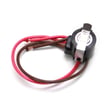
| Defrost | Refrigerator defrost bi-metal thermostat WPW10225581 | Frost control, cooling consistency |
| Ice making | Refrigerator ice maker WPW10190961 | Ice production |
Why it matters
Knowing the build family helps when you’re troubleshooting symptoms (cooling issues, ice maker problems, dispenser concerns) because the design patterns and common failure points are often shared across that manufacturer’s platform.
Last updated: February 2026
How to tell if a Kenmore refrigerator compressor is bad?
If your Kenmore 10656823603 side-by-side refrigerator is warm and you hear repeated clicking, loud buzzing, or the unit runs but never cools, the compressor may be failing. First rule out normal operating sounds and airflow issues before suspecting a sealed-system problem; use the owner's manual troubleshooting checks.
Quick signs that point to a compressor problem
- Refrigerator and freezer temperatures keep rising even after 24 hours of normal operation
- Repeated clicking every few minutes (start device/overload cycling) with little or no cooling
- Compressor is very hot to the touch and shuts off, then tries again
- Unusual loud humming or grinding coming from the compressor area
- Fans run (evaporator/condenser) but cooling performance stays poor
Normal sounds vs. problem sounds (what we expect on this model)
Your manual notes that newer, high-efficiency compressors and fans can run longer and make different sounds, including pulsating or high-pitched tones as the system adjusts. Use this table to separate “normal” from “needs attention.”
| Sound/behavior | Often normal | More likely a problem |
|---|---|---|
| Compressor runs longer than older fridge | Yes, especially in warm rooms or after door openings | If temps never recover |
| Pulsating or high-pitched sound | Yes, performance adjusting | If paired with no cooling |
| Clicking every few minutes | No | Yes, start/overload cycling |
| Fans running but compartments warm | No | Yes, points to sealed-system or compressor/start issue |
Checks to do before blaming the compressor
- Confirm power and controls: Make sure the unit is plugged into a grounded outlet and temperature controls are set correctly.
- Give it time after changes: After loading warm food or frequent door openings, allow several hours for temperatures to stabilize.
- Listen for airflow: You should hear the evaporator fan moving air; blocked vents or heavy frost can mimic compressor failure.
- Clean basics: Make sure doors close fully and the condenser area is not packed with dust.
When a part replacement is the right next step
If you have verified good airflow and correct settings but cooling is still failing, the compressor or sealed system becomes a primary suspect. For this model, the compressor is available as refrigerator compressor W10309990. Sealed-system diagnosis and refrigerant work require a qualified technician.
Why it matters
A weak compressor can look like a simple “not cooling” complaint, but the fix path is different than common issues like a dirty condenser, a door left ajar, or an airflow restriction. Doing the quick checks first prevents unnecessary parts replacement.
Last updated: February 2026
What causes a side-by-side refrigerator to stop cooling?
A Kenmore side-by-side refrigerator model 10656823603 usually stops cooling because it is not getting power, the temperature controls are off or set incorrectly, airflow is blocked, or the sealed system is not running correctly. Start with power and control checks, then move to airflow and fan issues.
Quick checks (fastest fixes first)
- Confirm the power cord is plugged into a grounded 3-prong outlet (no adapter or extension cord).
- Test the outlet by plugging in a lamp.
- Reset a tripped circuit breaker or replace a blown fuse.
- Make sure the refrigerator controls are turned ON and not set too warm.
- If it is a new install or was unplugged, allow 24 hours to cool completely.
- Minimize door openings; warm air entering can make temperatures rise quickly.
Airflow and loading problems that mimic “no cooling”
Blocked airflow can make one or both compartments warm even when the compressor is running.
- Keep vents inside both compartments clear (avoid packing food tightly against vent openings).
- Let large food loads cool down before loading when possible.
- Check for doors left ajar; even a small gap can cause warm temperatures and moisture.
What to listen for (helps narrow the cause)
Some sounds are normal, but changes can point to the problem.
| What you notice | What it often means | What to do next |
|---|---|---|
| No lights, no sound | No power to unit | Do the outlet, breaker, and cord checks |
| Running a lot but still warm | Doors opened often, warm room, heavy load | Reduce openings; recheck temps in 24 hours |
| Buzzing near ice maker area | Water valve opening to fill ice maker | Normal unless water flow is restricted |
| Fan noise missing, warm fridge/freezer | Air not circulating | Inspect for frost buildup; check fan operation |
When a part is commonly involved
If basic checks do not restore cooling, these model-compatible parts are often involved in cooling or related symptoms:
- Evaporator fan motor: refrigerator evaporator fan motor WP2315549
- Temperature control: refrigerator temperature control WP2315562
- Adaptive defrost control board: refrigerator electronic control 4388932
- Defrost thermostat (bi-metal): refrigerator defrost bi-metal thermostat WPW10225581
Why it matters
Loss of cooling can be as simple as a power interruption or control setting, but it can also signal airflow or defrost problems that lead to frost buildup and rising temperatures. Catching it early helps protect food and prevents strain on the compressor.
For model-specific operating checks (controls, cooling time, and troubleshooting steps), follow the owner's manual.
Last updated: February 2026