Owner’s manual
 View engine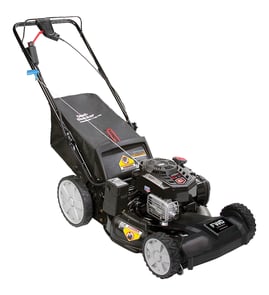



Should I use 87 or 89 gas for lawn mower?
For the Craftsman 917377843 gas walk-behind lawn mower, use fresh, clean regular unleaded gasoline with a minimum of 87 octane; 89 is not needed for normal operation. We also recommend staying at 10% ethanol (E10) or less to help protect the fuel system during storage (see the owner's manual).
- Use 87 octane (regular unleaded) as your go-to fuel
- 89 octane is fine, but it does not improve power or reliability in this mower
- Use fuel with 10% ethanol or less (E10 max)
- Do not mix oil with gasoline (this is a 4-cycle engine)
- Buy only what you can use in about 30 days so fuel stays fresh
| Fuel choice | OK to use? | Our recommendation |
|---|---|---|
| 87 octane regular unleaded | Yes | Best everyday choice |
| 89 octane mid-grade | Yes | Not necessary |
| Old/stale gas (sitting for months) | No | Drain and replace |
| Higher-ethanol blends (over E10) | No | Avoid to reduce fuel-system issues |
Stale fuel and moisture in alcohol-blended gas are common causes of no-start problems. Use this checklist:
- Drain the tank and refill with fresh 87 octane fuel
- Check that the spark plug wire is firmly connected
- Inspect and clean or replace the air filter
- If the mower was stored with fuel for 30+ days, empty the fuel system before restarting
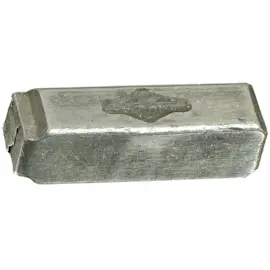
- If you suspect blade impact or vibration, inspect the blade mounting; a loose blade or damaged adapter can cause problems (see blade adapter 532186766)
Using the correct fuel (fresh 87 octane, E10 or less) helps prevent hard starting, rough running, and fuel-system corrosion, especially when the mower is stored between mowing seasons.
Last updated: February 2026
What model number is the Craftsman 917377843?
The model number for this Craftsman gas walk-behind lawn mower is 917.377843 (often written without the dot as 917377843). You can confirm it in the parts diagram and model identification section of the owner's manual.
We recommend checking the mower’s ID label first, then matching it to the manual.
- Look for a model and serial tag on the rear of the deck or near the handle mounting area
- Clean grass and debris off the tag so all digits are readable
- Match the full number, including any dot (917.377843)
- Use the model number when ordering parts like wheels, cables, and chute components
- If the tag is damaged, use the illustrated parts list in the manual to confirm the model family
The same model can appear in two formats; both refer to the same Craftsman mower.
| Where it appears | Example | What it means |
|---|---|---|
| Manual and diagrams | 917.377843 | Standard printed model format |
| Parts lookup and ordering | 917377843 | Same model number without punctuation |
Using the exact model number ensures you get the correct walk-behind mower parts for your deck and drive system, such as the wheel assembly, drive control components, and discharge chute parts listed for Craftsman 917377843.
Last updated: February 2026
What year is Craftsman Model 917377843?
The model number 917377843 identifies the mower family and parts breakdown, but it does not contain the manufacturing year. To find the year for your Craftsman gas walk-behind mower, use the product’s date code (typically on the ID tag) and confirm the format shown in the owner's manual.
On Craftsman walk-behind mowers, the build date is usually tied to a separate date code/serial-style label, not the model number.
Check these common locations:
- The ID tag on the rear of the deck near the discharge area
- The ID tag near the handle mounting brackets
- A label near the engine mounting area (deck side)
- The engine label (engine model is often separate from the mower model)
Once you locate the date code, match it to the format used for your mower documentation.
Typical possibilities you may see:
- MMDDYY (month, day, year)
- YYMMDD (year, month, day)
- A week and year code (common on some components)
| What you have | What it tells you | What to do next |
|---|---|---|
| Model number (917377843) | Parts lookup and diagrams | Use it to order correct parts |
| Date code on ID tag | Manufacturing date | Decode the date format |
| Engine model label | Engine family and specs | Use it for engine-specific parts |
Knowing the correct year helps when you are matching deck hardware, drive components, and bagging or chute parts that can change across production runs, even when the mower model looks similar.
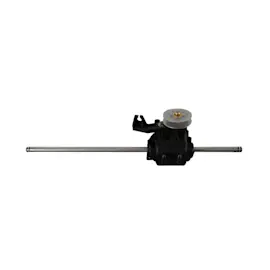
If you are replacing worn drive or deck hardware on this model, examples of model-matched parts include the wheel assembly 532192622 and the lawn mower transmission assembly 532188294.
Last updated: February 2026
What are the common problems with Craftsman lawn mowers?
Common problems on the Craftsman 917377843 gas walk-behind lawn mower include no-start conditions (fuel, spark, or safety control issues), loss of power from restricted airflow or heavy grass load, poor cut from a worn or loose blade, and vibration from blade or crankshaft damage. Use the owner's manual troubleshooting chart to match symptoms to fixes.
- Won't start: stale fuel, dirty air filter, fouled spark plug, fuel valve OFF (if equipped), or control bar not functioning
- Loss of power: cutting too much grass, clogged air filter, grass buildup under the deck, oil level too high, walking speed too fast
- Poor cut (uneven): worn/bent/loose blade, uneven wheel height settings, debris packed under the deck
- Excessive vibration: loose or damaged blade, broken blade adapter, bent crankshaft
- Starter rope hard to pull: flywheel brake engaged, blade dragging in grass, blade adapter damage
| Symptom | Likely cause | What we recommend |
|---|---|---|
| Won't start | Fuel/spark/safety control issue | Refresh fuel, service air filter and spark plug, confirm control bar operation |
| Loss of power | Air restriction or heavy load | Raise cutting height, clean underside of deck, slow down |
| Vibration | Blade or adapter problem | Inspect blade mounting; replace damaged hardware or adapter |
| Rope hard to pull | Brake engaged or blade drag | Verify control bar movement; clear deck buildup and check blade |
If inspection shows worn or damaged cutting hardware, these model-listed parts are often involved:
- Blade adapter 532186766 (if the blade won’t stay tight or the mower vibrates)
- Lawn mower clipping deflector 583127101 (if discharge control parts are cracked or missing)
- Wheel assembly 532192622 (if height adjustment won’t hold or the mower tracks unevenly)
Most “mower problems” trace back to airflow, fuel quality, cutting load, or a loose/damaged blade stack-up. Catching a worn blade adapter or heavy deck buildup early prevents vibration, poor cut quality, and harder starting.
Last updated: February 2026
Is it cheaper to repair or replace a lawnmower?
For a Craftsman 917377843 gas walk-behind mower, repairing is usually cheaper when the fix is a wear item (blade adapter, wheels, chute parts) and you do the work yourself. Replacing the mower often costs less when the repair involves major drive or engine work plus paid labor; use the owner's manual to match maintenance and troubleshooting steps to the symptom.
- Repair when the mower still starts and cuts well, and the problem is a single part or adjustment.
- Replace when the engine has low compression, the crankshaft is bent, or multiple major systems are failing.
- Repair when you can do basic DIY tasks (blade removal, wheel cleanup, belt/drive checks).
- Replace when shop labor plus parts approaches the cost of a comparable new mower.
We recommend starting with the items the manual calls out for routine upkeep and common performance issues:
- Replace the spark plug yearly and service the air filter; these directly affect starting and power.
- Inspect the blade for damage and keep it sharp.
- Clean under the mower deck to prevent heavy buildup.
- Check rear drive wheels for grass and debris that can stop them from turning freely.
- Follow the storage steps if the mower sat for 30+ days (stale fuel problems are common).
| Symptom | Most common cause | Usually repair or replace? |
|---|---|---|
| Won’t self-propel / won’t move | Drive debris, worn drive parts | Repair first |
| Poor cut / vibration | Bent or dull blade, worn adapter | Repair |
| Clippings blow out the side | Damaged chute/deflector | Repair |
| Hard starting after storage | Fuel, spark plug, air filter | Repair |
| Persistent knocking, smoke, low power | Internal engine wear | Replace often makes sense |
If the issue matches, these are common “repair-first” items:
- Side discharge problems: lawn mower clipping deflector 583127101
- Blade fit or wobble concerns: blade adapter 532186766
- Self-propel issues tied to the drive system: lawn mower transmission assembly 532188294
A mower that is maintained and tuned up per the manual typically avoids the expensive failures (engine damage, drive system wear) that push you toward replacement. Regular oil changes, air filter service, and blade care protect performance and extend service life.
Last updated: February 2026