Owner’s manual
 View engine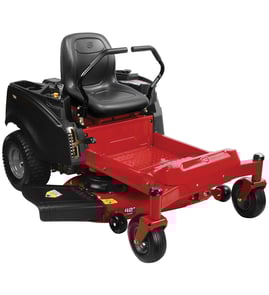





Is it worth repairing a lawn mower engine?
Yes, it’s worth repairing the engine on your Craftsman 107280070 rear-engine riding mower when the problem is a normal wear item or a straightforward fix (fuel, ignition, belts, safety switches) and the total repair cost stays well below the cost of replacing the mower. Use the owner's manual to match symptoms to the correct checks and adjustments.
Quick decision checklist
- Repair it when it needs a tune-up, cleaning, or a single part replacement.
- Repair it when the mower is otherwise solid (deck, steering, transmission feel normal).
- Repair it when the issue is safety-related or maintenance-related (interlock, battery cables, dirty air filter).
- Replace or retire it when the engine has severe internal damage (knocking, seized crank, heavy smoke) and multiple major systems also need work.
- Repair it when you can confirm the cause (for example, belt slipping because it’s oily or worn).
Common “worth repairing” engine-related fixes
These are typical, high-value repairs that often restore reliable starting and power:
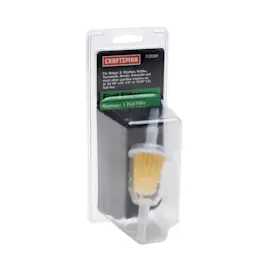
- Fuel system service (fresh fuel, carburetor cleaning, new fuel filter if equipped)
- Ignition service (spark plug, plug wire, key switch checks)
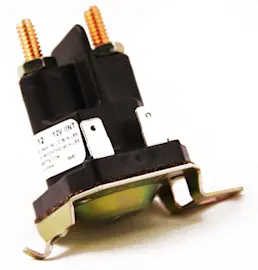
- Battery and starting circuit service (clean terminals, charge battery, check solenoid)
- Air intake service (clean or replace air filter)
- Exhaust leak repair (a leaking exhaust gasket can cause noise and poor performance); see exhaust gasket 690970
Cost vs. benefit guide
| Situation | Typical outcome | Usually worth it? |
|---|---|---|
| Starts hard, runs rough, stalls under load | Tune-up or fuel/air fix | Yes |
| Clicks but won’t crank | Battery, cables, starter circuit | Yes |
| Cranks but won’t start | Spark or fuel diagnosis | Yes |
| Loud knock, low compression, seized | Major internal engine work | No (most cases) |
Why it matters
A running engine is only part of safe mowing. The manual stresses safe operation and maintenance practices (disconnect the negative battery cable before service, remove spark plug wire(s), and avoid running the engine in enclosed areas due to carbon monoxide). Following those steps prevents injuries and avoids turning a small repair into a bigger one.
Last updated: February 2026
What brand engine does Craftsman use?
For the Craftsman rear-engine riding mower model 107280070, the operator’s manual specifies a Briggs & Stratton engine (26 HP) with a 52-inch mower deck. For other Craftsman riding mowers, engine brands can vary by model and series, but Briggs & Stratton is one of the most common.
What this means for parts and maintenance
Engine brand matters because tune-up parts, gaskets, and some drive components are matched to the engine family and specifications listed for your exact model.
- Use the engine brand and horsepower listed in your documentation when ordering parts.
- Match parts by model number 107280070 first, then confirm fit by diagram and description.
- For engine-related repairs, follow the safety and service steps in the manual.
- If you’re chasing an exhaust leak, replace the gasket rather than reusing the old one.
Where to confirm the engine brand on your mower
The most reliable places to confirm the engine brand are:
- The cover page and specifications section of the owner's manual
- The engine identification label (model, type, trim) on the engine shroud
- The mower’s model and serial tag (helps ensure you are looking at the right parts list)
Common engine brands you may see on Craftsman riders
Craftsman has used multiple engine suppliers across different riding mower lines. Here’s a quick comparison:
| Engine brand | Where you’ll typically see it | Notes |
|---|---|---|
| Briggs & Stratton | Many Craftsman rear-engine riders and lawn tractors | Very common across many model years |
| Kohler | Some lawn tractor series | Often used on higher-output configurations |
| Kawasaki | Select models | Common on certain premium configurations |
Related part you might need
If your 107280070 has exhaust noise, popping, or visible soot near the muffler, an exhaust gasket is a common fix. The part listed for this model includes the exhaust gasket 690970.
Why it matters
Using the correct engine brand and model information prevents ordering the wrong ignition, fuel, or gasket parts, and it helps you follow the right starting, safety interlock, and maintenance procedures for your Craftsman rider.
Last updated: February 2026
How to find Craftsman mower parts?
To find the right parts for your Craftsman 107280070 rear-engine riding mower, match the model number and (when available) the serial number from the product label, then use the parts diagrams and lists in the 107280070 owner's manual to identify the exact replacement part you need.
Where to find the model and serial label
On Craftsman riding mowers like model 107280070, the model and serial information is typically on a label or tag on the frame. A common location is the rear frame area between the wheels.
Use this checklist when you look for it:
- Park on a flat surface, set the parking brake, and shut the engine off
- Remove the key and let hot parts cool
- Look on the rear frame and under/behind the seat area
- Wipe dirt and grass off the label so the numbers are readable
- Write down the model number (107280070) and the serial number
How we recommend matching the correct part
Once you have the model number, use the parts list for Craftsman 107280070 and confirm the part by name and diagram location. For hardware and wear items, matching by diagram position helps avoid ordering the wrong size.
Common examples from this model’s parts list include:
- Exhaust gasket 690970 (engine exhaust sealing)
- Murray lawn tractor blade drive belt 7103789YP (deck blade drive)
- Gauge wheel 1736896YP (deck height and anti-scalp support)
- Briggs and stratton switch - rocker 1734141SM (controls and electrical)
Quick part-matching table
| What you’re fixing | What to match | Why it helps |
|---|---|---|
| Engine-related leak/noise | Part name plus diagram callout | Prevents wrong gasket or hardware |
| Deck not cutting or blades not engaging | Belt routing and deck diagram | Ensures correct belt length and path |
| Uneven cut or scalping | Deck setup and gauge wheel style | Restores proper deck support |
Why it matters
Using the exact model number and the correct diagram callout prevents fit issues, repeat repairs, and damage to related components (like pulleys, spindles, and belts).
Last updated: February 2026