Installation guide
 Owner’s manual


What is the most common problem with a KitchenAid dishwasher?
The most common KitchenAid dishwasher problem is a cycle that will not start, stops mid-cycle, or will not run correctly. On the KitchenAid KUDT03FTSS3, the first checks are simple: confirm the door is fully latched and verify the dishwasher has power (breaker, fuse, outlet). See the KUDT03FTSS3 owner's manual troubleshooting section for the exact checks and control behavior.
Most common symptoms we see (and what they usually point to)
- Won’t start at all: door not latched, power issue, blown house fuse, tripped breaker
- Stops during the cycle: temporary motor overload reset, door opened, control interruption
- Won’t fill: overfill protection float stuck, water shutoff valve closed
- Won’t drain: drain path restriction, drain pump issue, drain hose issue
- Runs a long time: incoming water temperature low or heavy soil causing the cycle to add time/heat/water
Quick checks to do first (fast, no parts)
- Close the door firmly until it latches; then restart the cycle.
- Confirm power: check the breaker and any household fuse.
- If it stopped, wait a few minutes; the motor can reset after an overload.
- Make sure the water shutoff valve is on.
- Press the overfill float down to ensure it moves freely.
When a part is the likely fix
If the basic checks pass and the symptom repeats, these parts are common suspects on dishwashers like the KUDT03FTSS3:
| Symptom | Common part to check | What it does |
|---|---|---|
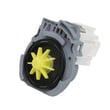
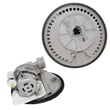
| Not draining | Dishwasher drain pump WPW10348269 | Pumps water out at the end of wash/drain steps |
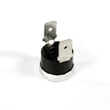
| No power or dead control | Fuse (thermal) | Protects the control circuit from overheating |
| Not filling | Water inlet valve | Opens to let water into the tub |
Why it matters
A dishwasher that won’t run, won’t fill, or won’t drain is usually a simple “start-up condition” (door latch, power, float) or a single failed component. Checking the basics first prevents unnecessary part replacement and gets you back to reliable wash cycles faster.
Last updated: January 2026
Is a 24 inch dishwasher actually 24 inches wide?
A “24-inch” dishwasher describes the cabinet opening it’s designed to fit, not the exact outside width. For KitchenAid model KUDT03FTSS3, the installation guide shows the unit is about 23-7/8 inches wide, so it fits a standard 24-inch cutout.
What to measure (so it fits the first time)
Use a tape measure and compare your space to the cutout requirements in the KUDT03FTSS3 installation guide.
- Opening width: measure between cabinet sides at the narrowest point
- Opening height: measure from the underside of the countertop to the floor
- Opening depth: measure from the back wall to the front of the cabinets
- Plumbing and wiring clearance: confirm holes and routing won’t pinch the drain hose or water line
- Leveling room: allow for front legs and rear wheels adjustments
KUDT03FTSS3 size: label vs. actual
Here’s how the “24-inch” label compares to what’s shown in the installation documentation.
| Measurement type | What you’ll see advertised | What the guide shows for KUDT03FTSS3 |
|---|---|---|
| Nominal width class | 24-inch dishwasher | Fits a 24-inch cutout; unit width about 23-7/8 in. |
| Cutout height (typical) | Standard undercounter | 34 in. min. (can be 33-7/8 in. with wheels removed) |
| Depth (typical) | Standard undercounter | Often listed around 24 in.; confirm your cabinet depth and toe-kick clearance |
Why it matters
Dishwashers are built slightly under the “nominal” width so they can slide into the opening without scraping cabinets, while still sealing correctly at the door and aligning with the countertop and toe kick.
Quick install-fit tips
- If your opening is tight, check for out-of-square cabinets and protruding screws.
- Confirm the dishwasher is centered side-to-side before securing it.
- If height is borderline, the guide notes you can remove the rear wheels to gain clearance.
Last updated: January 2026
What does F03 mean on a dishwasher?
On the KitchenAid KUDT03FTSS3 dishwasher, error code F03 (or F3) points to a drain problem: the dishwasher is not pumping water out as expected. In most cases, clearing a clog in the filter area or drain path restores normal draining.
What to check first (fast drain checks)
- Cancel the cycle and let the unit try to drain; listen for the drain pump running.
- Remove standing water (cup or wet/dry vac) so you can inspect the sump area safely.
- Clean the filter and water trap area; food debris here is the most common cause.
- Check the sink drain/disposer inlet for a blockage (especially if the issue started after a sink change).
- Inspect the drain hose for kinks, crushing, or a sag that traps water.
Parts that commonly cause an F03 drain error
If the drain path is clear but the dishwasher still will not drain, these parts are the most likely suspects for KUDT03FTSS3:
| Symptom | Most likely cause | What we typically do next |
|---|---|---|
| Hums but no drain flow | Drain pump jammed or failed | Inspect/replace dishwasher drain pump WPW10348269 |
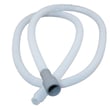
| Drains slowly or backs up | Restricted hose | Inspect/replace dishwasher drain hose 8269144A |
| No pump sound at all | Control not powering drain circuit | Check wiring, then test/replace control if needed |
Why it matters
A dishwasher that cannot drain can leave dirty water in the tub, trigger repeated error codes, and cause poor cleaning and odors. Fixing the drain restriction early also helps protect the pump motor and sump components.
Helpful references
- Use the troubleshooting section in the KUDT03FTSS3 owner's manual to match symptoms (standing water, slow drain, noisy drain) to the right checks.
- For step-by-step drain troubleshooting, follow dishwasher not draining video.
Last updated: January 2026
What's the average lifespan of a KitchenAid dishwasher?
Most KitchenAid dishwashers, including model KUDT03FTSS3, typically last 10 to 12 years with normal household use and basic maintenance. Lifespan depends most on water quality, how often you run cycles, and keeping the wash system and seals clean.
What affects dishwasher lifespan the most
- Hard water and scale buildup: shortens the life of the pump, heater, and valves
- Drain and circulation health: clogs and debris strain the motor and drain pump
- Door sealing and leaks: water intrusion can damage wiring and electronic controls
- Loading habits: overloading can stress racks, spray arms, and the wash motor
- Routine cleaning: reduces odors, buildup, and performance issues over time (see KUDT03FTSS3 owner's manual)
Maintenance that helps you reach (or beat) 10 to 12 years
- Run a monthly cleaning cycle (many owners use white vinegar as described in the manual)
- Clean the filter area and remove debris from the sump after heavy soil loads
- Check the drain path for kinks or restrictions at the hose and disposer connection
- Use the right detergent amount for your water hardness to reduce residue
- Inspect the door seal for flattening, tears, or gaps; replace if leaking
Common “end-of-life” symptoms and what they usually point to
| Symptom | Most common cause | Often involves |
|---|---|---|
| Won’t drain | Blockage or failing drain pump | Dishwasher drain pump WPW10348269, drain hose |
| Won’t fill | Water supply issue or inlet valve problem | Water inlet valve |
| Stops mid-cycle | Door latch issue, overload, or control problem | Electronic controls |
| Poor cleaning | Clogged filter/sump, spray issue, low water temp | Sump, circulation system |
Why it matters
Knowing the typical 10 to 12 year lifespan helps you decide whether to repair or replace. If your KUDT03FTSS3 is near that range and you are seeing repeated drain, fill, or control issues, replacing a major component (pump motor, control board) may not be the most cost-effective long-term fix.
Last updated: January 2026