 Owner’s manual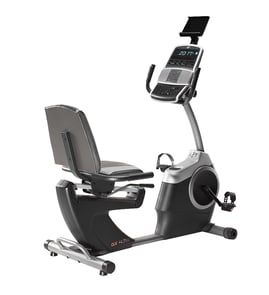

Is 30 minutes a day on a stationary bike enough?
Yes. For most people, 30 minutes a day on a stationary bike is enough to improve cardiovascular fitness, support weight management, and build a consistent exercise habit. The Schwinn 213 manual also emphasizes that light to moderate activity done regularly delivers meaningful health benefits. See the 213 owner's manual for the fitness guidelines section.
What “enough” means (and what results to expect)
Thirty minutes is a strong daily baseline when you ride at a light to moderate intensity (you breathe faster, may sweat, but can still talk in short sentences). Over time, this typically improves:
- Heart and lung endurance (cardio fitness)
- Energy and mood, plus better stress management
- Leg strength and cycling efficiency
- Consistency (the biggest driver of long-term results)
- Weight control when paired with nutrition habits
How to structure your 30 minutes
If 30 minutes straight feels tough, split it up. The Schwinn fitness guidance notes that shorter bouts still help, especially when you are getting started.
Simple 30-minute options
| Goal | Ride structure | Intensity cue |
|---|---|---|
| General fitness | 30 minutes steady | Comfortable, sustainable pace |
| Beginner consistency | 2 x 15 minutes | Easy to moderate |
| Better conditioning | 5 min easy + 20 min moderate + 5 min easy | Moderate in the middle |
| More challenge | 10 x (1 min hard, 2 min easy) | Hard intervals, easy recovery |
When 30 minutes may not feel like enough
You will get benefits at 30 minutes, but you may need to adjust the plan if you want faster changes in endurance or body composition:
- Increase resistance or add intervals 2 to 3 days per week
- Add 5 to 10 minutes to a few rides (35 to 45 minutes)
- Include strength training on non-riding days
- Prioritize recovery (sleep, hydration) to avoid burnout
Why it matters
The biggest payoff comes from doing cardio activity consistently. A daily 30-minute ride on your Schwinn 213 helps you build the routine first; then you can fine-tune intensity and duration to match goals like weight loss, stamina, or performance.
Last updated: February 2026
What are the downsides of recumbent bikes?
Recumbent bikes can feel great on your back and hips, but the tradeoffs are real: many riders get less core and upper-body involvement, the larger frame takes more space, and the laid-back position can make it harder to stand and pedal hard for short bursts. For Schwinn model 213, use the owner's manual to dial in seat and console position so you stay comfortable and efficient.
Common downsides (and what they mean for workouts)
- Less core and upper-body engagement: you are supported by the seat and backrest, so your trunk stabilizers work less than on an upright bike.
- Harder to do high-intensity “out of the saddle” efforts: you cannot stand to sprint, climb, or change leverage the way you can on an upright.
- Bigger footprint: recumbent frames are often longer, which matters for storage and moving the unit.
- Seat position is more critical: if you sit too close or too far, your knees and hips can feel it quickly.
- Visibility and “bike-like” handling are different (outdoors): the lower riding position changes sight lines and how drivers see you.
How to reduce the downsides on a Schwinn 213
The manual’s setup guidance helps you get the most from the recumbent position.
- Set the seat so your knee is slightly bent when the pedal is forward.
- Slide the seat forward if your leg is too straight; slide it backward if your knee is too bent.
- Adjust the console position so you can reach buttons without feeling cramped or over-stretched.
- Keep toes and knees pointed forward for better pedal efficiency.
- Use the resistance levels to add intensity without needing to stand.
Quick comparison: recumbent vs upright
| Feature | Recumbent bike | Upright bike |
|---|---|---|
| Back support | Higher | Lower |
| Core involvement | Lower | Higher |
| Sprinting/standing | Not typical | Common |
| Space needed | Often more | Often less |
Why it matters
Most comfort complaints and “this feels too easy” feedback come from fit and intensity. When seat distance, console reach, and resistance are set correctly, a recumbent bike can still deliver strong cardio while staying joint-friendly.
Last updated: February 2026
What exercise bike is good for 400 lb person?
A good exercise bike for a 400 lb person is a heavy-duty model with a published 400 lb (or higher) user weight rating, a stable step-through frame, and an adjustable seat that lets you pedal with a slight knee bend. For setup and safe use basics, follow the Schwinn 213 guidance in the Schwinn 213 owner's manual.
What to look for (must-have features)
- Weight capacity: 400 lb minimum (higher is better for stability and longevity).
- Frame stability: wide base, solid leveling feet, minimal side-to-side flex.
- Seat and fit range: easy fore/aft or height adjustment; comfortable saddle or recumbent seat.
- Resistance type: magnetic resistance is typically smoother and quieter than friction pads.
- Pedals: large pedals with adjustable straps; consider crank length and foot clearance.
- Ease of entry: step-through upright or recumbent design to reduce strain getting on and off.
Upright vs. recumbent: quick comparison
| Feature | Upright bike | Recumbent bike |
|---|---|---|
| Getting on/off | Moderate | Easiest for most users |
| Back support | None | Built-in backrest |
| Seat comfort | Varies by saddle | Typically more supportive |
| Space needed | Usually smaller | Usually larger |
Fit and comfort setup tips (applies to most bikes)
Proper fit reduces knee and hip stress and makes workouts more effective.
- Set the seat so your knee is slightly bent at the bottom of the pedal stroke.
- Keep your foot centered on the pedal and use the straps snugly.
- Start with low resistance for 5 to 10 minutes, then increase gradually.
- Re-check seat position after the first few rides; small changes matter.
Why it matters
A bike that is truly rated for 400 lb and fits your body correctly is safer, more comfortable, and holds up better over time. The Schwinn 213 manual also emphasizes correct seat adjustment for comfort and injury reduction.
Last updated: February 2026
Where does the Schwinn exercise bike plug in?
On the Schwinn 213 exercise cycle, the plug-in connection is for the power adapter that supplies the console (computer) so it can run the display and control resistance features. The adapter typically plugs into a small DC power jack on the bike frame near the console or front stabilizer area; confirm the exact jack location in the owner's manual.
What to check on the bike
- Look for a round DC power jack labeled similar to “DC IN” or “POWER” near the console mast
- Check the front base/stabilizer area for a power jack routed through the frame
- Follow the console wire harness down the frame; the power jack is usually close to that harness
- Make sure the adapter plug fits snugly and is not loose or angled
- Inspect the adapter cord for pinches, cuts, or a bent center pin
Quick troubleshooting if the console will not power on
- Plug the adapter into a known-good wall outlet.
- Reseat the adapter plug at the bike’s DC jack.
- Check that the console cable connections are fully seated (unplug and reconnect if accessible).
- If your model uses batteries for memory/backup, install fresh batteries (if applicable).
Common plug-in locations (what you will usually see)
| Bike style | Most common DC jack location | What it powers |
|---|---|---|
| Upright cycle | Lower front of the frame or near the console mast | Console display and resistance control |
| Recumbent cycle | Side of the frame near the seat rail or front frame section | Console display and resistance control |
Why it matters
If the adapter is not fully seated in the correct DC jack, the computer console may stay blank, resistance may not respond, and workout tracking (time, speed, distance, calories) will not function as intended.
Last updated: February 2026
