 Installation guide
 Owner’s manual
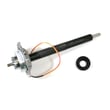





What is the life expectancy of a GE washing machine?
Most GE washing machines typically last 10 to 14 years with normal household use and basic upkeep. For your GE WPRE6100G1WT washer, following the care and maintenance guidance in the WPRE6100G1WT owner's manual helps you get the longest service life.
What affects washer lifespan the most
- Overloading the wash basket and stressing the drive system
- Unbalanced loads that increase vibration and wear on suspension parts
- Hard water and detergent buildup that can cause odors and residue
- Leaks that damage bearings, seals, and the base
- Old fill hoses that should be replaced on a regular schedule (GE recommends every 5 years)
Maintenance that extends the life of a GE top-load washer
We recommend these habits for the WPRE6100G1WT:
- Leave the lid open after loads so moisture can evaporate.
- Wipe the basket with a soft cloth and mild detergent; rinse (avoid harsh or gritty cleaners).
- Run an occasional cycle that includes bleach to help keep the interior clean.
- Shut off the water faucets when the washer is not in use for long periods.
- Replace fill hoses every 5 years to reduce leak risk.
Common wear items and what they usually mean
| Symptom | Common cause | Parts often involved |
|---|---|---|
| Loud roaring during spin | Worn tub bearing or seal | Tub bearing, tub seal |
| Water leaking from tub area | Failed seal or tub damage | Tub seal, outer tub |
| Won’t spin or stops when lid opens | Lid switch issue | Lid switch assembly |
| Excessive shaking | Suspension wear or leveling issue | Suspension rod and spring assembly, leveling hardware |
If you are chasing a leak or spin noise, the parts list for this model includes items like the washer tub seal WH02X10383 and tub bearing WH2X1198.
Why it matters
A washer that is kept clean, level, and leak-free runs with less strain on the motor, bearings, suspension, and control components, which directly increases reliability and helps you reach the full 10 to 14 year lifespan.
Last updated: February 2026
Does a GE washer have a filter that needs to be cleaned?
Most GE top-load washers like model WPRE6100G1WT do not have a routine, user-cleanable “filter” like many front-load washers. Instead, we focus on keeping the wash basket clean, maintaining fill hoses, and troubleshooting drain or fill problems using the WPRE6100G1WT owner's manual.
What “filter” usually means on washers
On washers, “filter” can refer to different things depending on the design.
- Front-load washers often have a drain pump clean-out (coin trap) that gets cleaned periodically.
- Top-load washers commonly rely on the pump and internal plumbing; routine filter cleaning is usually not part of normal maintenance.
- Some models use a lint screen or self-cleaning pump design rather than a removable filter.
What we recommend for WPRE6100G1WT maintenance
The owner’s manual for this GE washer emphasizes general care and cleaning steps.
- Leave the lid open after washing to help moisture evaporate
- Clean the wash basket with a soft cloth and mild detergent, then rinse
- Run an occasional cycle with bleach to help keep the interior clean
- Replace fill hoses about every 5 years
- Shut off water supply during long vacations; drain hoses if freezing is possible
If you are chasing a drain or “won’t spin” problem
If the washer is not draining, won’t spin, or stops mid-cycle, the issue is usually a component problem, not a dirty filter.
| Symptom | Common cause | Part to check for WPRE6100G1WT |
|---|---|---|
| Won’t drain or drains slowly | Pump issue or blockage in drain path | Washer drain pump assembly WH23X10030 |
| Won’t spin with lid closed | Lid switch not closing electrically | Washer lid switch assembly WH12X10334 |
| Overfills or water level acts wrong | Pressure hose issue or air leak | Hose pressure switch WH41X365 |
Why it matters
Cleaning a “filter” that your washer does not have can waste time and delay the real fix. For WPRE6100G1WT, correct maintenance plus targeted troubleshooting (drain pump, lid switch, pressure hose) gets you back to normal washing faster.
Last updated: February 2026
How to force GE washer to drain and spin?
To force your GE WPRE6100G1WT washer to drain and spin, select the DRAIN & SPIN cycle and press START. If the washer is paused with water still in the tub, switching to DRAIN & SPIN is the correct way to pump water out and spin it from the load (see the owner's manual).
Quick steps (what to press)
- Press POWER to wake the controls.
- Turn the cycle selector to DRAIN & SPIN.
- Press START to begin.
- If you lift the lid, the washer will pause; close the lid and press START again to resume.
- To stop the cycle, hold START for 3 seconds.
If it will not drain or spin
These checks fix the most common “won’t drain” and “won’t spin” situations on this model:
- Close the lid fully; the washer will not spin with the lid open.
- Make sure START was pressed (cycle will not begin until START is pressed).
- Reset the electronics: unplug the washer for 2 minutes, plug back in, then select DRAIN & SPIN and press START.
- If you hear humming or gurgling, the drain pump may be running; wait a minute for the tub to empty before spin ramps up.
- If the washer still will not drain, a failed pump is a common cause; check the washer drain pump assembly WH23X10030.
What “normal” sounds and pauses mean
| What you notice | What it usually means | What to do |
|---|---|---|
| Humming during drain | Drain pump is pumping | Let it run; it continues until spin is complete |
| Gurgling near end of drain | Pump is drawing air as water finishes | Normal; spin should start next |
| Brief pause during spin | Washer is removing soapy water efficiently | Normal; wait for spin to resume |
Why it matters
Using DRAIN & SPIN protects the washer and your laundry because it removes standing water before high-speed spin. It also helps you confirm whether the issue is a control setting, a lid safety condition, or a draining problem.
Last updated: February 2026


