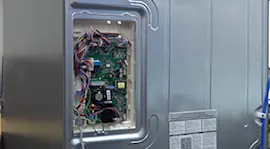
Owner’s manual
 Error Codes

How many years does a LG washing machine last?
Most LG washing machines last 10 to 15 years with normal household use and basic maintenance. For the LG WM1832CW specifically, following the care and safety guidance in the WM1832CW owner's manual helps you get the longest, most reliable service life.
What affects washer lifespan most
A washer’s life is usually determined by wear on the drive system, bearings, drain system, and door seal. These habits make the biggest difference:
- Avoid chronic overloading; it strains the motor, tub, and bearings
- Use the right detergent amount (too much can cause residue and odors)
- Leave the door slightly open between loads so the boot can dry
- Clean the drain pump filter regularly to prevent slow draining
- Use the correct cycle and water temperature for the load
- Keep the washer level to reduce vibration and suspension wear
Typical lifespan expectations (what to plan for)
Here is what we see most often for modern residential washers:
| Usage pattern | Typical lifespan | What usually wears first |
|---|---|---|
| Light (few loads/week) | 12 to 15 years | Door boot, drain pump |
| Average (most households) | 10 to 15 years | Drain pump, bearings |
| Heavy (daily loads) | 8 to 12 years | Bearings, motor components |
Maintenance that pays off fastest
These steps reduce the most common “early failure” causes like standing water, mold, and vibration.
- Drain and odor prevention: Clean the pump filter and check for coins, lint, and hairpins
- Leak prevention: Inspect the door boot for small tears and trapped debris
- Drain performance: If draining gets noisy or slow, check the filter first; a failing pump is also common
If you’re troubleshooting draining issues on WM1832CW, the washer drain pump filter 383EER2001A and the washer drain pump assembly 4681EA2001T are two common service parts.
Why it matters
A washer that is maintained and kept draining properly runs with less strain on the motor, tub bearings, and door seal. That typically means fewer breakdowns and a longer overall service life.
Last updated: February 2026
What is the capacity of the LG wm1832cw?
The LG WM1832CW washer has a 3.22 cu. ft. wash capacity, which is rated as 3.72 cu. ft. (IEC) in the specifications. For most shopping and load-size comparisons, the 3.72 cu. ft. IEC figure is the one you will see referenced most often. See the WM1832CW owner's manual for the full spec table.
What those capacity numbers mean
LG lists two related capacity figures for the WM1832CW:
- 3.22 cu. ft.: the washer’s stated wash capacity
- 3.72 cu. ft. (IEC): a standardized IEC 60456 rating used for comparing washers
- Both refer to the same washer; they are just measured and reported differently
- The IEC rating is commonly used to compare “equivalent” load size across brands
Quick capacity reference
| Spec label you may see | Capacity | Best used for |
|---|---|---|
| Wash capacity | 3.22 cu. ft. | General spec reference for this model |
| IEC capacity (IEC 60456) | 3.72 cu. ft. | Comparing load size across washers |
Why it matters
Capacity affects how much laundry you can wash per cycle and how well the load tumbles. Overloading a front-load washer can reduce cleaning performance and contribute to vibration, longer cycle times, and poor spin-out.
Related specs that help with fit and use
From the WM1832CW specifications, these details often matter along with capacity:
- Width: 27 in.
- Depth: 29-1/2 in.
- Height: 42-3/4 in.
- Depth with door open: 49-4/5 in.
- Spin speed options (WM1832CW): up to 900 RPM
Last updated: February 2026
Do LG washers have a filter that needs to be cleaned?
Yes. Your LG WM1832CW washer has filters that need periodic cleaning: the water inlet filter (at the hose connections) and the drain pump filter (which traps lint, threads, and small objects). Regular cleaning helps prevent slow filling, slow draining, and related error codes; see the owner's manual.
What filters to clean on the LG WM1832CW
- Water inlet filter: Small screens where the hot and cold inlet hoses connect to the washer.
- Drain pump filter: Collects threads and small items left in pockets; it should be checked regularly.
- Drain hose (emergency drain): Used to drain water before opening the pump filter (helps prevent spills).
How often we recommend cleaning
The manual recommends cleaning the water inlet filter every few months, especially if you have hard water or lime buildup. We also recommend checking the drain pump filter regularly so the washer drains smoothly.
| Filter | What it prevents | Typical cleaning interval |
|---|---|---|
| Water inlet filter | Slow fill, no fill, inlet-related errors | Every few months |
| Drain pump filter | Slow drain, no drain, drain-related errors | Check regularly (monthly if you wash heavily) |
Safe, practical steps (to avoid leaks and burns)
- Unplug the washer before cleaning inside areas to reduce electric shock risk.
- Turn off the water taps before removing inlet hoses.
- Let water cool before draining and opening the drain pump filter (hot water can burn).
- Drain first, then open the filter: use the small drain hose and a shallow pan to control water.
- Remove debris (coins, hair pins, lint) and reinstall the filter snugly to prevent leaks.
When a clogged filter looks like a “bad part”
A clogged drain pump filter can mimic a failing pump because the washer may drain slowly or stop with water left in the tub. If cleaning the filter does not restore normal draining, common next checks include the drain hose for kinks/clogs and the pump area. If you’re replacing parts, the washer drain pump filter 383EER2001A and washer drain pump assembly 4681EA2001T are common drain-system items for this model.
Why it matters
Keeping these filters clean protects the drain pump, improves wash performance, and reduces nuisance interruptions from fill or drain problems. It also helps prevent odors caused by trapped debris and standing water.
Last updated: February 2026
What are the common errors on an LG washing machine?
Common error codes on the LG WM1832CW washer usually point to filling, draining, load balance, or a door lock/control lock condition. The display shows an error code when a problem is detected; most fixes start with checking hoses, cleaning filters, and correcting the load.
Common LG washer error codes
- IE: water is not entering the dispenser fast enough (often supply or inlet screen restriction)
- OE: washer is not draining (often a clogged drain pump filter or drain restriction)
- UE/uE: unbalanced load (load distribution or leveling)
- dE/dE1: door not locking or door switch/lock problem
- LE: motor is struggling to turn (overload, friction, or motor/sensor related)
- CL: Child lock is on (controls disabled by design)
Quick checks we recommend first
- Make sure both faucets are fully open; straighten any kinked or crushed inlet hoses
- For IE, clean the inlet screen filters at the hose connections
- For OE, clean the drain pump filter and confirm the drain hose is not pinched
- For UE/uE, redistribute the load and verify the washer sits solidly on the floor
- For CL, use the control-panel Child lock key sequence shown in the manual
Code-to-fix cheat sheet
| Code | What it points to | First action |
|---|---|---|
| IE | Fill problem | Check supply, clean inlet screens |
| OE | Drain problem | Clean pump filter, check drain hose |
| UE/uE | Unbalanced | Redistribute, level washer |
| dE/dE1 | Door lock | Close firmly, check for obstruction |
Parts that are commonly involved
If the same code returns after the checks above, these parts are frequent suspects:
- OE (drain): washer drain pump filter 383EER2001A, washer drain pump assembly 4681EA2001T
- IE (fill): LG washer single-solenoid water inlet valve 5220FR2006H
- dE/dE1 (door lock): washer door lock switch EBF49827801
Why it matters
Clearing the root cause prevents repeat shutdowns and helps avoid secondary issues like standing water (OE) or long fill times (IE).
For WM1832CW button functions, indicator lights, and filter-cleaning steps, use the WM1832CW owner's manual.
Last updated: February 2026