Owner’s manual
 Error Codes


How do I know what model Kenmore refrigerator I have?
To identify your Kenmore refrigerator model, we look for the model/serial tag on the cabinet (not the door). On Kenmore model 79571304011, it’s typically inside the fresh food compartment on a side wall or ceiling, or near the lower front behind the kick plate; match that full model number when ordering parts.
Check these common locations first:
- Inside the refrigerator section on the left or right side wall
- On the ceiling of the fresh food compartment
- Behind or beside a crisper drawer (you may need to slide the drawer out)
- Behind the lower kick plate or toe grille at the front
- On an inside edge near the door opening (cabinet frame)
Kenmore model numbers are usually a long number string. For this refrigerator, the model number you want to match is 79571304011. Using the exact model number helps us pull the correct parts list, diagrams, and compatible replacements.
| What you see on the tag | What to do with it |
|---|---|
| Model number (example: 79571304011) | Use it to find the exact parts list and diagrams |
| Serial number | Helps identify production run; useful for service reference |
| Brand (Kenmore) | Confirms product line; still use the model for parts matching |
Before you buy a replacement part, we recommend:
- Copy the model number exactly, including all digits
- Take a clear photo of the tag for reference
- Compare your part to the parts list for your model
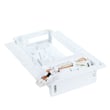
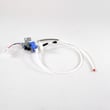
- If you’re troubleshooting ice issues, confirm whether your unit uses the lg refrigerator ice maker assembly model AEQ72909603 AEQ72909603
- Use the owner's manual to confirm feature locations and normal operation
Kenmore refrigerators can look similar across multiple series, but parts like the ice maker, door switch, gasket, and sensors can vary by model. Matching the full model number (like 79571304011) prevents fit issues and repeat repairs.
Last updated: February 2026
What are the most common problems with Kenmore refrigerators?
The most common problems we see on Kenmore refrigerators like model 79571304011 are no ice or slow ice production, warm temperatures (fresh food or freezer), water leaks, frost buildup, and unusual noises. Many issues trace back to airflow, door sealing, or the defrost and ice maker systems; use the 79571304011 owner's manual for model-specific operating checks.
- Not cooling or weak cooling: dirty condenser coils, blocked vents, failed evaporator fan, or a temperature sensor issue
- Ice maker not working: frozen fill tube, low water flow, or a failed ice maker assembly
- Water leaking: clogged/iced defrost drain, cracked drain tube, or water supply/valve problems
- Frost buildup: door not sealing, frequent door openings, or a defrost system fault
- Noisy operation: condenser fan, evaporator fan, or compressor start components
- Set temps to typical targets: 37°F fresh food and 0°F freezer.
- Make sure vents inside the compartments are not blocked by food packages.
- Clean condenser coils and confirm the condenser fan area is clear of dust.
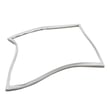
- Check door closing and gasket contact all the way around.
- If you have an ice maker, confirm the shutoff arm or switch is in the ON position and the water supply valve is fully open.
If troubleshooting points to a failed component, these are common fixes for this model:
| Symptom | Common suspect part | Example part on this page |
|---|---|---|
| No ice / small cubes | Ice maker failure | Lg refrigerator ice maker assembly model AEQ72909603 AEQ72909603 |
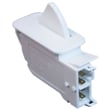
| Door light issues, beeping, warm temps from door ajar | Door not registering closed | Lg refrigerator door switch 6600JB1010A |
| Leaking into fridge/freezer, puddles | Defrost drain restriction | Refrigerator drain tube 5251JA3003D |
| Warm temps, fan noise, poor airflow | Evaporator fan problem | Refrigerator evaporator fan motor 4681JB1027N |
Cooling, ice making, and defrosting all depend on steady airflow and accurate temperature feedback. A small issue like a poor door seal or blocked vent can mimic a major failure, so the quick checks above often prevent unnecessary part replacement.
If your display shows an error code, use Kenmore 795 model bottom freezer refrigerator error codes to match the code to the most likely system (cooling, defrost, fan, or sensor).
Last updated: February 2026
What is the bottom part of a refrigerator called?
The “bottom part” of a refrigerator is most often the machine compartment, which typically houses the compressor, condenser fan, and other cooling-system components. On Kenmore model 79571304011, this area is where you will find key sealed-system and airflow parts.
In most bottom-mount refrigerators, the lower rear compartment contains components that move heat out of the cabinet and keep temperatures stable:
- Compressor: pumps refrigerant through the sealed system
- Condenser fan motor: pulls air across the condenser coils to remove heat
- Start device/relay: helps the compressor start and run
- Drain tubing: routes defrost water to the drain pan area
- Wiring and control connections: power and signals for cooling components
For model-specific diagrams and part locations, use the 79571304011 owner's manual.
If you are troubleshooting noise, warm temperatures, or intermittent cooling, these parts are commonly involved:
| Symptom | Bottom-area part often involved | Example part on this model page |
|---|---|---|
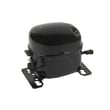
| Loud humming or clicking, no cooling | Compressor or start device | Refrigerator compressor TCA35931726 |
| Warm fridge/freezer, compressor runs | Condenser fan not moving air | Refrigerator condenser fan motor EAU61644105 |
| Water pooling under/behind unit | Drain path restricted or leaking | Refrigerator drain tube 5251JA3003D |
Knowing the correct name helps you troubleshoot faster and order the right replacement part. The “machine compartment” is where most cooling-system failures and many noise complaints originate, so it is a smart first place to inspect when performance changes.
Last updated: February 2026
What size is Kenmore refrigerator model 79571304011?
Kenmore refrigerator model 79571304011 is a 33-inch wide bottom-mount (French door style) refrigerator. Most units in this model family measure about 33 in. W x 31 in. D x 67 3/4 in. H; we recommend confirming the exact cutout and clearance requirements in the 79571304011 owner's manual.
These measurements help you confirm fit through doorways and in the kitchen opening.
- Width (W): cabinet width, not including extra clearance for door swing
- Depth (D): often varies depending on handles and how you measure from the wall
- Height (H): floor to top of cabinet; leveling legs can change this slightly
- Capacity: many 33-inch Kenmore bottom-mount units are in the low-20 cu. ft. range
Use this list to avoid installation surprises.
- Measure the kitchen opening width, depth, and height
- Allow clearance for door swing and drawer pull-out
- Check space behind the unit for airflow and water line routing (if equipped)
- Measure your doorways and hallways on the delivery path
- Plan for a little extra height adjustment for leveling
| Measurement | Typical value | Notes |
|---|---|---|
| Width | 33 in. | Standard 33-inch class cabinet |
| Depth | 31 in. | Depth can increase with handles |
| Height | 67 3/4 in. | Can vary slightly with leveling |
A refrigerator that is even 1/2 inch too wide or too tall can bind in the opening, rub cabinets, or prevent doors from sealing correctly. Confirming clearances also helps prevent ice maker and cooling performance issues caused by restricted airflow.
Last updated: February 2026