

How do I tell if my dryer heating element is bad?
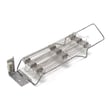
If your Kenmore dryer model 11086870800 runs but won’t heat, takes much longer to dry, or leaves clothes damp, the heating element is the top suspect. We confirm it by unplugging the dryer and testing the element for continuity and for a short to the metal housing.
Quick symptoms that point to a bad heating element
- Drum tumbles normally but there’s no heat
- Dry times suddenly get much longer
- Clothes come out cool and damp even on high heat
- You smell a burning/metallic odor during a heat cycle
- The dryer heats briefly, then stops heating (can also involve thermostats or a thermal cut-off)
How we test it (safe, reliable method)
- Unplug the dryer (or switch off the breaker).
- Access the heater terminals (location varies by design).
- Use a multimeter on ohms/continuity:
- Continuity present: the coil is not open.
- No continuity (open circuit): the element is bad.
- Check for a short to ground:
- Put one probe on an element terminal and the other on the metal heater housing.
- Any continuity indicates the element is shorted and must be replaced.
Typical meter readings (what “normal” looks like)
| Test | What you should see | What it means if you don’t |
|---|---|---|
| Terminal-to-terminal resistance | Often about 10 to 50 ohms | Open circuit usually means a broken coil |
| Terminal-to-housing (ground) | No continuity | Continuity indicates a shorted element |
What else can look like a “bad element”
A no-heat problem is sometimes caused by airflow or safety parts, not the heater itself:
- Clogged lint screen, lint chute, or venting (overheats and shuts heat down)
- Blown thermal cut-off or thermostat issue (common after restricted airflow)
- Loose/burnt heater wiring
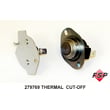
If you find a failed safety device during diagnosis, replacing the thermal cut-off kit is often the correct fix; see the cut-off 279769.
Why it matters
A heating element that’s shorted or an airflow restriction can overheat the dryer, damage wiring, and repeatedly blow safety fuses. Testing first helps you replace the right part and restore safe, normal drying.
Last updated: February 2026
How do I tell what model my Kenmore dryer is?
Your Kenmore dryer’s model number is printed on the appliance ID label; on most Kenmore dryers it’s located on the door opening (cabinet frame) when you open the door, or on the back of the dryer near the top. For parts ordering, match the full model number exactly (for example, 11086870800).
Where to look on a Kenmore dryer
Check these common label locations first:
- Open the dryer door and look along the door opening on the cabinet frame
- Check the back panel near the top edge
- Look along the inside edge of the front panel near the door switch area
- If you have a pedestal or tight install, use a flashlight and take a photo of the label
What the model number looks like (and why it matters)
Kenmore model numbers are typically a long string of numbers. For this dryer, the model is 11086870800. Using the exact model number helps us match the correct drum belt, drive motor, door switch, and thermal safety parts.
Model number vs. serial number
| Label item | What it’s used for | Example format |
|---|---|---|
| Model number | Finding correct parts and diagrams | 11086870800 |
| Serial number | Manufacturing date and production run | Letters and numbers |
Tips for ordering the right parts once you find the model
After you confirm the model number, use it to select parts that fit your exact Kenmore dryer configuration.
- If the drum won’t turn, check the belt 341241 and the idler pulley
- If the dryer won’t start, check the door switch and motor circuit
- If the dryer shuts off or won’t heat, check thermal cut-off and airflow restrictions
- Compare your old part to the replacement (mounting points, connectors, length)
Why it matters
Kenmore dryers can look similar across many model families, but internal components can differ. Using the correct model number prevents wrong-part returns and helps restore proper drying performance and safe operation.
Last updated: February 2026
How much does it cost to replace a heating element in a Kenmore dryer?
For a Kenmore dryer like model 11086870800, replacing the heating element typically costs $20 to $120 for the part and $150 to $350 total if you hire a technician (part plus labor). If you do the repair yourself, your cost is usually the part and basic supplies.
Typical cost breakdown
- DIY (parts only): $20 to $120
- Service call and labor: commonly $100 to $250
- Total professional repair: commonly $150 to $350
- Extra parts sometimes needed: thermal cut-off, wiring kit, or terminal block wires
| Scenario | What you pay for | Typical total |
|---|---|---|
| DIY heating fix | Heating element (and any safety parts) | $20 to $150 |
| Pro repair | Part + labor + service call | $150 to $350 |
| “No-heat” bundle | Element + thermal cut-off + wiring repair | $60 to $200+ |
Parts that often get replaced with the heating element
A failed heater can be caused by overheating, poor airflow, or a wiring issue. These related parts are common add-ons during a no-heat repair:
- Cut-off 279769 (thermal cut-off fuse kit; opens if the dryer overheats)
- Dryer heating element wire kit 279457 (repairs heat-circuit wiring and terminals)
- Dryer terminal block wire set 279318 (helps if the power cord connection is burned or loose)
Why the price varies
What changes the part cost
- Whether your dryer uses a bare element or an element assembly with housing
- Brand and quality level (OEM-style vs. aftermarket)
- Whether heat damage requires wiring or fuse replacement
What changes the labor cost
- How hard the heater is to access on your specific Kenmore dryer design
- Whether the tech also cleans the blower housing and vent path
- Any additional diagnosis time for cycling thermostat, timer, or control issues
Why it matters
A new heating element will not last if airflow is restricted. Cleaning the lint screen, lint chute, and venting helps prevent repeat overheating and protects the new heater and thermal cut-off.
Last updated: February 2026
How to hard reset a Kenmore dryer?
To hard reset your Kenmore dryer model 11086870800, we recommend disconnecting power for a few minutes to fully reboot the control. If the dryer still acts up afterward (won’t start, won’t run, or seems “stuck”), the issue is usually a safety switch, airflow overheating protection, or a drive problem.
Hard reset steps (safe and effective)
- Unplug the dryer from the wall outlet.
- Wait 3 to 5 minutes (this lets the control fully power down).
- Plug the dryer back in.
- Open and close the door once, then try a normal cycle.
- If the panel is still unresponsive, turn the cycle knob to a new setting and press Start.
If the reset doesn’t fix it, check these common causes
- Door not registering closed: a failed door switch can prevent starting; see dryer door switch W10820036.
- Overheat protection tripped: restricted venting can trigger a thermal cut-off; inspect and consider cut-off 279769.
- Broken belt: the motor may run but the drum won’t turn; check belt 341241.
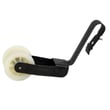
- Worn idler pulley: can cause squealing, belt slip, or no-tumble symptoms; inspect dryer idler pulley WP691366.
- Lint buildup in the airflow path: clogged lint chute or housing can cause long dry times and overheating.
Quick symptom-to-likely-cause guide
| What you notice | Most likely area to check | Common next step |
|---|---|---|
| Dryer won’t start at all | Door switch, thermal cut-off | Test switch continuity; inspect venting |
| Motor runs but drum doesn’t | Belt, idler pulley | Inspect belt routing and pulley spin |
| Runs but shuts off mid-cycle | Overheating/airflow restriction | Clean vent, lint chute, blower area |
| Loud squeal or thump | Idler pulley, belt | Replace worn drive components |
Why it matters
A hard reset clears temporary control glitches, but it won’t bypass safety circuits. On the 11086870800, start and heat problems often trace back to door-switch input, overheating protection (airflow), or the drum drive system.
Last updated: February 2026
What size belt does a Kenmore dryer use?
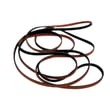
For Kenmore dryer model 11086870800, the correct drum belt is the belt 341241, which is the common 4-rib belt used on many Kenmore 110-series dryers. If your old belt is broken or stretched, matching it to 341241 ensures proper fit and drum speed.
What we recommend for model 11086870800
- Replace the belt with the exact model-matched part: belt 341241
- Inspect the idler pulley for wear or wobble while the belt is off
- Check the drum support area for rubbing that can shorten belt life
- Vacuum lint from the base and blower housing before reassembly
- Rotate the drum by hand after installation to confirm smooth tracking
Belt size details (what “size” usually means)
Most Kenmore 110-series drum belts in this design family are approximately 1/4-inch wide and about 92 1/4 inches long, with 4 ribs. Belt length can vary across Kenmore models, so using the model-specific belt part is the most reliable way to get the right size.
| What you’re checking | What to look for | What it affects |
|---|---|---|
| Belt width/ribs | 4-rib, multi-groove belt | Grip on the drum and motor pulley |
| Belt length | Typically around 92 1/4 inches for this style | Tension and drum rotation |
| Belt condition | Cracks, glazing, fraying | Slipping, squealing, no-tumble |
Why it matters
A belt that is even slightly off in length can slip, squeal, or prevent the drum from turning. Using the correct belt for Kenmore 11086870800 helps protect the drive motor, idler pulley, and drum support components.
Last updated: February 2026