Owner’s manual
 Error Codes


Are all refrigerators 70 inches high?
No. Refrigerator height is not standardized at 70 inches; it varies by style and capacity. For a Whirlpool bottom-mount refrigerator like model GX5FHDXVY09, you should measure your opening and confirm the exact cabinet height in the GX5FHDXVY09 owner's manual.
Heights vary by refrigerator type, hinge design, and whether the unit has adjustable leveling legs.
- Compact and apartment-size models: often about 32 to 67 inches
- Top-freezer models: often about 60 to 67 inches
- Bottom-mount models: often about 67 to 70+ inches
- Side-by-side models: often about 65 to 71 inches
- French door models: often about 68 to 72+ inches
Measure before you shop so the refrigerator fits and the doors can open fully.
- Height: floor to the lowest overhead cabinet or trim
- Width: wall to wall at the tightest point
- Depth: from the back wall to the front edge of counters (note handles add depth)
- Clearance: allow space behind and above for airflow
- Door swing: confirm the door can open without hitting walls or islands
| What you are checking | What to do | Why it matters |
|---|---|---|
| Opening height | Measure floor to cabinet | Prevents a too-tall refrigerator from fitting |
| Leveling legs | Plan for small height adjustment | Helps doors seal and reduces vibration |
| Hinge clearance | Leave room above for hinge movement | Prevents binding and door misalignment |
| Ventilation space | Keep recommended gaps | Protects cooling performance |
A refrigerator that is even 1 inch too tall can force you to remove cabinets or tilt the unit, and poor clearance can restrict airflow, leading to warm temperatures, longer run times, and frost or ice maker issues.
Last updated: January 2026
How to take the bottom off a Whirlpool fridge?
On the Whirlpool GX5FHDXVY09 bottom-mount refrigerator, the “bottom” most people mean is the toe grille (kick plate) at the very bottom front. We remove it by pulling the grille straight out from the cabinet, then lifting it off the retaining clips; reinstall by snapping it back into place.
- Unplug the refrigerator or switch off power at the breaker (recommended if you will reach near wiring).
- Remove items from the floor area so you can pull evenly.
- Use a towel to protect the floor and catch any water drips.
- If your model has a water filter behind the grille, have a towel ready for a few drops.
- Stand in front of the refrigerator and locate the grille along the bottom front edge.
- Grip the grille near both ends.
- Pull the grille straight toward you to release the clips.
- If it feels stuck, pull from one side slightly, then the other, so you do not crack the plastic.
- Lift the grille off once the clips release.
For model-specific illustrations and clip locations, use the GX5FHDXVY09 owner's manual.
Some Whirlpool bottom-mount designs place the water filter behind the toe grille. After the grille is off, you typically:
- Pull the filter cover open (if equipped).
- Turn or pull the filter straight out (design varies).
- Keep the filter upright to reduce spills.
For step-by-step filter handling and purging tips, use how to replace the water filter in a Whirlpool refrigerator.
| What you want to remove | Where it is | Typical release method |
|---|---|---|
| Toe grille (kick plate) | Bottom front | Pull straight out, then lift off |
| Water filter (if behind grille) | Behind toe grille | Pull/turn filter out; catch drips |
Removing the toe grille is a common first step for cleaning, checking for leaks, leveling access, and reaching components near the bottom front without damaging trim or breaking retaining clips.
Last updated: January 2026
What's the average lifespan of a Whirlpool refrigerator?
Most Whirlpool refrigerators, including the Whirlpool GX5FHDXVY09 bottom-mount model, typically last 10 to 20 years. In real-world use, 10 to 15 years is the most common range; consistent cleaning, correct temperatures, and good door sealing are what push a refrigerator toward the high end.
Here’s what we see most often for household refrigerators:
| Refrigerator type | Typical lifespan | What usually ends it first |
|---|---|---|
| Basic top-freezer | 15 to 20 years | Sealed system wear, thermostat issues |
| Bottom-mount (like GX5FHDXVY09) | 10 to 20 years | Fan, control, defrost, door sealing |
| Feature-heavy models (ice maker, dispenser) | 10 to 15 years | Ice maker and water system parts |
These are the biggest factors that affect longevity:
- Dirty condenser coils: makes the compressor run hotter and longer.
- Warm or humid room conditions: increases run time and frost buildup.
- Door seal leaks: causes constant cycling and moisture problems.
- Overpacking and blocked vents: reduces airflow and cooling performance.
- Power surges: can damage the electronic control.
Use this as a simple routine to help your Whirlpool refrigerator last longer:
- Clean condenser coils every 6 to 12 months.
- Keep refrigerator temps near 37°F and freezer near 0°F.
- Make sure doors close easily and don’t pop back open.
- Leave space around vents inside the compartments.
- Replace worn sealing parts when you notice gaps or condensation.
If cooling is weak, temperatures swing, or the unit runs constantly, these parts are often involved:
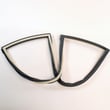
- Door sealing: a torn gasket can make the refrigerator run nonstop; see refrigerator door gasket W10443320.
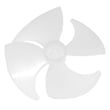
- Airflow: a noisy or stalled fan can stop proper cooling; see refrigerator evaporator fan motor WPW10128551.
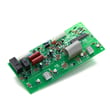
- Controls: intermittent cooling can point to a control issue; see refrigerator electronic control WPW10503278.
A refrigerator that is nearing the end of its lifespan often shows up as higher energy use, inconsistent temperatures, and moisture or frost issues. Catching airflow and door-seal problems early can prevent compressor overwork and extend service life.
For model-specific care and operating guidance, follow the GX5FHDXVY09 owner's manual.
Last updated: January 2026
What is the most common problem with Whirlpool refrigerators?
The most common Whirlpool refrigerator problem is a cooling complaint: the fridge is warm, the freezer is warm, or the unit runs constantly. On the Whirlpool GX5FHDXVY09, the most frequent root causes are airflow issues (fans, damper), dirty condenser coils, or a defrost/drain problem that leads to frost buildup.
- Fridge warm, freezer OK: restricted airflow or a stuck air damper (often the damper control)
- Freezer warm and fridge warm: condenser coils clogged, fan issue, sealed system/compressor issue
- Runs all the time: dirty coils, door not sealing, control or sensor issue
- Ice maker not working: water supply restriction, ice maker failure, or temperature too warm
- Water pooling inside or under the unit: clogged or frozen drain path
- Set temps to typical targets: 37°F fresh food and 0°F freezer.
- Clean condenser coils and confirm the condenser area has good airflow.
- Check door closure and gasket contact all the way around.
- Listen for the evaporator fan in the freezer (you should hear it running when cooling).
- Look for heavy frost on the freezer back panel (often a defrost airflow problem).
| Problem area | What fails | Example part for this model |
|---|---|---|
| Airflow to fresh food | Damper sticks or won’t open | Refrigerator damper control assembly WPW10196393 |
| Freezer airflow | Fan motor weak/noisy | Refrigerator evaporator fan motor WPW10128551 |
| Ice production | Ice maker stops cycling | Refrigerator ice maker assembly W10884390 |
| Warm temps, long run times | Door leak | Refrigerator door gasket W10443320 |
| Water leaks/ice buildup | Drain path issues | Refrigerator drain tube W10619951 |
Cooling problems usually start small (longer run times, soft ice, temperature swings) and can turn into food spoilage or compressor strain if airflow, sealing, or defrost issues are ignored.
- Use the GX5FHDXVY09 owner's manual for temperature settings, control features, and care and cleaning guidance.
- If your display shows a fault, use Whirlpool refrigerator error codes to narrow the problem faster.
Last updated: January 2026