 Owner’s manual



Is Bosch WAS20160UC a HE washer?
Yes. The Bosch WAS20160UC is a high-efficiency (HE) front-load washer, so it’s designed to use less water and energy than a traditional top-load washer while still cleaning effectively. For cycle and detergent guidance specific to your washer, use the owner's manual.
How to tell you’re using it like an HE washer
- Use HE-labeled detergent only; standard detergent can cause oversudsing.
- Measure detergent carefully; most loads need much less than the cap suggests.
- Choose the correct cycle for the load (normal, delicate, heavy duty, etc.).
- Avoid overloading; front-load washers clean best with room for tumbling.
- Leave the door slightly open after use to help reduce moisture and odors.
Common HE washer symptoms and what they mean
| What you notice | Most common cause | What to do first |
|---|---|---|
| Too many suds, long drain times | Too much or non-HE detergent | Rerun a rinse, reduce detergent next load |
| Musty odor | Moisture trapped in door seal or tub | Wipe gasket, run a cleaning cycle |
| Clothes feel stiff | Detergent buildup or too much detergent | Use less detergent, add an extra rinse |
| Poor cleaning | Overloading or wrong cycle | Reduce load size, match cycle to fabric |
Why it matters
HE washers like the Bosch WAS20160UC rely on low-water wash action and high-speed spin. Using the right detergent amount and load size prevents oversudsing, improves rinsing, and helps protect drain components such as the pump and filter.
Parts that often come up with HE washer care
If you’re dealing with draining issues after oversudsing or debris buildup, these model-matched parts are commonly involved:
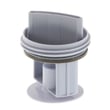
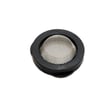
- Washer fluff filter 00647920 (helps catch lint and small items)
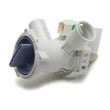
- Washer drain pump 00145753 (moves water out during drain)
- Drain hose 11023391 (routes water to the standpipe or sink)
Last updated: February 2026
What is the most common problem with a Bosch washing machine?
On the Bosch WAS20160UC, the most common service issues we see are draining problems (won’t drain, won’t spin out), door lock faults, and fill problems. These symptoms often trace back to a clogged pump filter, a failing drain pump, or a door lock that won’t latch correctly; check the owner's manual for model-specific error guidance.
Most common problems and what they usually mean
- Washer won’t drain or leaves water in the tub: drain pump filter clogged, drain hose kinked, or a weak pump
- Won’t spin or stops mid-cycle: drain issue preventing spin, unbalanced load, or door lock not confirming “locked”
- Door won’t lock or won’t open: failed lock mechanism or control not seeing the lock signal
- Won’t fill or fills slowly: restricted inlet screens, low water pressure, or inlet valve problem
- Leaks at the door: worn door boot, debris on the gasket, or a torn seal
Quick checks we recommend first (before replacing parts)
- Clean the drain pump filter and remove coins, lint, and small items.
- Confirm the drain hose is not kinked and the standpipe is not clogged.
- Reduce oversudsing; use HE detergent and the correct dose.
- Try a smaller, balanced load to rule out out-of-balance protection.
- If an error code appears, match it to the troubleshooting steps in the Bosch nexxt front load washer error codes.
Parts that commonly solve these symptoms on WAS20160UC
If the quick checks point to a failed component, these are common fixes for this model:
| Symptom | Common fix | Part to check |
|---|---|---|
| Won’t drain / won’t spin out | Pump not moving water | Washer drain pump 00145753 |
| Intermittent draining / slow drain | Filter clogged or damaged | Washer fluff filter 00647920 |
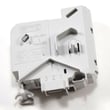
| Door won’t lock / cycle won’t start | Lock not latching or signaling | Electronic lock 00612148 |
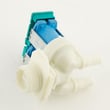
| Won’t fill / fills slowly | Valve not opening correctly | Washer water inlet valve 00611702 |
Why it matters
On front-load washers like the Bosch WAS20160UC, the control often will not allow a high-speed spin unless the washer drains properly and the door lock confirms a safe, locked condition. Fixing the drain path and lock issues first prevents repeat shutdowns and water left in the drum.
Last updated: February 2026
What is the capacity of the WAS20160UC?
The Bosch WAS20160UC washer is a compact front-load style machine; washers in this Bosch class are typically around 2.2 to 2.5 cu. ft. capacity (not 4.5 cu. ft.). For the exact rated capacity for your specific unit, check the specifications section in the owner's manual.
How to confirm the correct capacity for your exact washer
Use these quick checks so you match the right spec to the right model/variant:
- Look for the full model and index (for example, WAS20160UC/38) on the rating label
- In the manual, find “Specifications”, “Technical data”, or “Capacity”
- If the manual lists capacity in kilograms (kg), it is a load rating; convert to a rough cu. ft. equivalent only as a reference
- Do not use dryer capacity specs; dryers are commonly 6.0 to 8.0 cu. ft. and are not comparable
- If you are shopping parts, match by model number first, then confirm fit by diagram
Capacity vs. load rating (what you may see in Bosch documentation)
Bosch front-load washers often describe capacity as a maximum dry load (by fabric type) rather than a single large “cu. ft.” number.
| What you see | What it means | How to use it |
|---|---|---|
| Capacity (cu. ft.) | Drum volume | Helps compare washer size across brands |
| Max load (kg or lb) | Recommended dry laundry weight | Best for avoiding overloading and poor cleaning |
| Cycle-specific limits | Different limits for cottons, delicates, etc. | Follow these to prevent vibration and drain issues |
Why it matters
Using the correct capacity helps prevent overloading, which can cause poor rinsing, excessive vibration during spin, and draining problems that may lead you to service items like the washer drain pump 00145753 or clean the filter.
Last updated: February 2026


