Owner’s manual
 Error Codes

What is the average lifespan of a Kenmore washer?
Most Kenmore washers average 10 to 15 years of service life with normal household use and basic maintenance. For the Kenmore Elite washer 11023012100, keeping loads balanced, using the right water level and cycle settings, and addressing small issues early helps you reach the upper end of that range (or beyond). See the 11023012100 owner's manual for model-specific use and care guidance.
- Load size and balance: frequent overloading or consistently unbalanced loads shortens life.
- Water quality: hard water can speed up mineral buildup and wear.
- Drain performance: slow draining strains the pump and can leave residue.
- Agitation and drive wear: worn drive components reduce wash action and increase stress.
- Routine cleaning: detergent residue and grime accelerate corrosion and odors.
- Use the lowest water level that still allows clothes to move freely.
- Avoid packing the basket; leave space for proper turnover.
- Level the washer and keep it from rocking during spin.
- Check fill hoses and the drain hose routing periodically.
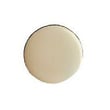
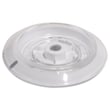
- If agitation gets weak or noisy, inspect common wear items like the agitator dog 80040.
| Symptom | Common cause | Example part for this model |
|---|---|---|
| Won’t drain or drains slowly | Clogged or failing pump | Washer drain pump (WP3363394) |
| Won’t spin or agitates poorly | Drive coupling wear | Washer motor coupling (285753A) |
| Loud during spin, poor shifting | Gearcase wear | Gear case (3360629) |
| Won’t start or stops when lid opens | Lid switch issue | Washer lid switch (WP8054980) |
A washer near the 10 to 15 year mark often needs a few key parts to stay reliable. Catching early signs (slow drain, weak agitation, new noises, off-balance spinning) helps prevent bigger repairs and protects the basket, gearcase, and motor.
Last updated: February 2026
How to hard reset a Kenmore Elite washer?
To hard reset your Kenmore Elite washer model 11023012100, unplug it for 1 minute, then restore power and clear the controls by pressing and holding Power/Cancel for about 10 seconds. This resets the control state and often restores normal operation.
- Press Power/Cancel to turn the washer off.
- Unplug the washer (or switch the breaker off).
- Wait 60 seconds.
- Plug the washer back in (or turn the breaker on).
- Press and hold Power/Cancel for 10 seconds.
- If the console has a Pause/Cancel button, press and hold it for 10 seconds as well.
A reset clears a “stuck” control, but it will not fix a failed part. These quick checks catch the most common causes:
- Lid not closing or not sensing closed: inspect the lid strike area; consider the washer lid switch WP8054980.
- Washer will not drain: check for a kinked drain hose or a clogged pump; the washer drain pump WP3363394 is a common fix when the pump is jammed or leaking.
- No fill or slow fill: verify both faucets are fully open; the washer inlet valve 285805 can fail electrically or clog at the screens.
- Agitation problems: worn agitator dogs can cause weak or no agitation; see the agitator dog 80040.
| Symptom after reset | Most likely area to inspect | Common related part |
|---|---|---|
| Won’t start or stops when lid opens | Lid sensing | Washer lid switch |
| Hums but won’t drain | Drain path / pump | Washer drain pump |
| Won’t fill or fills slowly | Water supply / valve screens | Washer inlet valve |
| Agitates poorly | Agitator drive components | Agitator dog |
A hard reset is the fastest way to clear a control glitch after a power interruption or an interrupted cycle. If the same symptom returns, focusing on the lid switch, drain pump, or inlet valve prevents repeat shutdowns and incomplete washes.
For cycle and control details specific to this washer, follow the button functions and operating suggestions in the 11023012100 owner's manual.
Last updated: February 2026
How to force a Kenmore Elite washer to drain?
For the Kenmore Elite washer model 11023012100, the fastest way to force a drain is to stop the cycle, unplug the washer, then manually remove water through the drain system (hose or pump). After the tub is empty, clear the clog or replace the failed drain component so it drains normally again.
- Unplug the washer (or switch off the breaker) before touching hoses or the pump.
- Bail out water with a cup and bucket if the tub is very full.
- Gravity-drain through the drain hose: lower the hose into a shallow pan or floor drain (keep control of the hose to prevent spills).
- If gravity-draining is slow or stops, check for a blockage at the pump; the pump is a common restriction point.
- Use the 11023012100 owner's manual for your model’s operating suggestions and control layout.
Most “won’t drain” problems come from a restriction or a failed pump.
- Kinked, crushed, or clogged drain hose
- Clogged pump inlet (lint, coins, socks)
- Failed pump motor or broken impeller
- Lid switch not closing (some cycles will not drain/spin if the lid switch is open)
- Suds overload (too much detergent can slow draining)
| Symptom | Most likely area | Model-matched part to consider |
|---|---|---|
| Hums but won’t move water | Drain pump jammed or failed | Washer drain pump WP3363394 |
| Drains sometimes, then stops | Partial clog at pump or hose | Washer inner drain hose WPW10358149 |
| Won’t drain and won’t spin | Safety interlock issue | Washer lid switch WP8054980 |
Forcing a drain gets laundry out and prevents overflow, but the real fix is removing the restriction or restoring the drain path. Running the washer with a weak or blocked drain can lead to repeated stoppages and poor spin performance.
Last updated: February 2026
What model is my Kenmore Elite washer?
Your Kenmore Elite washer’s model number is printed on the model and serial number plate. On Kenmore Elite model 11023012100, the plate is typically under the lid on the top panel area; on some washers it can also be on the back of the control panel or on the cabinet near the bottom. Use the exact model number to match the right parts and manual.
Check these common locations in this order:
- Under the washer lid (often on the top rim or underside area near the opening)
- On the back of the control panel
- On the left or right side of the main cabinet near the bottom edge
- Behind the door or in the door jamb (common on front-load washers)
The label usually shows a model number and a serial number. We use the model number to pull the correct Kenmore parts diagrams, and we use the serial number to help confirm production details when there are multiple versions.
- Write the model number exactly as shown (all digits, no spaces)
- Take a clear photo of the label before ordering parts
- Match the model number on your label to the model number on the 11023012100 owner's manual
| Label item | What it’s used for | Example format |
|---|---|---|
| Model number | Correct parts list, diagrams, and troubleshooting info | 11023012100 |
| Serial number | Manufacturing run details and version checks | Letters and numbers |
Kenmore Elite washers can look similar across model series, but internal components (like the drive system, lid switch, or drain pump) can differ. Using the exact model number helps ensure you get the right replacement part the first time.
Last updated: February 2026
Is it worth repairing a Kenmore washing machine?
Yes, repairing a Kenmore washer is usually worth it when the machine is otherwise in good shape and the fix targets a common wear part. For Kenmore Elite model 11023012100, many repairs (drain, fill, no-agitate, no-spin) are straightforward and cost far less than replacing the washer.
We use a simple cost and condition check:
- Repair cost vs. replacement: if the repair is well under the cost of a comparable new washer, repair wins.
- What failed: wear parts (couplers, pumps, lid switches) are typically good-value repairs.
- Overall condition: rusted cabinet, chronic leaks, or repeated major failures point toward replacement.
- Downtime: if you need same-day laundry and parts lead time is long, replacement may be more practical.
- DIY vs. service: DIY labor can make a borderline repair clearly worthwhile.
These are frequent fixes on direct-drive Kenmore top-load designs like this one:
- Won’t agitate or spin: check the washer motor coupling 285753A
- Won’t drain or leaves water in tub: check the washer drain pump WP3363394
- Won’t start or stops when lid opens: check the washer lid switch WP8054980
- Agitator “slips” or doesn’t move clothes well: check the agitator dog 80040
| Symptom | Likely area | Typical outcome |
|---|---|---|
| No drain | Drain pump or hose | Restores drain and spin enable |
| No agitate/no spin | Motor coupling | Restores drive between motor and transmission |
| Dead/no run | Lid switch | Restores safety interlock so motor can run |
| Poor wash action | Agitator dogs/agitator | Restores proper agitator movement |
Use the 11023012100 owner's manual to confirm cycle settings and operating suggestions, then do these basics:
- Verify the washer fills to the selected water level
- Confirm the lid closes and latches firmly
- Listen for the drain pump during drain (motor sound but no water movement suggests a blockage or pump issue)
- Look for oil leaks under the gear case area (more expensive repair)
- Check for burning smell or repeated tripped breaker (stop and diagnose before replacing parts)
A targeted repair on a proven Kenmore Elite platform often restores full performance for years, especially when you replace the correct wear part (pump, coupling, lid switch) instead of guessing.
Last updated: February 2026
Is Kenmore Elite high end?
Yes. Kenmore Elite is Kenmore’s higher-end line, and the Kenmore Elite washer model 11023012100 reflects that with premium, feature-focused design elements like multiple water level and temperature settings, a TRIPLE ACTION agitator, and a larger-capacity basket. For the exact feature set on your unit, use the 11023012100 owner's manual.
On model 11023012100, “Elite” typically shows up as more cycle and care options, higher capacity, and comfort features aimed at better cleaning and quieter operation.
Common high-end traits you’ll see on this platform include:
- Multiple water level selections to match load size
- Multiple water temperature selections for fabric care
- Multiple speed settings
- Specialty cycles such as Ultra Clean, Prewash, and Soak
- A porcelain-on-steel basket and balance/noise-control features
| Feature area | Kenmore Elite (like 11023012100) | Standard models (typical) |
|---|---|---|
| Cycles and options | More specialty cycles and settings | Fewer cycle combinations |
| Capacity | Often larger “super capacity” style tubs | Often standard capacity |
| Noise and vibration | More insulation and balance features | More basic sound control |
| Cleaning action | Enhanced agitator or wash action design | More basic wash action |
If you’re deciding whether to repair or upgrade, “Elite” usually means the washer is worth maintaining when the fix is straightforward (for example, a no-agitate issue caused by worn agitator components).
If your washer isn’t agitating well, these model-matched parts are common wear items:
- Agitator dog 80040 (helps the agitator “grab” and move clothing)
- Washer motor coupling 285753A (connects motor power to the drive system)
- Washer lid switch WP8054980 (can stop spin/agitate if the lid isn’t sensed closed)
Last updated: February 2026
What is the cubic foot of my Kenmore washer model 11023012100?
The Kenmore Elite washer model 11023012100 is a top-load, agitator-style washer marketed as Super Capacity Plus; that capacity class is 3.5 cu. ft. Use the 11023012100 owner's manual to confirm the listed capacity and any basket-load guidance for your exact configuration.
Use the manual and the model/serial tag so you are matching the correct spec to your exact unit.
- Check the specifications section in the 11023012100 owner's manual
- Look at the model and serial number plate (commonly under the lid area)
- Match your control panel and feature set to the manual (water level, temperature, speed options)
- Use the manual’s loading guidance to avoid overfilling above the top row of holes (if present)
This helps when comparing Kenmore top-load washers by “capacity class” wording.
| Label used on washer | Typical capacity (cu. ft.) | What it’s best for |
|---|---|---|
| Standard capacity | 2.5 to 3.1 | Everyday mixed loads |
| Super Capacity Plus | 3.5 | Larger mixed loads, more towels |
| Extra-large top load | 3.6 to 4.3+ | Bulky items (varies by design) |
Knowing the cubic-foot capacity helps prevent overloading (poor cleaning and out-of-balance spinning) and makes it easier to compare like-for-like when shopping for a replacement washer or evaluating performance.
If the washer seems to “hold less” because clothes are not turning over well, worn agitator parts can cause that symptom; a common wear item is the agitator dog 80040.
Last updated: February 2026