Installation guide
 Owner’s manual
 Error Codes


Is GE Cafe considered high end?
Yes. GE Café is generally considered a high-end line within GE’s mainstream lineup, known for upgraded styling, premium finishes, and feature-rich designs compared with standard GE models. It is positioned below true luxury lines, but it delivers a “built-upgrade” look and feel for many kitchens.
Where GE Café fits in the GE lineup
GE organizes its offerings in tiers. Café typically sits above standard GE and is often compared with GE Profile for premium features and design-forward options.
- Standard GE: core features, value-focused
- GE Profile: premium features, performance upgrades
- GE Café: premium features plus elevated design and customizable styling
- Luxury lines: higher-end pricing, more specialized designs and materials
For your GE GFE27GGDCBB bottom-mount refrigerator, the exact “tier” is best confirmed by the model’s feature set and finish options listed in the owner's manual.
What “high end” usually means for refrigerators
“High end” is usually about a mix of design, convenience features, and ownership experience, not just cooling performance.
- More refined exterior styling and handles
- Enhanced interior lighting and storage layouts
- More advanced controls and temperature management
- Quieter operation targets (though modern compressors can sound different)
- Higher typical purchase price than entry-level models
Quick comparison (typical positioning)
| Line | Design focus | Feature level | Typical price tier |
|---|---|---|---|
| Standard GE | Basic | Good | $ |
| GE Profile | Modern | Better | $ |
| GE Café | Statement design | Better to best | $ to $$ |
| Luxury lines | Premium materials | Best | $$ |
Why it matters
If you are deciding whether to repair or upgrade, “high end” affects parts cost expectations and feature complexity. For example, premium models often rely more on electronics such as a user interface or main control board.
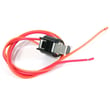
If you are troubleshooting cooling or temperature swings on a feature-rich refrigerator, common repair paths can include checking airflow and sensors such as the refrigerator temperature sensor WR55X10025.
Last updated: February 2026
Is a top mount or bottom mount fridge better?
A bottom-mount refrigerator like the GE GFE27GGDCBB is better when you want fresh-food items at eye level and more organization features; a top-mount is better when you want simpler access to the freezer and typically lower purchase cost. Use your kitchen habits to decide.
Quick comparison
| Feature | Top-mount (freezer on top) | Bottom-mount (freezer on bottom) |
|---|---|---|
| Fresh-food access | You bend more often | More eye-level access (less bending) |
| Freezer access | Easier, at chest level | More bending, often a pull-out drawer |
| Organization | Usually simpler shelving | Often more bins, drawers, and zones |
| Energy use | Often slightly lower | Often slightly higher (varies by model) |
| Best for | Frozen-food heavy households | Fresh-food heavy households |
Why a bottom-mount can be the better choice (like GFE27GGDCBB)
GE bottom-mount designs commonly focus on usable fresh-food space and convenience features. For example, this model family is described with features such as interior LED lighting and space-saving ice storage that can free up shelf room. See the feature descriptions in the owner's manual.
Bottom-mount advantages
- Fresh-food shelves sit higher, so daily items are easier to reach
- Pull-out freezer drawers help you see items without digging
- Often more flexible storage (bins, wide drawers, adjustable shelving)
- Good fit if you cook often and use produce, dairy, and leftovers daily
When a top-mount is the better pick
A top-mount refrigerator is usually the better match when you prioritize freezer access and simplicity.
Top-mount advantages
- Freezer is easier to reach without bending
- Typically fewer moving parts in the freezer area (simpler layout)
- Often a lower upfront cost for similar capacity
- Works well if you use frozen foods more than fresh foods
What matters most when choosing
Use these decision points to pick the layout that will feel best every day:
- How often you use the freezer vs. fresh-food section
- Whether bending for a freezer drawer is a comfort issue
- Need for wide drawers and flexible organization
- Kitchen clearance for doors and drawers (check dimensions in the installation guide)
Why it matters
The “better” refrigerator is the one that matches how you shop and cook. Layout affects daily ergonomics, how well food stays organized, and whether you actually use all the storage you are paying for.
Last updated: February 2026
What is the most common problem with a GE refrigerator?
The most common GE refrigerator complaint is not cooling correctly, which is usually caused by airflow issues (evaporator fan, frost buildup), dirty condenser areas, or a control/sensor problem. On your GE GFE27GGDCBB bottom-mount refrigerator, start with basic airflow and temperature checks in the owner's manual.
Most common issues we see (and what they look like)
- Not cooling or warm sections: fresh food warm, freezer OK (or both warm)
- Unusual noises: hum, whoosh, clicks, pops, cracking (many are normal)
- Ice maker not making ice: empty ice bucket, slow production
- Water dispenser issues: no water, weak flow, dripping after dispensing
- Water leaks/puddles: water under crisper or on floor
- Door not sealing: moisture, frost, door alarm, temperature swings
- Lights out: interior LEDs not working
Quick checks before replacing parts
- Confirm temperature settings and allow 24 hours after any adjustment.
- Make sure vents inside the refrigerator are not blocked by food.
- Clean dust from condenser areas (restricted heat release can reduce cooling).
- If water or ice is affected, flush and purge the water system (air in the line is common after filter changes).
- Listen for fan operation; a failed evaporator fan often causes warm temperatures.
Common parts tied to these symptoms (for GFE27GGDCBB)
| Symptom | Likely system | Example part on this model |
|---|---|---|
| Warm fridge/freezer, poor airflow | Evaporator airflow | Refrigerator fan motor assembly WR60X26866 |
| Temps swing, inconsistent cooling | Temperature sensing/control | Refrigerator temperature sensor WR55X10025 |
| No water or slow water | Filtration or supply restriction | Refrigerator water filter RPWFE |
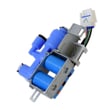
| No ice or no water at all | Water supply control | Refrigerator water inlet valve WR57X10098 |
Why it matters
Cooling and airflow problems can quickly lead to food spoilage and ice maker failures. Catching a weak fan, clogged filter, or sensor issue early helps your GE GFE27GGDCBB hold steady temperatures and reduces strain on the compressor.
Normal sound note
Many newer GE refrigerators make sounds older units did not; the manual describes hums, whooshing, and clicking as normal operating noises in many situations.
Last updated: February 2026