 Installation guide
 Owner’s manual
 Error Codes


How much to replace a whirlpool dryer motor?
Replacing the drive motor in our Whirlpool WGD5610XW1 27-inch gas dryer typically runs $200 to $600 total (parts plus labor). The motor itself is usually the biggest cost; for this model, the drive motor 279787 is a common replacement part, and labor often adds 1 to 2 hours.
Typical cost breakdown
- Motor part: commonly $150 to $300+ (model-specific pricing varies)
- Labor: commonly $150 to $300 depending on service rates and access
- Service call/diagnostic: commonly $75 to $150 (sometimes applied to the repair)
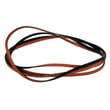
- Optional related parts: belt, rollers, idler, and seals if wear is present
| Scenario | What you pay for | Typical total |
|---|---|---|
| DIY motor replacement | Motor (and any worn wear-items) | $150 to $350+ |
| Pro motor replacement | Motor + labor + diagnostic | $300 to $600+ |
| “Refresh” while open | Motor + wear-item kit | $200 to $450+ |
Parts that often make sense to replace at the same time
If the dryer is already opened up, we usually recommend checking the drum support and belt-drive wear items because they can cause noise, drag, and repeat failures.
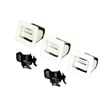
- Drive motor 279787
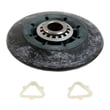
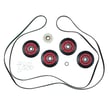
- Dryer repair kit 4392067
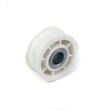
- Dryer drum support roller WPW10314173
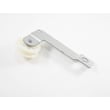
- Dryer idler pulley 279640
Why the price varies so much
A motor job can be straightforward or time-consuming depending on cabinet access, seized fasteners, and whether the blower wheel or drum support system is also worn. Venting restrictions can also make the dryer run hotter and harder, which increases stress on moving parts.
Before you spend money: quick checks
We use these checks to confirm the motor is the real problem before buying parts:
- Unplug the dryer; try turning the drum by hand (it should turn with steady resistance).
- Listen for a hum with no drum movement (often points to a stuck drum, seized roller, or motor issue).
- Check for burning smell or repeated shutdowns; inspect airflow and lint buildup.
- Follow the electrical and safety guidance in the WGD5610XW1 installation guide before servicing.
Last updated: February 2026
What does E1 mean on a whirlpool dryer?
On the Whirlpool WGD5610XW1 gas dryer, an E1 error points to a temperature-sensing problem, most often the dryer not reading temperature correctly during a cycle. In many cases, the fix is restoring proper airflow and then checking the temperature sensor circuit.
What to check first (fast, no parts)
- Unplug the dryer (or switch off the breaker) before inspecting anything.
- Clean the lint screen and confirm it seats fully; a damaged screen can let lint bypass.
- Inspect the vent path for restrictions (crushed flex vent, clogged wall hood, long run).
- Confirm the dryer is level; the moisture sensing system needs a level cabinet to work correctly.
- If the dryer shuts off quickly, try a timed dry cycle after cleaning the venting to see if behavior changes.
Likely causes and what they look like
| What’s happening | Most common cause | What to do |
|---|---|---|
| E1 appears and clothes stay damp | Poor airflow causing abnormal temps | Clear venting, verify strong exhaust outside |
| E1 appears and cycle ends early | Sensor reading out of range | Check wiring connections to the sensor, then test sensor |
| E1 appears intermittently | Loose connection or heat buildup | Inspect harness plugs, clean lint buildup inside cabinet |
Parts that commonly relate to E1 on this model
If airflow is good and E1 returns, the temperature sensor is a common next step.
Why it matters
A dryer that cannot sense temperature correctly can over-dry, under-dry, or stop the cycle early. Fixing airflow first prevents repeat errors and helps protect the burner system and controls.
For model-specific safety, venting, and leveling details, follow the WGD5610XW1 installation guide.
Last updated: February 2026
What is the life expectancy of a Whirlpool dryer?
A Whirlpool dryer like model WGD5610XW1 typically lasts 10 to 13 years. With consistent maintenance (especially airflow and lint control) and normal household use, it’s common to reach the upper end of that range before major repairs become frequent.
Typical lifespan and what changes it
Most dryers fail early due to heat and airflow stress, not “age” alone. These factors have the biggest impact:
- Venting that is too long or restricted (long dry times, overheating)
- Heavy loads and frequent overloading (extra strain on drum support and drive system)
- Skipping lint screen cleaning (reduced airflow)
- Running the dryer in cold spaces below about 45°F (cycle performance issues)
- Worn moving parts (rollers, idler pulley) causing drag and longer run times
For model-specific operating and care guidance, follow the WGD5610XW1 owner’s manual.
Maintenance that adds years (high impact)
Use this checklist to protect the motor, burner system, and drum support components:
- Clean the lint screen every load; replace a damaged screen such as screen W10120998 if it won’t seal or is torn
- Keep the exhaust route as straight and short as possible; use rigid metal venting when you can
- Avoid long vent runs; excessive length and elbows reduce performance and can shorten dryer life (the installation guide includes vent length limits)
- Do not overload; stop if you hear thumping or squealing (often rollers or idler pulley)
- Level the dryer so the drum tumbles correctly and sensor cycles work as designed
Quick “repair vs. replace” guide
| What you’re seeing | What it usually means | Typical next step |
|---|---|---|
| Squealing, rumbling, thumping | Wear in rollers or idler system | Inspect drum support and belt path; consider a maintenance kit |
| Long dry times | Vent restriction or airflow issue | Clean venting; verify vent length and elbows |
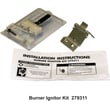
| Heat issues on a gas dryer | Ignition or sensor problem | Check igniter and sensors; service if needed |
Why it matters
A gas dryer depends on steady airflow for safe, efficient drying. When venting is restricted or the drum drive drags, the dryer runs hotter and longer, which accelerates wear on key parts and shortens overall life.
Last updated: February 2026








