 Owner’s manual
 Error Codes


Can I replace dishwasher parts myself?
Yes, for the GE PDW7300G00BB dishwasher, we recommend DIY replacement only for straightforward, low-risk items (filters, spray-arm hardware, some door trim). For anything involving wiring, grounding, or major disassembly, disconnect power and water first and follow the PDW7300G00BB owner's manual; many repairs are best handled by a qualified technician.
Good DIY repairs vs. technician repairs
Typically DIY-friendly (basic tools, minimal risk):
- Cleaning or replacing the dishwasher filter WD12X10109
- Replacing the dishwasher float assembly WD12X10047
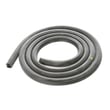
- Replacing the dishwasher drain hose WD24X10014 (if access is easy and you can prevent leaks)
- Replacing the dishwasher tub gasket WD08X10018 (if the leak source is clearly the door/tub seal area)
- Replacing the dishwasher detergent dispenser assembly WD12X10163 (if you are comfortable removing the inner door panel)
Usually technician-level (higher shock/leak risk, more teardown):
- Drain or circulation motor issues, pump and motor assembly replacement
- Electrical troubleshooting (control module, wiring, grounding)
- Persistent leaks where the source is unclear
Safety steps we follow before any repair
The manual emphasizes that turning the dishwasher off does not disconnect power; we treat this as a hard rule.
- Shut off power at the breaker (not just the control panel)
- Shut off the water supply valve
- Protect the floor; keep towels and a shallow pan ready
- Take photos of wire and hose routing before removal
- Restore power only after checking for leaks and secure connections
Quick decision table
| What you’re doing | DIY difficulty | Main risk | Best first step |
|---|---|---|---|
| Filter/float service | Low | Poor cleaning, overfill | Clean and inspect for debris |
| Drain hose swap | Medium | Leaks, siphoning | Verify routing and clamps |
| Dispenser replacement | Medium | Door leaks, wiring mix-up | Label connectors, check gasket seating |
| Pump/motor work | High | Shock, leaks, misdiagnosis | Confirm symptoms and error codes |
Why it matters
Dishwashers combine water and electricity in a tight space. Doing simple maintenance yourself can restore cleaning and draining performance, but incorrect wiring, grounding, or sealing can create shock hazards or leaks.
Last updated: February 2026
How to fix leaking GE Cafe dishwasher corner baffle replacement?
On the GE PDW7300G00BB dishwasher, a leaking lower corner is often caused by a worn or mis-seated corner tub baffle. Replacing it is usually a straightforward press-fit job: clean the corner thoroughly, slide the new baffle into position, and press it firmly so it seals.
Before you start (safety and prep)
- Turn off power at the breaker (or wall switch, if your dishwasher is on one).
- Shut off the water supply under the sink.
- Pull the lower rack out for working room.
- Wipe the tub corner dry so you can see the leak path clearly.
- Keep detergent and rinse aid off the seal area; residue can prevent a tight seal.
Corner baffle replacement steps
- Remove the old corner baffle by pulling it straight out of the tub corner (work slowly to avoid tearing pieces off).
- Clean the tub corner and sealing surfaces:
- Remove soap film, grease, and grit.
- Rinse and dry the area completely.
- Align the new baffle with the tub corner channel.
- Slide it into place and press firmly along the full length so it seats evenly.
- Run a short cycle and watch the corner during fill and wash to confirm the leak is gone.
For model-specific diagrams and part location guidance, use the PDW7300G00BB owner’s manual.
Quick checks if it still leaks
- Confirm the baffle is fully seated with no gaps or twists.
- Inspect the door seal area for nicks or debris that could redirect water.
- Check for oversudsing (using non-dishwasher detergent can cause suds and leaks).
- Make sure large items are not blocking spray arms and blasting water toward the door corner.
What to replace vs. what to inspect
| Symptom | Most likely cause | What to do |
|---|---|---|
| Leak only at one lower corner | Corner baffle not sealing | Reseat or replace baffle |
| Leak during heavy wash action | Spray pattern hitting corner | Re-load, check spray arm obstructions |
| Foamy water, leak appears random | Oversudsing | Drain/reset, use proper detergent |
Why it matters
A properly seated corner baffle helps keep wash water inside the tub during high-pressure spray. If it is loose or hardened, water can escape at the corner and mimic a door gasket leak.
Last updated: February 2026
Is GE profile considered high end?
Yes. GE Profile is generally considered GE’s higher-end mainstream line, positioned above standard GE models with more premium styling and feature sets; it is not GE’s top luxury tier (that is typically Café and Monogram). For your GE PDW7300G00BB dishwasher, use the PDW7300G00BB owner's manual to confirm the exact features and options included.
Where GE Profile fits in the GE lineup
GE uses multiple product lines that typically stack like this:
| GE line | Typical positioning | What you usually get |
|---|---|---|
| GE (standard) | Value to mid-range | Core cycles and basic controls |
| GE Profile | Mid-to-high end | More features, upgraded design, quieter operation on many models |
| Café / Monogram | Premium to luxury | Highest-end finishes, advanced features, pro-style options |
What “high end” usually means in a dishwasher
When customers call a dishwasher “high end,” they usually mean a combination of:
- Quieter operation (lower dBA ratings on many premium models)
- More wash options and sensor-based cycles
- Better rack adjustability and loading flexibility
- Improved filtration and spray coverage
- More durable, premium-looking controls and trim
How to confirm what YOUR PDW7300G00BB includes
Because GE Profile features vary by model and year, we recommend checking these items for PDW7300G00BB:
- Control panel options (cycle selections, delay start, heated dry)
- Rack features (adjusters, tines, basket configuration)
- Filtration and spray components
- Warranty coverage and what parts are included
If you are troubleshooting performance (not cleaning, not draining, or error beeps), the fastest next step is to match symptoms to GE’s diagnostics in GE electronic dishwasher error codes.
Why it matters
Knowing the product tier helps set expectations for noise level, cycle options, and repair decisions. If you are comparing repair cost versus replacement, “Profile” models often justify repair longer because they typically include more premium components and features.
Last updated: February 2026
What is the average lifespan of a GE dishwasher?
A GE dishwasher typically lasts 10 to 12 years. For your GE PDW7300G00BB, lifespan depends most on water quality, how often it runs, and routine care like keeping the filter area clean and protecting the door seal; see the PDW7300G00BB owner’s manual for model-specific use and care guidance.
What affects lifespan the most
- Hard water and scale buildup can stress the inlet valve and internal components.
- Detergent choice and amount matter; too much detergent with soft water can cause etching and residue.
- Loading habits that block spray arms reduce cleaning performance and increase wear.
- Door seal protection (keeping sharp items from contacting the seal) helps prevent leaks.
- Regular cleaning of the filter area and tub reduces odors and pump strain.
Quick care checklist (best return for the effort)
- Use dishwasher detergent only; avoid hand-dish soap to prevent oversudsing.
- Keep detergent fresh and dry; fill the dispenser right before starting.
- If water is hard, consider a water softener to reduce mineral buildup.
- Periodically clean the filter area; replace a worn filter if needed (example: dishwasher filter WD12X10109).
- If draining slows, inspect the drain path and replace a damaged hose (example: dishwasher drain hose WD24X10014).
Typical lifespan expectations
| Dishwasher condition | What you’ll notice | What it usually means |
|---|---|---|
| Well maintained | Quiet wash, consistent cleaning | Often reaches 10 to 12 years |
| Moderate buildup/wear | Longer cycles, spots/film | May need periodic part replacements |
| Heavy wear or poor water quality | Leaks, poor cleaning, frequent issues | Shorter lifespan (often under 10 years) |
Why it matters
Knowing the typical 10 to 12-year lifespan helps you decide when a repair (like a drain hose, filter, or pump-related part) makes sense versus planning for replacement, especially if multiple symptoms show up at once.
Last updated: February 2026
What is the most common problem with GE dishwashers?
The most common GE dishwasher problem is a drain issue: the unit finishes with water left in the bottom because the filter, drain path, or drain pump is restricted. On the GE PDW7300G00BB, we also commonly see cleaning complaints tied to water temperature, loading, and detergent use.
Most common symptoms and what they usually mean
- Standing water after the cycle: clogged filter area, blocked drain hose, or a weak drain pump
- Dishes not clean: low inlet water temperature, spray arm blockage, or improper loading
- Won’t start or stops mid-cycle: door not fully latched or control needs a reset (wait 5 to 10 seconds after restoring power before pressing Start)
- Leaks: door seal area issues or overfilling related to water valve problems
- Detergent problems (cup not opening, suds): wrong detergent type or dispenser issues
Quick checks we recommend first (PDW7300G00BB)
- Confirm the door is fully closed; this model requires the door closed to select cycles.
- Use only automatic dishwasher detergent (not hand dish soap) and keep detergent dry until you are ready to start.
- Run hot water at the sink before starting if your inlet water temperature tends to be low.
- Check for loading issues; large items can block the detergent dispenser or spray arms.
- If draining is poor, inspect the drain path and hose routing for kinks or clogs.
Parts that commonly solve these problems
| Problem area | What to inspect | Model-matched part to consider |
|---|---|---|
| Not draining | Drain hose for kinks/clogs | Dishwasher drain hose WD24X10014 |
| Not draining | Drain pump performance/noise | Dishwasher drain pump WD26X10016 |
| Poor cleaning | Filter restriction | Dishwasher filter WD12X10109 |
| Detergent not dispensing | Dispenser door/latch failure | Dishwasher detergent dispenser assembly WD12X10163 |
Why it matters
Drain restrictions and poor water flow reduce wash performance and can lead to odors, standing water, and repeat cycle failures. Correct detergent use and proper loading also prevent suds, etching, and dispenser or spray arm blockages.
For cycle selection, detergent guidance, and operating details specific to your unit, use the PDW7300G00BB manual.
Last updated: February 2026





