Owner’s manual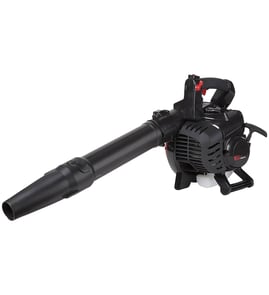


Are gas leaf blowers being phased out?
Yes. Gas leaf blowers like the Craftsman 358797310 are being phased out in many areas because of local and state rules focused on noise and emissions; the exact status depends on where you live. Your blower can still be used where allowed, and good maintenance keeps it running cleaner and quieter (see the 358797310 owner's manual).
Most phase-outs fall into one of these buckets:
- Sales restrictions: new gas blowers may not be sold in certain states or cities.
- Use restrictions: gas blowers may be limited by day/time, season, or decibel rules.
- Fleet transitions: parks, schools, or contractors may be required to switch to battery equipment.
- Enforcement varies: some places focus on complaints and noise hours.
Use this quick checklist before you buy parts or plan seasonal cleanup:
- Check your city or county ordinance for “leaf blower” or “outdoor power equipment.”
- Look for noise-hour rules (many ordinances restrict early morning and late evening use).
- Confirm whether rules apply to 2-cycle engines specifically.
- If you use it for work, check jobsite requirements (HOAs and commercial properties often have stricter rules).
The manual recommends operating at the lowest throttle that gets the job done and using reasonable hours. These steps also reduce noise and smoke:
- Use fresh, properly mixed fuel (this model uses a 40:1 gas-to-2-cycle-oil mix).
- Fix fuel leaks promptly; replace cracked lines with the ayp lawn & garden equipment fuel line, large 530069216.
- Keep the air path clear and the unit fully assembled with guards in place.
- Avoid extended idling; run only as needed.
| Rule type | What you might see | What to do |
|---|---|---|
| Sales ban | No new gas blower sales | Maintain your current unit; consider battery for future purchases |
| Use ban | No gas blower operation | Switch to electric or manual tools in that area |
| Time limits | Allowed only certain hours/days | Schedule yard work inside permitted windows |
Phase-outs are usually driven by noise complaints and air-quality goals. Running your Craftsman blower correctly, with the right fuel mix and intact fuel system, helps reduce smoke, odor, and nuisance noise.
Last updated: February 2026
Why are gas-powered leaf blowers bad?
Gas-powered leaf blowers can be “bad” mainly because they create exhaust fumes (including carbon monoxide), generate high noise, and can throw debris at high speed. With the Craftsman 358797310 blower/vac, safe operation and good ventilation are essential to reduce health and injury risks (see the 358797310 owner's manual).
- Exhaust exposure: Two-cycle engines produce fumes; carbon monoxide can build up in enclosed or poorly ventilated areas.
- Noise: Extended use can disturb others; many communities restrict operating hours.
- Flying debris: The air stream can launch rocks, sticks, and dirt that can injure people or damage property.
- Fire risk during fueling: Gasoline is highly flammable; spills and ignition sources create real hazards.
- Vibration and fatigue: Long sessions can contribute to numbness or discomfort; take breaks and use proper grip.
Follow these practices from the manual to reduce the biggest risks:
- Use the blower outdoors and in well-ventilated areas; avoid unventilated spaces where carbon monoxide can build up.
- Keep bystanders, children, and pets at least 30 feet away during operation.
- Inspect the area first and remove hard debris (rocks, glass, wire) that can ricochet.
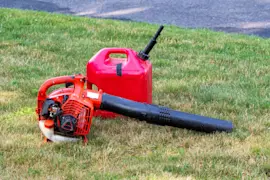
- Fuel safely: mix and pour fuel outdoors, stop the engine before refueling, wipe up spills, and move at least 10 feet away from the fueling spot before starting.
- Operate at the lowest throttle that gets the job done to reduce noise and debris scatter.
| Feature | Gas-powered blower | Corded/battery electric blower |
|---|---|---|
| Exhaust fumes | Yes (CO risk) | No on-tool exhaust |
| Noise | Typically higher | Typically lower |
| Runtime | Refuel to continue | Limited by cord/battery |
| Maintenance | Fuel system, carburetor, spark plug | Usually less routine maintenance |
Most complaints about gas blowers come down to air quality, noise, and safety. Using the correct operating position, keeping distance from others, and handling fuel carefully helps you get the performance benefits of a gas blower while reducing the downsides.
Last updated: February 2026
What is the life expectancy of a gas leaf blower?
A gas leaf blower like the Craftsman 358797310 typically lasts about 8 to 10 years with normal homeowner use and routine maintenance (fresh fuel mix, clean air filter, and periodic tune-ups). Heavy use, poor fuel storage, and skipped maintenance shorten lifespan.
- Fuel quality and storage: Old fuel and ethanol-related varnish are the fastest way to ruin a carburetor.
- Air filtration: A dirty air cleaner increases wear on the piston and cylinder.
- Cooling and cleanliness: Debris buildup can cause overheating.
- Operating habits: Running wide open all the time and frequent hot restarts add stress.
- Wear items: Spark plug, air cleaner, and tubes are normal wear parts (called out as expendable in the 358797310 owner's manual).
- Mix the correct 2-cycle fuel and oil ratio listed in the 358797310 owner's manual.
- Use fresh fuel; empty the tank for storage, or run the engine dry before long storage.
- Inspect and replace cracked fuel lines; the fuel line, large 530069216 is a common fix for hard starting and fuel leaks.
- Keep the air cleaner clean and replace it when it will not come clean.
- Check fasteners and vibration points; tighten loose screws and bolts.
| Usage pattern | Typical life | What usually fails first |
|---|---|---|
| Occasional seasonal homeowner use | 8 to 10 years | Fuel system (lines, carburetor) |
| Regular weekly use | 5 to 8 years | Carburetor, starter parts |
| Heavy or commercial-like use | 3 to 5 years | Engine wear (compression loss) |
Most “worn out” gas blowers are actually suffering from fuel-system issues (stale fuel, clogged carburetor passages, brittle fuel lines). Staying ahead of fuel and filtration maintenance keeps performance strong and delays expensive engine repairs.
Last updated: February 2026
How to find Craftsman leaf blower model number?
For a Craftsman gas leaf blower, the model number is printed on the unit’s ID label; for model 358797310, it’s shown as 358.797310 in the documentation. Check the housing (often the back, bottom, or near the starter/fuel tank area), then write the full number exactly as shown.
We recommend checking these common label locations first:
- Back of the blower housing
- Bottom of the unit near the base
- Near the recoil starter cover
- Near the fuel tank or handle area
- On a sticker or metal plate attached to the housing
Model numbers must match character-for-character to get the right Craftsman parts list.
- Copy every digit (and any dots or dashes)
- Watch for look-alikes (0 vs O, 1 vs I)
- If the label is dirty, wipe it clean before reading
- Take a clear photo so you can zoom in
- Keep the number with your maintenance notes for future tune-ups
| What you’re looking at | What it’s used for | Example for this blower |
|---|---|---|
| Model number | Identifies the exact blower version | 358797310 (often printed as 358.797310) |
| Part number / part ID | Identifies a replacement part | Fuel line, large: 530069216 |
Craftsman blowers can look similar across different model series, but parts like the carburetor, fuel line routing, and switches can vary. Using the exact model number helps us match the correct diagrams and parts for your 2-cycle blower/vac.
For diagrams and the full parts list tied to your exact model, use the 358797310 owner’s manual.
Last updated: February 2026
Are leaf blowers 2 stroke or 4 stroke?
Most gas leaf blowers are 2-cycle (2-stroke) engines, and the Craftsman model 358797310 is specifically a 2-cycle blower/vac. That means the engine uses a gas and 2-cycle oil mixture for lubrication rather than a separate oil sump like many 4-stroke engines.
Check these quick identifiers before you fuel up:
- The label or manual says “2-cycle” or “2-stroke”.
- Fuel instructions mention mixing gasoline with 2-cycle oil.
- There is no separate engine oil fill cap or dipstick.
- The unit is lighter and typically has a higher-pitched engine sound.
- The carburetor and fuel system are designed for mixed fuel.
For this model, the 358797310 owner's manual calls it a 24cc 2-cycle gasoline powered blower/vac.
| Feature | 2-stroke (2-cycle) blower | 4-stroke blower |
|---|---|---|
| Fuel | Gas mixed with 2-cycle oil | Straight gas |
| Engine oil | No separate crankcase oil | Separate oil to check/change |
| Common tune-up items | Spark plug, air filter, fuel filter | Spark plug, air filter, oil service |
Old fuel and cracked fuel lines are top causes of poor running on small engines.
- Use fresh fuel; don’t store mixed fuel for long periods.
- Keep the fuel cap sealing properly to avoid leaks and vapor loss.
- Inspect fuel lines for softness, cracks, or loose fit.
- Replace brittle fuel lines to prevent air leaks that lean out the mixture.
- If the engine surges or won’t idle, inspect carburetor diaphragms and gaskets.
If you’re chasing a fuel leak or air leak, the ayp lawn & garden equipment fuel line, large 530069216 is a common replacement item for this model.
Using straight gas in a 2-cycle engine can quickly damage the piston and cylinder because the oil in the fuel mix provides the lubrication. Using the correct fuel mix also helps the carburetor, fuel filter, and spark plug last longer.
Last updated: February 2026
Who makes Craftsman leaf blowers?
Craftsman is a brand name; Craftsman leaf blowers (including model 358797310) are made for Craftsman by outside manufacturers, and the maker can vary by model and production run. For model-specific identification details, we use the labeling and documentation in the 358797310 owner's manual.
The most reliable way is to match the model number and any engine or emissions label information to the documentation.
- Check the product ID label for 358797310 and any additional code (often a prefix or revision).
- Look for an engine family or emissions label; many small 2-cycle engines list this.
- Compare label wording to the parts list and diagrams in the manual.
- Use the parts list to confirm you are servicing the correct configuration.
- If you are ordering tune-up items, match by part ID, not by appearance.
Craftsman-branded outdoor power equipment is commonly produced by different OEMs over time. That is why the same Craftsman product type (gas leaf blower) can have different carburetors, fuel lines, or ignition parts depending on the exact model.
| What you are doing | Why the manufacturer matters | What to use instead |
|---|---|---|
| Ordering parts | Similar-looking parts may not fit | Model number 358797310 and part IDs |
| Troubleshooting | Procedures can differ by engine design | The 358797310 owner's manual troubleshooting table |
| Maintenance | Fuel mix and storage steps are model-specific | Manual-based maintenance schedule |
For this Craftsman gas blower, proper fuel handling and storage are critical for reliability. The manual advises draining fuel for storage periods of 30 days or longer, or using fuel stabilizer; it also notes a 40:1 2-cycle oil mix guidance in the storage section.
If you are diagnosing hard starting, stalling, or fuel leaks, these model-listed parts are common suspects:
- Ayp lawn & garden equipment fuel line, large 530069216 (cracked or loose fuel line)
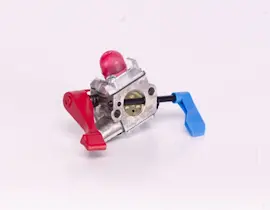
- Carburetor 545081882 (metering issues, clogged passages)
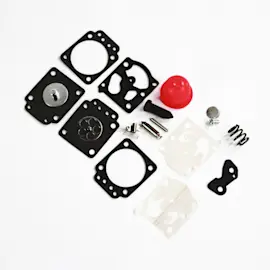
- Husqvarna lawn & garden equipment engine carburetor diaphragm and gasket kit 530069844 (stiff diaphragm, air leaks)
Knowing who “made” the unit is less important than matching the exact model number (358797310) and using the correct Craftsman-compatible parts and procedures; that prevents fit issues and reduces repeat failures.
Last updated: February 2026
Why does my Craftsman leaf blower keep dying?
On a Craftsman gas leaf blower model 358797310, repeated stalling is usually caused by a fuel delivery problem (old fuel, restricted fuel flow, or carburetor issues) or an air flow restriction. Start by refreshing the fuel mix and checking the fuel lines and air filter per the 358797310 owner's manual.
- Dump old fuel and refill with fresh 40:1 2-cycle fuel mix.
- If fuel sat 30 days or longer, drain the tank and run the engine until it stops to empty the carburetor.
- Check the fuel cap venting; a plugged vent can starve the engine.
- Inspect fuel lines for cracks, soft spots, or loose connections; replace if damaged.
- Clean the air filter; a clogged filter can make the engine run rich and stall.
- Clear debris from vents and tubes; restricted air flow can cause poor running.
If the blower runs briefly and quits, we focus on fuel flow first.
| Symptom | Most likely area | What to do | Related part (if needed) |
|---|---|---|---|
| Starts, then dies after a few seconds | Fuel supply restriction | Replace cracked or hardened fuel line | Ayp lawn & garden equipment fuel line, large 530069216 |
| Runs only with choke partly on | Carburetor metering issue | Rebuild carburetor or replace carburetor | Husqvarna lawn & garden equipment engine carburetor diaphragm and gasket kit 530069844 or carburetor 545081882 |
| Dies when you move the switch or handle | Ignition stop circuit | Inspect wiring and switch for shorts | Lawn & garden equipment kill switch 530069572 |
Alcohol-blended fuel can attract moisture during storage, leading to separation and acid formation that damages the fuel system. For storage of 30 days or longer, draining the fuel system prevents gum deposits and hard-start or stall complaints.
- Move at least 10 feet away from the fueling area before starting.
- Keep vents and discharge tubes clear of debris.
- Disconnect the spark plug before maintenance (except carburetor adjustments).
Last updated: February 2026
What is the best gas-powered leaf blower on the market?
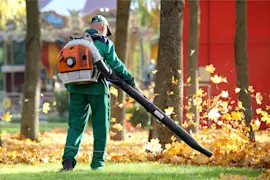
The “best” gas-powered leaf blower is the one that matches your yard size and debris type. For many homeowners, a mid-range handheld blower is the best fit; for large properties and heavy leaf season, a backpack blower is the best choice. Use the 358797310 owner's manual to confirm your Craftsman 358797310 blower/vac specifications and operating limits.
- Blower type: Handheld for quick cleanup; backpack for long sessions.
- Air volume (CFM): Higher CFM moves more leaves and wet debris.
- Air speed (MPH): Higher MPH helps break up stubborn piles.
- Weight and comfort: Lighter units reduce fatigue; harness quality matters on backpacks.
- Starting and maintenance: 2-cycle fuel mix, air filter care, and carburetor condition affect reliability.
| Yard and debris | Best style | What to prioritize | Typical performance range |
|---|---|---|---|
| Small to medium yard, dry leaves | Handheld | Low weight, easy control | 300 to 500 CFM |
| Medium yard, mixed debris | Handheld (higher output) | Balance of CFM and weight | 400 to 600 CFM |
| Large yard, heavy leaf season | Backpack | High CFM, comfort | 600 to 900+ CFM |
A “best blower” still performs poorly with fuel delivery or carburetor issues. These fixes restore power on many 2-cycle blowers:
- Replace cracked or soft fuel line with ayp lawn & garden equipment fuel line, large 530069216
- If it surges, won’t idle, or only runs on choke, rebuild the carburetor metering side using husqvarna lawn & garden equipment engine carburetor diaphragm and gasket kit 530069844
- If the engine randomly shuts off, check the stop switch and wiring; replace lawn & garden equipment kill switch 530069572 if it intermittently grounds ignition
Choosing the right CFM/MPH and blower style saves time, reduces fatigue, and prevents overbuying. For most homeowners, the best value is the lightest blower that clears debris efficiently at a reasonable throttle setting.
Last updated: February 2026