 Installation guide
 Owner’s manual


Are Bosch dishwashers a standard size?
Yes. The Bosch SHE68T56UC is designed to fit a standard built-in dishwasher opening; the installation guide shows a typical cutout width of about 23 5/8 to 24 1/4 inches (600 to 616 mm) and an opening height around 33 7/8 inches (860 mm).
What “standard size” means for built-in dishwashers
Most U.S. built-in dishwashers are made to fit a 24-inch-wide cabinet opening. For the SHE68T56UC, the key is matching the cabinet cutout dimensions and ensuring the enclosure is square.
- Measure the cabinet opening width, height, and depth before ordering or installing
- Confirm the dishwasher can be enclosed on the top, back, and both sides by cabinetry
- Check door swing clearance if the dishwasher sits near a wall or corner
- Plan routing for the water line, drain hose, and power connection
- Follow the drain hose high-loop requirement to help prevent draining problems
Quick fit check (typical cutout targets)
| Measurement | Typical target shown in install guide | What to verify in your kitchen |
|---|---|---|
| Opening width | 23 5/8 to 24 1/4 in (600 to 616 mm) | Opening is within range and square |
| Opening height | About 33 7/8 in (860 mm) | Countertop height and leveling room |
| Drain hose routing | High loop at least 20 in off cabinet floor | Space to secure hose up high |
Why it matters
A “standard size” dishwasher still needs the right cutout and hose routing. If the opening is too tight or the drain hose is routed low, you can end up with poor door alignment, vibration, or draining issues.
Where to confirm the exact dimensions and requirements
Use the installation guide for the official cutout diagram, corner-clearance guidance, and the drain hose routing requirement for the Bosch SHE68T56UC.
Last updated: January 2026
Can I still use my appliance with an E22 error?
We do not recommend running your Bosch SHE68T56UC dishwasher with an E22 error because it commonly points to a drain restriction that can leave dirty water in the tub and strain the drain system. Clear the blockage first, then run a short cycle to confirm normal draining (see the SHE68T56UC user manual).
What E22 usually means on this Bosch dishwasher
E22 is typically tied to a draining problem, most often caused by a clogged filter area or a restriction in the drain path.
Common causes to check first:
- Food debris blocking the filter and sump area
- Kinked, pinched, or partially blocked drain hose
- Drain pump area obstructed by glass, labels, or seeds
- Sink/disposer connection clogged (if the dishwasher drains through it)
- Standing water from a previous interrupted cycle
Safe, practical steps before you run another cycle
Turn off power at the breaker before opening panels or handling wiring.
- Cancel/drain the cycle (if the controls allow it) and see whether water evacuates.
- Remove and clean the filters and the sump area.
- Inspect the drain hose routing for kinks and high-loop/air-gap issues (confirm routing in the SHE68T56UC installation guide).
- Check the sink drain/disposer inlet where the dishwasher hose connects.
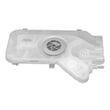
- If the hose and filters are clear but it still will not drain, inspect the drain pump cover area; the cover 00611322 is commonly involved when clearing obstructions.
When a part is likely involved
If E22 returns immediately after cleaning and the dishwasher still leaves water behind, a drain-path component may be failing or restricted.
| Symptom | Most likely area | What to do next |
|---|---|---|
| Water remains in tub | Drain hose or pump area | Inspect hose and pump inlet for blockage |
| Drains slowly | Partial clog in hose/sump | Deep clean filters and check hose routing |
| Intermittent E22 | Debris shifting in sump | Recheck sump area and pump cover |
Why it matters
Running with poor draining can cause redeposit on dishes, odors, and extra load on the drain system. Fixing the restriction first protects wash performance and helps prevent repeat error codes.
Last updated: January 2026
What is the most common problem with a Bosch dishwasher?
The most common Bosch dishwasher problem is a drain issue (standing water or not draining), followed closely by “not drying” complaints that are often normal for Bosch condensation drying. For Bosch model SHE68T56UC, start with the filter, drain path, and cycle settings in the SHE68T56UC user manual.
Most common symptoms and what they usually mean
- Standing water in the tub: clogged filter area, blocked drain hose, or a drain pump obstruction
- Dishes not dry: condensation drying behavior, rinse aid low, or plastics holding water
- Stops mid-cycle: door not fully latched, interrupted cycle, or a fault code
- Not filling: water supply issue or a failed inlet valve
- Not cleaning well: spray arm blockage, loading issues, or restricted water flow
Quick checks we recommend first (fast, no parts)
- Cancel the cycle and try a drain function (if your control panel offers it).
- Clean the filter area and remove debris from the sump.
- Confirm the sink drain or garbage disposer knockout is open (new installs are a common cause).
- Check for kinks or clogs in the drain line routing.
- Review any displayed fault codes using Bosch dishwasher error codes.
When a part is commonly involved
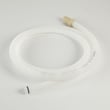
If the dishwasher will not fill or fills inconsistently, the water inlet valve is a frequent suspect. If it will not drain and the drain path is clear, the drain hose can be the restriction.
| Symptom | Common cause | Part that may help (if needed) |
|---|---|---|
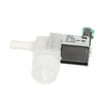
| Won’t fill / fills slowly | Supply issue or valve not opening | Dishwasher water inlet valve 10023852 |
| Not draining | Blocked hose or drain path | Dishwasher drain hose 00744881 |
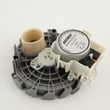
| Poor cleaning | Water not directed correctly | Dishwasher diverter assembly 00751950 |
Why it matters
Drain and fill problems can trigger error codes, leave dirty water in the tub, and reduce cleaning performance. Drying concerns can also be “false alarms” on Bosch units if the cycle options and rinse aid settings are not matched to your load.
Last updated: January 2026





