Installation guide
 Owner’s manual




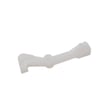
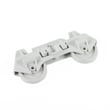
Can I replace dishwasher parts myself?
Yes, for the Amana ADB1100AWS3 dishwasher, we see many customers successfully replace common wear parts themselves (filters, drain hoses, rack stops, and even some pumps) using basic tools and careful shutoff steps. For electrical testing or water-leak repairs, follow the ADB1100AWS3 owner's manual and use extra caution.
What you can usually DIY on ADB1100AWS3
These repairs are typically straightforward when you can access the part and you are comfortable removing a few screws or clamps:
- Clean or replace the filter (helps with poor cleaning and debris)
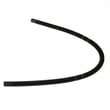
- Replace a drain hose (helps with leaks or drain routing issues)
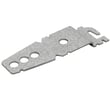
- Replace an upper rack rail stop (fixes rack coming off the track)
- Replace a water inlet valve (addresses no-fill or slow-fill symptoms)
- Replace a drain pump (addresses standing water after a cycle)
Common DIY parts for this model
| Symptom | Part that often fixes it | Example part for ADB1100AWS3 |
|---|---|---|
| Dishes not drying well | Heater circuit issue | Element assembly W10518394 |
| Dishwasher will not fill | Fill valve problem | Dishwasher water inlet valve W11175771 |
| Water left in tub | Drain pump not pumping | Dishwasher drain pump W10876537 |
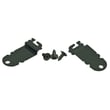
| Upper rack slides off | Rail stop broken | Dishwasher dishrack slide rail stop, upper WP8565925 |
Safety and prep steps (do these first)
- Turn off power at the breaker; do not rely only on the door switch
- Shut off the water supply under the sink
- Place towels under the front of the dishwasher before disconnecting hoses
- Take a photo of wire and hose routing before removal
- Run a short test cycle after reassembly to check for leaks
When we recommend a technician
Some jobs are still DIY-friendly, but they go faster and safer with pro help:
- Diagnosing wiring, switches, or console issues (requires meter testing)
- Replacing door panels or inner door components that affect sealing
- Persistent leaks after replacing hoses or clamps (may involve sump or tub sealing)
Why it matters
Replacing the right part yourself can restore cleaning, draining, and drying performance quickly, and it helps prevent secondary damage like water leaks, odor buildup, or pump strain.
Last updated: February 2026
Why is my Amana dishwasher leaking from the bottom?
A bottom leak on your Amana ADB1100AWS3 dishwasher almost always comes from a loose or damaged hose connection, a failing pump seal/grommet, or a drain issue that causes water to escape under the tub. Start by removing the toe-kick and inspecting for active drips during fill and drain using the ADB1100AWS3 installation guide.
Quick checks we recommend first
- Turn off power at the breaker and shut off the water supply before touching any hoses.
- Remove the lower access (toe-kick) panel and look for wet trails, mineral deposits, or rust marks.
- Run a short cycle and watch for the first moment water appears (fill, wash, or drain).
- Check the household water supply line connection at the inlet valve area for seepage.
- Check the drain hose routing for kinks and confirm it is secured and not rubbing a sharp edge.
Most common causes of a leak underneath
| When it leaks | Most likely area | What to look for |
|---|---|---|
| During fill | Water inlet connection/valve | Drip at fitting, cracked line, loose clamp |
| During wash | Pump/sump area | Water slinging from below, steady drip at seal |
| During drain | Drain hose or drain pump | Leak only when draining, wet hose end or pump body |
Parts that commonly fix bottom leaks on ADB1100AWS3
If you see water around the pump or sump area, these model-matched parts are common solutions:
- Dishwasher pump grommet WPW10538166: helps seal the pump area; a worn grommet can seep or drip.
- Dishwasher drain hose 8269144A: replace if split, brittle, or leaking at the ends.
- Dishwasher water inlet valve W11175771: replace if the valve body or fittings seep during fill.
- Dishwasher drain pump W10876537: replace if the pump housing leaks or the shaft seal is failing.
Why it matters
Even a small leak under the dishwasher can damage flooring and cabinets, and it can also lead to electrical issues if water reaches wiring or the junction box. Catching the leak source early usually keeps the repair limited to a hose, clamp, or pump seal.
Tips to pinpoint the exact source
- Dry everything under the unit, then place paper towels under the inlet area, sump, and drain pump to identify the first wet spot.
- If the leak appears only during drain, focus on the drain hose and drain pump.
- If the leak starts immediately when filling, focus on the inlet valve and supply connection.
Last updated: February 2026
Why is my Amana dishwasher not dispensing soap?
On the Amana ADB1100AWS3, soap usually does not dispense because the dispenser door is blocked, the latch is sticking, or the dishwasher is not getting hot enough water to complete the wash sequence that triggers the release. Start with simple obstructions, then check for wash performance and heating issues.
Quick checks that fix most soap-dispensing problems
- Make sure a tall pan or utensil is not blocking the dispenser door.
- Confirm the detergent cup is dry before you add detergent (wet detergent can clump and stick).
- Check the dispenser door for hardened detergent buildup; clean it with hot water and a soft brush.
- Verify the rinse aid cap and nearby items are not interfering with the dispenser door swing.
- Run hot water at the kitchen sink for 30 to 60 seconds before starting the cycle.
What to inspect if the dispenser still will not open
If the dispenser door feels sticky or does not “snap” closed and open smoothly, the latch mechanism is the most common cause. If the dishwasher is washing poorly or leaving gritty residue, restricted filtration or a heating problem can also prevent proper detergent release and dissolving.
| Symptom | Most likely cause | What to do next |
|---|---|---|
| Dispenser door stays shut | Latch jammed or detergent buildup | Clean and test door movement by hand |
| Door opens but soap remains | Water not hot enough or weak spray | Preheat water; check spray and filters |
| Soap clumps in cup | Cup was wet or humid storage | Dry cup; store detergent sealed |
| Poor wash results overall | Filter restriction | Clean/inspect the filter |
Parts that commonly relate to this issue
- If you suspect poor circulation or weak spray, inspect the filter area and sump for debris; a damaged or missing filter can reduce wash pressure. Consider checking the dishwasher filter WPW10463906.
- If dishes are coming out cool and detergent is not dissolving, a heating problem is likely; the heater circuit is tied to wash performance. Consider testing the element assembly W10518394 with a multimeter.
Why it matters
When detergent does not release at the right time, the dishwasher cannot break down grease and food soils. That leads to cloudy glassware, residue, and odors, and it can also cause detergent to cake inside the dispenser.
Model-specific help
Use the ADB1100AWS3 owner's manual for the correct detergent type, loading guidance (to avoid blocking the dispenser), and cycle selection tips for your exact control panel.
Last updated: February 2026