Owner’s manual
 Error Codes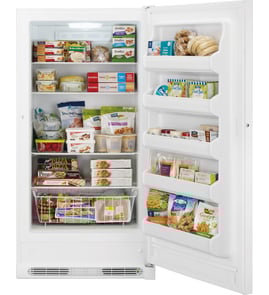





How long does a Maytag upright freezer last?
A Maytag upright freezer like model MZF34X16DW00 typically lasts 12 to 16 years with normal home use and basic maintenance. Keeping the condenser area clean, maintaining good airflow, and fixing frost or door-seal issues quickly helps you reach the high end of that range.
Typical lifespan and what affects it
Most upright freezers fail from wear in the sealed system (compressor, evaporator) or from airflow and defrost problems that overwork the compressor.
Common factors that shorten lifespan:
- Dirty condenser area or blocked airflow around the cabinet
- Door left ajar, torn gasket, or frequent warm-air leaks
- Heavy frost buildup from defrost system issues
- Hot garage or tight enclosure that traps heat
- Overloading shelves so air cannot circulate
Quick maintenance checklist (5 to 10 minutes)
Use these habits to reduce compressor run time and temperature swings:
- Set the freezer to 0°F (typical recommended target)
- Keep at least a few inches of clearance around the freezer for ventilation
- Wipe the door gasket and confirm it seals evenly all the way around
- Defrost and remove heavy frost if you see ice restricting airflow
- Keep the interior vents clear so cold air can move top to bottom
Parts that commonly relate to “it’s not lasting as long” symptoms
If the freezer runs constantly, warms up, or builds frost, these are common suspects on this model:
| Symptom | Common system involved | Example part for MZF34X16DW00 |
|---|---|---|
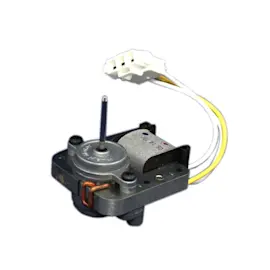
| Warm temps, fan noise, poor airflow | Evaporator fan system | Evaporator motor WPW10359880 |
| Frost buildup, warming, long run times | Defrost system | Refrigerator defrost heater WPW10316428 |
| Temps swing, inaccurate readings | Temperature sensing | Refrigerator thermistor WPW10383615 |
Why it matters
A freezer that is forced to run longer to maintain temperature puts extra stress on the compressor and sealed system. Reducing frost, improving airflow, and keeping temperature control accurate helps the freezer hold 0°F with less run time, which extends overall life.
For model-specific operating tips and care steps, follow the MZF34X16DW00 owner's manual.
Last updated: February 2026
How much does a 16 cubic foot freezer weigh?
A 16 cubic foot upright freezer like the Maytag MZF34X16DW00 typically weighs about 150 to 190 lb when empty. The exact shipping and net weight varies by insulation, cabinet design, and whether shelves and bins are installed; confirm your unit’s listed weight in the MZF34X16DW00 owner’s manual.
Typical weight range (what to expect)
Most freestanding 16 cu. ft. upright freezers fall into a fairly tight range.
- Net (empty) weight: ~150 to 190 lb
- Shipping weight: often 10 to 30 lb higher than net weight
- Heavier units usually have thicker insulation and more robust shelving
- Lighter units may have fewer interior components or a lighter door design
| Weight type | What it includes | Typical range |
|---|---|---|
| Net (empty) | Freezer as installed | 150 to 190 lb |
| Shipping | Packaging plus accessories | 160 to 220 lb |
How to get the most accurate number for your freezer
Use these quick checks to pin down the right weight for moving, flooring, or delivery planning.
- Look for “net weight” and “shipping weight” in the specifications section of the MZF34X16DW00 owner’s manual
- If you are moving it, remove food, shelves, and bins to reduce handling weight
- Measure doorways and plan for a dolly; upright freezers are tall and awkward even when not extremely heavy
- If the freezer must be laid down, follow the manual guidance; after transport, let it stand upright before plugging in
Why it matters
Weight affects safe lifting, dolly selection, and floor loading (especially on upper floors). It also helps you estimate whether two people can handle the freezer or if you should plan for a third helper.
Last updated: February 2026
What are the dimensions of an 18 cubic foot freezer?
An 18 cubic foot freezer is usually about 30 to 33 inches wide, 28 to 32 inches deep, and 60 to 67 inches tall for an upright; chest models are typically longer and lower. For Maytag model MZF34X16DW00, use the published dimensions in the MZF34X16DW00 owner’s manual because this model is a 16 cu. ft. class upright, not an 18 cu. ft. unit.
Typical exterior dimensions by freezer style
Use these ranges to plan space, doorways, and ventilation; then confirm the exact spec for the freezer you are buying.
- Uprights are taller and narrower; they fit kitchens and utility rooms well
- Chests are wider and shorter; they need more floor space but open from the top
- Depth changes with handle style and whether you include hinges and door protrusions
- Height can change slightly with leveling legs and hinge covers
- Clearance is required around the cabinet for airflow and efficient cooling
| Freezer type | Typical width | Typical depth | Typical height |
|---|---|---|---|
| Upright (18 cu. ft. class) | 30 to 33 in. | 28 to 32 in. | 60 to 67 in. |
| Chest (18 cu. ft. class) | 55 to 66 in. | 28 to 34 in. | 32 to 36 in. |
How we recommend measuring so it fits
- Measure the installation space (width, depth, height)
- Measure the tightest path to the location (doorways, turns, stairs)
- Plan for door swing and shelf or basket access
- Follow the ventilation clearance listed in the MZF34X16DW00 owner’s manual
Why it matters
“18 cubic feet” describes storage capacity, not cabinet size. Two freezers with the same capacity can have very different footprints, and proper clearance helps the compressor and condenser remove heat efficiently.
Last updated: February 2026
What is the most common freezer problem?
The most common problem we see on the Maytag MZF34X16DW00 upright freezer is poor cooling caused by restricted airflow or warm air leaking in, which often leads to heavy frost, temperature swings, and longer run times. Start with door sealing and airflow checks, then move to the defrost and fan system using the MZF34X16DW00 owner’s manual.
Quick checks that fix the most issues
- Make sure the door closes fully and nothing is holding it open (bins, packages, shelves).
- Confirm interior vents are not blocked by food packages.
- Set the control to a normal mid setting and give it 24 hours to stabilize.
- Clean dust from the condenser area and make sure there is airflow around the cabinet.
- Look for heavy frost on the back wall; that points to a defrost or airflow problem.
What the symptoms usually mean
| Symptom | Most likely cause | What to check first |
|---|---|---|
| Freezer not cold enough | Airflow restriction or evaporator fan issue | Listen for fan, check for blocked vents |
| Heavy frost buildup | Defrost system problem or door leak | Door seal, then defrost heater circuit |
| Runs constantly | Warm air leak, dirty condenser area, or sensor issue | Door closing, airflow, temperature sensor |
| Noisy humming or clicking | Fan blade hitting ice or failing motor | Ice buildup, fan blade condition |
Parts that commonly relate to these problems
If airflow or defrost issues keep coming back, these model-compatible parts are often involved:
- Refrigerator evaporator fan blade WP2169142 (noise, weak airflow)
- Evaporator motor WPW10359880 (fan not running or intermittent)
- Refrigerator defrost heater WPW10316428 (heavy frost, warm temps)
- Refrigerator thermistor WPW10383615 (temperature swings, odd cycling)
Why it matters
Airflow and defrost problems snowball fast in an upright freezer: frost blocks the evaporator, the fan cannot move cold air, and the compressor runs longer. Fixing the root cause protects food quality and reduces energy use.
Last updated: February 2026