Owner’s manual
 Error Codes


What is the most common problem with a GE refrigerator?
The most common GE refrigerator complaint is not cooling properly (fresh food too warm, freezer too warm, or both). On the GE GSH25JFTFBB side-by-side, this often ties back to airflow issues, control settings, or a defrost-related problem; our GSH25JFTFBB owner's manual troubleshooting chart is the fastest place to start.
Quick checks we recommend first
- Confirm the temperature controls are set correctly (avoid the coldest setting as a default).
- Make sure doors fully close and nothing is holding a door open.
- Allow time after changes; many refrigerators need about 24 hours to stabilize after a setting change or first plug-in.
- Listen for normal operating sounds during defrost (sizzling, popping, dripping can be normal).
- Check for heavy frost buildup on the freezer back wall (points to a defrost problem).
Common GE refrigerator problems and what they usually mean
| Symptom | Most common cause | What to do next |
|---|---|---|
| Not cooling or warm temps | Airflow blocked, dirty condenser area, control setting, fan issue | Clear vents, verify settings, check fans |
| Strange noises | Normal refrigerant movement or defrost sounds | Compare to the normal sounds list in the manual |
| Ice maker not making ice | New install delay, water supply issue, freezer not cold enough | Wait 12 to 24 hours after hookup; verify water supply |
| Water dispenser weak/no water | Clogged filter or valve issue | Replace filter; check inlet valve |
| Water leaking | Defrost drain issue or water line connection | Inspect drain pan area and water line fittings |
| Door not closing | Misaligned door, gasket issue, overloaded bins | Level unit; inspect gasket and hinges |
| Light not working | Bulb failed or door switch issue | Replace bulb; check door switch |
Parts that commonly solve these symptoms on GSH25JFTFBB
If troubleshooting points to a failed component, these model-matched parts are common fixes:
- Cooling/temperature sensing: refrigerator temperature sensor WR55X10025
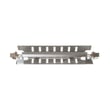
- Defrost system: refrigerator defrost heater WR51X10055 and refrigerator defrost bi-metal thermostat WR50X10065
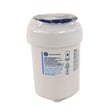
- Water and ice supply: GE refrigerator water filter MWFP and refrigerator water valve WR57X33326
- Air circulation: rca refrigerator evaporator fan motor WR60X10185
- Interior lighting: refrigerator light bulb 40A15
Why it matters
When a refrigerator is not cooling, food safety and compressor run time are the big concerns. Catching airflow, defrost, or water-supply problems early helps the GE GSH25JFTFBB maintain stable temperatures and prevents repeat icing, leaking, and ice maker issues.
Last updated: February 2026
What are the most reliable side-by-side refrigerators?
The most reliable side-by-side refrigerators are typically the ones with simpler designs, fewer dispenser and ice-maker complications, and strong parts availability. For a GE side-by-side like model GSH25JFTFBB, long-term reliability usually comes down to steady temperatures, a healthy defrost system, and consistent water supply and filtration (see the owner's manual).
What to look for when comparing reliability
- Simple controls and fewer “extra” features that add failure points
- Proven cooling system performance (stable fresh food and freezer temps)
- A solid defrost system (heater, thermostat, sensors) to prevent ice buildup
- Easy-to-service ice and water dispenser design
- Readily available replacement parts for common wear items
Common reliability drivers (and the parts that support them)
Even the best brands can have issues; the most reliable units are the ones you can keep in spec with routine maintenance and timely part replacement.
| Reliability area | What you notice at home | Common fix path |
|---|---|---|
| Temperature stability | Food freezing in fresh food section or warm spots | Check airflow, then test sensors like the refrigerator temperature sensor WR55X10025 |
| Defrost performance | Frost sheet on freezer back wall, weak airflow | Inspect defrost components such as the refrigerator defrost heater WR51X10055 |
| Water and ice system | Slow fill, hollow cubes, dispenser issues | Replace filter like the GE refrigerator water filter MWFP and verify supply |
| Door sealing | Moisture, frost near door edges | Inspect gaskets and door alignment |
Why “simple” often equals “reliable”
Side-by-side refrigerators run a lot of components at once: evaporator fan, defrost system, temperature sensing, and (often) ice and water dispensing. The more complex the dispenser and ice-maker setup, the more likely you are to see clogs, leaks, or freeze-ups over time.
Practical tips to improve reliability on a side-by-side
- Keep condenser area clean so the compressor does not run excessively
- Replace the water filter on schedule to protect valves and improve flow
- Avoid overpacking; blocked vents cause temperature swings
- Confirm doors seal tightly; warm air intrusion drives frost and long run times
- If you hear new “whooshing” or “clicking,” compare to normal sound descriptions in the manual
Last updated: February 2026
What is the average lifespan of a GE refrigerator?
Most GE refrigerators average about 10 to 15 years of service life with normal use. For your GE GSH25JFTFBB side-by-side, consistent maintenance (airflow, clean coils, good door sealing, and stable temperatures) is what most directly determines whether you land closer to 10 years or closer to 15.
Typical lifespan and what affects it most
A refrigerator’s life is usually limited by cooling-system wear, airflow problems, and defrost or ice-maker related issues.
Common factors that shorten lifespan:
- Dirty condenser area that traps heat and overworks the compressor
- Door gasket leaks that cause long run times and temperature swings
- Poor airflow from a failing fan motor
- Frost buildup from a defrost-system problem
- Water supply issues that stress the ice maker and water valve
Maintenance that adds years (high impact)
We recommend these practical habits for GE side-by-side refrigerators:
- Keep the condenser area clean and unobstructed
- Confirm doors close and seal fully; fix gaps promptly
- Replace the water filter on schedule to maintain flow and ice quality
- Keep vents inside the fresh food and freezer sections unblocked
- Listen for changes in fan noise (often an early warning)
Helpful parts that support long life
If you’re addressing cooling, airflow, or water/ice symptoms on this model, these commonly-related parts are available:
| Symptom you notice | What it often points to | Example part for GSH25JFTFBB |
|---|---|---|
| Warm temps or temp swings | Sensor or airflow issue | Refrigerator temperature sensor WR55X10025 |
| No ice or weak water flow | Filter or valve restriction | GE refrigerator water filter MWFP |
| Heavy frost, warm freezer | Defrost system problem | Refrigerator defrost heater WR51X10055 |
Why it matters
A GE refrigerator that runs hotter than normal or runs constantly ages faster because the compressor and sealed system work harder. Simple upkeep (especially airflow and sealing) reduces run time, stabilizes temperatures, and helps the refrigerator reach its expected lifespan.
Quick note about ice maker startup (normal behavior)
If the refrigerator was just installed or reconnected, it can take 12 to 24 hours to begin making ice. Also, the manual notes that leaving the ice maker on without a connected water supply can damage the water valve; we recommend turning the ice maker off until water is connected (see the GSH25JFTFBB owner's manual).
Last updated: February 2026