Error Codes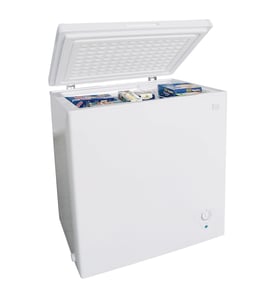



Is the GE chest freezer 7 cu ft any good?
Yes. The GE FCM7DAAWH 7 cu. ft. chest freezer is a solid choice when you want compact, reliable bulk storage; it is typically quiet, holds temperature well, and offers good usable space for its footprint. Like most manual-defrost chest freezers, it will need periodic defrosting.
What you can expect from a 7 cu. ft. GE chest freezer
- Good “extra freezer” capacity for meat, meal prep, and frozen staples
- Stable temperatures once it is fully cooled and not overpacked
- Low noise compared with many upright freezers
- Manual defrost means frost buildup is normal over time
- Simple controls with fewer electronics to troubleshoot
Pros and tradeoffs (quick comparison)
| What matters | Typical experience | What to plan for |
|---|---|---|
| Storage | Big open bin fits bulky items | Add bins/baskets for organization |
| Efficiency | Generally efficient for size | Keep lid seals clean and tight |
| Maintenance | Fewer parts than uprights | Defrost when frost gets thick |
| Convenience | Easy long-term storage | No auto-defrost; interior features vary |
How to get the best performance (and avoid common complaints)
- Let the freezer sit upright after delivery, then run 24 hours before loading heavily.
- Keep it reasonably full (but not jammed); packed air gaps help cold air circulate.
- Minimize lid-open time; warm, humid air drives frost buildup.
- Wipe the lid gasket and rim regularly; a poor seal causes temperature swings and excess frost.
- If you see power issues (intermittent operation, damaged plug), inspect the cord and replace it with the correct power cord WR23X10300.
Why it matters
A 7 cu. ft. chest freezer like the GE FCM7DAAWH is popular because it balances capacity, energy use, and cost. The main “downside” people notice is frost management, which is normal for manual-defrost designs and is easy to control with good loading and lid-seal habits.
Last updated: February 2026
Is there a reset button on chest freezers?
Most chest freezers (including GE model FCM7DAAWH) do not have a dedicated reset button. The practical “reset” is a power reset: unplug the freezer (or switch off the breaker) for about 30 seconds, then restore power and allow time for the control and compressor to restart.
How to reset a GE chest freezer safely
- Unplug the freezer from the outlet (or turn the circuit breaker off).
- Wait 30 seconds.
- Plug it back in (or turn the breaker on).
- Listen for the compressor to start; it may take a few minutes.
- Let temperatures stabilize; full recovery can take several hours after a warm-up or defrost.
If the light is blinking or the freezer seems “dead”
A blinking or non-working indicator light is often caused by a power issue, a loose connection, or a control that needs a power reset.
Quick checks
- Confirm the outlet has power (try a lamp or small appliance).
- Check the cord and plug for damage or looseness.
- Make sure the lid is closing fully and the gasket is sealing.
- Verify the temperature control is not set to “off” (if your control has an off position).
If the cord is damaged or intermittent, replacing it is the right fix for reliable power to the freezer: power cord WR23X10300.
Why it matters
A power reset clears minor control glitches and restores normal operation without replacing parts. If the freezer still will not run after a reset and basic power checks, the issue is typically in the power supply path (cord, connections) or a sealed-system component such as the compressor.
Common symptoms and what they usually point to
| Symptom | Most common cause | What to do first |
|---|---|---|
| No lights, no sound | No power to unit | Check outlet, breaker, then cord |
| Lights on, not cooling | Cooling system not running | Reset power; listen for compressor |
| Runs constantly | Warm load, poor seal, airflow issues | Check lid seal, avoid overloading |
Last updated: February 2026
What is the average lifespan of a chest freezer?
A chest freezer typically lasts 10 to 20 years, and many run about 15 to 16 years with normal use. For your GE FCM7DAAWH chest freezer, steady temperatures, good airflow around the cabinet, and basic upkeep (cleaning and lid-seal care) are what most extend service life.
Typical lifespan and what changes it
Most chest freezers outlast refrigerator-freezers because they hold cold air better and are opened less often.
Common factors that shorten or extend lifespan:
- Room temperature: hot garages and tight closets make the compressor work harder
- Airflow: blocked vents or a dusty condenser area raises operating stress
- Lid gasket condition: air leaks cause longer run times and frost buildup
- Power quality: frequent outages or low voltage can damage electrical components
- Loading habits: overpacking can restrict internal airflow and slow freezing
Maintenance that adds years (simple, high impact)
- Keep the freezer level so the lid seals evenly.
- Leave a few inches of clearance around the cabinet for heat to escape.
- Defrost when frost buildup reaches about 1/4 inch.
- Wipe the lid sealing surface clean; check for gaps or tears.
- If the cord is damaged or loose, replace it rather than taping it; use the correct power cord WR23X10300.
When repair makes sense vs replacement
Use age plus symptoms to decide.
| Freezer age | What we typically see | Practical next step |
|---|---|---|
| 0 to 7 years | Minor issues (seal, handle, cord) | Repair is usually worthwhile |
| 8 to 14 years | Wear shows up (long run times, frost) | Repair if cooling is strong |
| 15+ years | Efficiency drops, major sealed-system risk | Compare repair cost to replacement |
Why it matters
A chest freezer near end-of-life often shows it through longer run times, warming temps, or heavy frost. Catching airflow, sealing, and electrical issues early helps protect food and reduces compressor strain.
Last updated: February 2026
What causes a chest freezer to stop working?
A GE chest freezer like model FCM7DAAWH usually stops working because it is not getting power, the temperature control is not calling for cooling, or a sealed-system component (compressor/start components) has failed. Door sealing and airflow issues can also prevent proper freezing.
Quick checks we recommend first
- Confirm the outlet has power (try a lamp or small appliance).
- Reset the home breaker or replace a blown fuse if needed.
- Make sure the power cord is fully seated and not damaged; see power cord WR23X10300.
- Set the control colder and wait 15 to 30 minutes for the compressor to attempt to start.
- Check the lid gasket area for gaps, frost buildup, or a lid that is not closing squarely.
- Verify the freezer is not packed so tightly that cold air cannot circulate around items.
What the symptoms usually mean
| Symptom | Most common cause | What to do next |
|---|---|---|
| Completely dead (no sound) | No power, bad cord, house breaker/fuse | Verify outlet power; inspect/replace cord |
| Runs but not freezing | Poor lid seal, warm room, overloading, sealed-system issue | Improve airflow and sealing; then troubleshoot cooling |
| Clicking or humming then stops | Start device issue or compressor problem | Unplug, wait 10 minutes, retry; plan deeper diagnosis |
| Frost or moisture around rim | Lid not sealing, cabinet sweating | Clean rim, check alignment, reduce humidity |
Parts that can be involved (when a repair is needed)
These are examples of parts on this model that may come up during diagnosis:
- Compressor WR87X10006 (sealed-system cooling component)
- Refrigerator filter dryer WR86X25269 (sealed-system component used during refrigerant service)
- Breaker strip WR40X10010 (helps reduce sweating/condensation around cabinet edges)
Why it matters
A freezer that is losing power or failing to start can lead to rapid temperature rise and food spoilage. Catching simple issues early (power, cord, lid seal, loading) helps you avoid unnecessary sealed-system repairs.
Last updated: February 2026
Can a chest freezer seal be replaced?
Yes. The lid gasket (seal) on a GE chest freezer like model FCM7DAAWH is a replaceable part when it’s torn, hardened, or no longer sealing evenly. Replacing a failed seal stops warm-air leaks that cause frost buildup, longer run times, and temperature swings.
How to confirm the seal is the problem
Before buying parts, we check for simple issues that mimic a bad gasket.
- Clean the gasket and cabinet rim; residue can hold the lid open
- Do the paper test: close the lid on a strip of paper; it should resist pulling out all around
- Look for gaps at corners or along the hinge side
- Verify the freezer is level so the lid closes squarely
- Check for items inside that prevent full closure
What replacement usually involves
Most chest-freezer gaskets install by pressing into a channel or securing under a retainer, then warming and shaping for a uniform seal.
| Step | What you do | What to watch for |
|---|---|---|
| Prep | Unplug freezer; wipe rim and lid | Keep water out of electrical areas |
| Remove | Pull old gasket from the lid mounting groove | Note how corners are seated |
| Install | Work the new gasket in evenly around the lid | Avoid twists and stretched sections |
| Set the seal | Close lid for several hours | Recheck for gaps after it relaxes |
Getting the correct gasket for FCM7DAAWH
Gaskets are model-specific and must match the lid design. If you do not see a lid gasket listed for FCM7DAAWH in the parts shown for this model, use the model number to search for the exact gasket by description (for example, “gasket” or “lid seal”) and confirm it matches your freezer’s lid style.
- Search using the full model number: FCM7DAAWH
- Compare photos and measurements listed for the gasket
- Match the mounting style (press-in channel vs. fastened)
- Replace the gasket if it is torn, permanently flattened, or won’t seal after cleaning
Why it matters
A tight seal keeps humid air out; that reduces frost, protects food quality, and helps the compressor run less.
For help confirming you have the right model number before ordering, use how to find your appliance model number (and what it means for parts).
Last updated: February 2026