Owner’s manual
 Error Codes
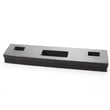



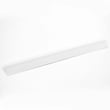
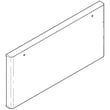
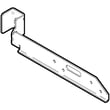
How to remove bottom grille on GE refrigerator?
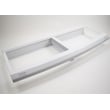
On the GE ZFGP21HZCSS bottom-mount refrigerator, the bottom grille (base grille) typically comes off by releasing its retaining clips or removing a couple of screws (model variations exist). Once released, pull the grille straight out from the bottom front of the cabinet.
- Unplug the refrigerator (or switch off power at the breaker) for safety.
- Pull the refrigerator straight out a few inches if you need more hand room (avoid twisting it sideways).
- Look along the top edge and corners of the grille for:
- Phillips-head screws, or
- Snap-in tabs/clips
- If you see screws, remove them and set them aside.
- If it is snap-in, grip the grille near both ends and pull straight outward to pop it free.
- Lift and pull the grille away from the cabinet.
- Hidden screws: Some grilles have screws at the ends or slightly underneath.
- Stuck tabs: Pull evenly from both sides; twisting can crack the grille.
- Toe-kick clearance: If the refrigerator is tight to the floor, pulling it straight out slightly helps.
- Ice maker water line and power cord: When moving the unit, do not roll over either one.
Align the grille with the openings, then secure it using the same retention method.
| Grille style | What you will see | How it comes off |
|---|---|---|
| Screw-mounted | 2 (typical) Phillips screws | Remove screws, pull grille forward |
| Snap-in | Plastic tabs/clips, no screws | Pull straight out to release tabs |
We remove the bottom grille to access and clean the condenser area, check airflow, and reach components like the condenser fan area. Proper removal also helps prevent floor damage when pulling the refrigerator out.
For model-specific handling and safety notes (including moving the refrigerator straight out), use the owner's manual.
Last updated: February 2026
Is a top mount or bottom mount fridge better?
A bottom-mount refrigerator like the GE ZFGP21HZCSS is better for most households because the fresh-food section sits at eye level, so everyday items are easier to reach and organize. A top-mount is often the better pick if you want the simplest layout and typically lower energy use.
| Feature | Bottom-mount (like ZFGP21HZCSS) | Top-mount |
|---|---|---|
| Fresh food access | Easier (less bending) | More bending |
| Freezer access | More bending | Easier |
| Organization | Strong (drawers, baskets) | Basic |
| Energy use | Often slightly higher | Often slightly lower |
| Price/complexity | Often higher/more features | Often lower/simpler |
- Choose bottom-mount if you use fresh food most and want better day-to-day ergonomics.
- Choose top-mount if you use the freezer most and want a straightforward, budget-friendly design.
- If you store lots of frozen foods, a top-mount can feel more convenient.
- If you meal prep with fresh ingredients, bottom-mount usually feels more efficient.
- If you have mobility or back concerns, bottom-mount reduces bending for the most-used compartment.
The “better” style is the one that matches how you actually use the refrigerator. Bottom-mount designs prioritize the fresh-food compartment, while top-mount designs prioritize freezer access and simplicity. For your ZFGP21HZCSS, our owner's manual also covers storage features like baskets and shelf configurations so you can get the most out of the layout.
Last updated: February 2026
What are the most common issues with ZFGP21HZCSS?
The most common problems we see on the GE ZFGP21HZCSS bottom-mount refrigerator are temperature swings, weak ice maker or water dispenser flow, unusual fan noise, and frost buildup from defrost or airflow issues. Many of these symptoms trace back to sensors, fans, or the water supply system; use the owner's manual for model-specific checks.
- Fridge or freezer too warm or inconsistent: airflow restriction, a failing sensor, or control issue (check the temperature sensor WR55X10025).
- No ice or slow ice production: clogged filter, low water pressure, or a valve problem (start with the GE refrigerator water filter MWFP).
- Water dispenser slow or not dispensing: filter restriction or a weak inlet valve (inspect the refrigerator water valve WR57X33326).
- Buzzing, rattling, or grinding noises: evaporator or condenser fan blade/motor issues (common wear items include the refrigerator evaporator fan motor WR60X10277).
- Frost buildup on the back wall or in the freezer: defrost system trouble (a frequent suspect is the refrigerator defrost bi-metal thermostat WR50X10069).
- Confirm controls are set correctly and doors seal tightly.
- Make sure vents are not blocked by food packages.
- Clean dust from the condenser area and verify the condenser fan runs.
- Replace the water filter if flow is reduced or the filter is overdue.
- Listen for fan noise changes when you open and close the doors.
| Symptom | Most likely area | Example part on this model |
|---|---|---|
| Warm temps, erratic temps | Sensing/control | Temperature sensor WR55X10025 |
| No ice, slow fill | Water supply | Refrigerator water valve WR57X33326 |
| Slow water dispensing | Filtration | GE refrigerator water filter MWFP |
| Frost buildup | Defrost system | Refrigerator defrost bi-metal thermostat WR50X10069 |
| Loud fan noise | Air movement | Refrigerator evaporator fan motor WR60X10277 |
Temperature stability protects food quality and prevents compressor overwork; water-flow issues affect ice and dispensing; fan and defrost problems can quickly lead to warm compartments or heavy frost that blocks airflow.
Last updated: March 2026