Installation guide
 Owner’s manual
 Error Codes

How to fix rubber seal on KitchenAid dishwasher?
On KitchenAid dishwasher model KUDC10IXSS8, a “rubber seal” problem is usually a door gasket that has popped out of its channel or a lower door seal that’s worn. We fix it by cleaning the channel, pressing the seal in evenly, and confirming the door closes without rubbing or gaps (then rechecking for leaks).
- Turn off power at the breaker; open the door and inspect the full perimeter.
- Look for twists, stretched sections, or hardened spots on the gasket.
- Clean the gasket channel and mating surfaces with warm water and mild dish soap; dry fully.
- Check for rack interference that can push the seal out of place.
- If you see water at the bottom edge of the door, focus on the lower seal area.
- Start at the top center of the tub opening.
- Press the gasket into the channel a few inches at a time using your fingers (avoid sharp tools).
- Work evenly down both sides, then across the bottom corners.
- Close and latch the door; keep it closed for several hours so the gasket “sets” into position.
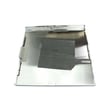
If the rubber is torn, permanently flattened, or won’t stay seated, replacement is the reliable fix. For bottom-edge leaks on this model, the correct part is the dishwasher door seal, lower WPW10497235.
The installation guide calls out checking door clearance and centering so the door does not contact screws, brackets, or the countertop. Use the KUDC10IXSS8 installation guide to confirm the dishwasher is level and centered.
| What you see | Likely cause | What to do |
|---|---|---|
| Leak at bottom center | Lower door seal worn or mispositioned | Inspect/replace lower seal; verify level |
| Leak at corners | Gasket not fully seated or twisted | Reseat gasket; check corners carefully |
| Door hard to close | Gasket bunched or door rubbing | Reseat; re-center unit; adjust leveling legs |
A properly seated gasket and a centered, level tub keep wash water inside the tub, protect the door panels, and prevent moisture damage around the cabinet opening.
Last updated: February 2026
What is the most common problem with a KitchenAid dishwasher?
For the KitchenAid KUDC10IXSS8 dishwasher, the most common problem we see is drainage trouble (water left in the tub at the end of the cycle). In many cases, the fix is clearing a blockage in the drain path; if the drain path is clear, the drain pump or drain hose is the next place to focus.
- Cancel the cycle and let the dishwasher attempt to drain.
- Remove standing water (cup or wet/dry vac) so you can inspect the sump area.
- Check the drain hose for kinks, crushing, or a low loop that is missing.
- Clear the sink disposer inlet (if connected) and confirm the knockout plug was removed.
- Clean debris from the sump area and any screens you can access.
- Verify the door closes tightly and latches; some models will not drain correctly if the door is not latched.
If the hose and disposer connection are clear, a weak or failed pump is a common cause.
| Symptom | Most likely cause | What to do next |
|---|---|---|
| Hums but little or no water exits | Drain pump jammed or failing | Inspect for debris; replace if noisy/weak using dishwasher drain pump WPW10348269 |
| Drains slowly or backs up | Restricted hose or air gap/disposer blockage | Inspect routing; replace damaged hose with dishwasher drain hose 8269144A |
| Intermittent draining | Loose connection, partial clog, or pump starting to fail | Recheck clamps and routing; test again on a short cycle |
A fast way to separate “no fill” from “no drain” is to run the shortest cycle and check for water in the tub after the first couple minutes. The installation instructions for this model outline this basic operational check and the key items to verify (power, door latch, water supply). See the KUDC10IXSS8 installation guide.
Drainage problems can leave dirty water in the tub, cause odors, and lead to poor cleaning results. Fixing the drain path first prevents unnecessary part replacement and gets your KitchenAid dishwasher back to normal cycle performance.
Last updated: February 2026
What's the average lifespan of a KitchenAid dishwasher?
A KitchenAid dishwasher typically lasts about 10 years on average with normal household use. For your KitchenAid KUDC10IXSS8 undercounter dishwasher, consistent cleaning, correct loading, and proper installation setup help you reach that lifespan and reduce wear on the pump, heater, and door components.
Most dishwashers fall into a predictable range based on use and water conditions.
| Use and conditions | Typical lifespan | What usually ends a dishwasher’s life |
|---|---|---|
| Average use (1 load/day) | ~10 years | Pump/motor wear, leaks, control issues |
| Light use (3 to 5 loads/week) | 11 to 13 years | Seals, racks, intermittent electrical issues |
| Heavy use (2+ loads/day) | 7 to 9 years | Wash system wear, heater issues, door latch wear |
We recommend these habits because they reduce strain on the wash system and help prevent leaks.
- Clean the filter area and remove debris that can restrict water flow.
- Use rinse aid for better drying and to reduce hard-water buildup (especially important on energy-efficient models).
- Run hot water at the sink before starting a cycle so the dishwasher fills with hotter water sooner.
- Avoid overloading; keep spray arms from being blocked by tall items.
- Fix small leaks early; a worn lower seal can turn into cabinet or floor damage.
- Keep the unit level and centered so the door closes and seals correctly (see the KUDC10IXSS8 installation guide).
A dishwasher near the end of its lifespan often shows up as longer cycle times, weaker cleaning, standing water, or intermittent starting. Addressing the root cause early can prevent secondary damage to higher-cost assemblies.
If performance drops, these are frequent wear items on this model family.
- Drain problems or standing water: check the dishwasher drain pump WPW10348269 and drain path.
- Poor drying or water not heating: inspect the heating circuit and heater connections.
- Door not starting or stopping mid-cycle: verify the door closes tightly and latches; confirm Start/Resume behavior in the use and care information.
Last updated: February 2026