Owner’s manual
 Error Codes



Are bottom mount fridges better?
Yes, a bottom-mount refrigerator like the GE PYE22PSKGSS is better for many households because the fresh-food section sits at eye level, so you reach for everyday items with less bending; the freezer stays below for less-frequent access.
When a bottom-mount is the better choice
- You use the refrigerator compartment more than the freezer
- You want fresh food shelves and drawers at a more comfortable height
- You prefer wider refrigerator storage and easier visibility of items
- You are okay with bending to access freezer drawers and baskets
- You want a layout that often fits meal-prep and family use well
Trade-offs to consider
Bottom-mount designs are not “better” for every kitchen; they are better when the layout matches how you use the appliance.
- Freezer access usually means pulling out drawers (more bending)
- Freezer organization depends on baskets and dividers (items can stack)
- Door clearance and moving the unit into place can be more demanding in tight hallways
Quick comparison
| Feature | Bottom-mount (like PYE22PSKGSS) | Top-freezer |
|---|---|---|
| Fresh food access | Easier, eye level | Lower, more bending |
| Freezer access | Drawer style, lower | Eye level-ish, door shelves |
| Best for | Frequent fresh-food use | Frequent freezer use |
Why it matters
Most people open the refrigerator section far more often than the freezer. Putting fresh food at eye level reduces daily bending and makes it easier to see what you have, which helps with organization and food waste.
Tips for getting the most from your bottom-mount layout
- Keep everyday items on the middle shelves for fastest access
- Use drawers for produce and deli items to reduce clutter on shelves
- Avoid overpacking the freezer drawer so air can circulate and items stay evenly frozen
- If you need to move the refrigerator, pull it straight out and push it straight back in to help prevent floor damage
For model-specific use and care details (including moving, cleaning, and door handling guidance), follow the PYE22PSKGSS owner's manual.
Last updated: February 2026
What is the most common problem with GE PYE22PSKGSS refrigerators?
The most common issues we see on the GE PYE22PSKGSS bottom-mount refrigerator are ice maker and water dispenser troubles (slow or no ice, weak water flow) and temperature complaints (fresh food too warm or freezer too warm). These problems usually trace back to airflow, icing, or a sensor or fan problem; use the owner's manual to confirm control settings and basic checks.
Quick checks that solve many “common problems”
- Verify the temperature is set to the recommended 37°F (refrigerator) and 0°F (freezer).
- Give the unit 24 hours after any setting change to stabilize.
- Make sure vents inside the compartments are not blocked by food packages.
- Check doors close fully and the gasket seals all the way around.
- If water or ice is slow, replace the filter and purge air from the water line.
Parts that commonly fix the underlying cause
If symptoms point to a specific failure, these parts are frequent solutions for this model:
| Symptom | Common cause | Part to consider |
|---|---|---|
| Fridge warm, freezer OK; or uneven temps | Bad temperature sensing | Refrigerator temperature sensor WR55X10025 |
| Warm temps plus weak airflow or unusual fan noise | Evaporator fan not moving air | GE refrigerator evaporator fan motor WR60X26866 |
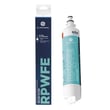
| Slow water, poor ice production, “replace filter” reminder | Restricted water filter | GE refrigerator water filter RPWFE |
| Random temp swings, dispenser or display acting up | Control not regulating correctly | Refrigerator main control board WR55X46805 |
Why it matters
On a counter-depth GE Profile unit like the PYE22PSKGSS, proper airflow and accurate temperature feedback keep food safe and prevent frost buildup. When airflow is reduced or temperatures are misread, the ice maker and cooling performance are usually the first things you notice.
Helpful DIY guidance
- For door-alarm and door-related complaints, follow how to reset the door alarm on a GE refrigerator.
- If you see an error code or suspect an electronic issue, use GE refrigerator error codes to narrow the problem before replacing parts.
Last updated: February 2026
What are the disadvantages of a bottom freezer refrigerator?
Bottom-freezer refrigerators like the GE PYE22PSKGSS keep fresh food at eye level, but the tradeoff is that frozen items sit low in a pull-out drawer. The biggest disadvantages are more bending for freezer access, heavier drawer loads, and sometimes less convenient freezer organization for small items (especially if you use the freezer often).
Common disadvantages (what you’ll notice day to day)
- You typically bend more to reach frozen foods in the lower drawer.
- The freezer drawer can get heavy when fully loaded, which increases wear on slides, brackets, and door alignment.
- Small frozen items can be harder to keep organized unless you use bins or dividers.
- Cold air can spill out quickly when the wide drawer is open, so the freezer may need a bit more recovery time.
- If the freezer door is removed for moving or service, it is heavy and needs careful handling.
Wear points to watch on a bottom-freezer design
Heavier freezer drawers and frequent opening can show up as sealing, alignment, or cooling complaints over time.
| Symptom | What it often means | What to check first |
|---|---|---|
| Frost buildup or moisture | Air leak at the freezer door | Door seal condition and door closing |
| Drawer feels hard to close | Drawer load or alignment issue | Reduce load; check for obstructions |
| Temps swing after opening | Normal cold-air loss from wide drawer | Minimize open time; confirm settings |
| Warm freezer or noisy airflow | Airflow or defrost issue | Fan operation; defrost system |
If you’re seeing sealing problems, a common fix is replacing the freezer door gasket; for this model, see refrigerator freezer door gasket WR14X36194.
Why it matters
Bottom-freezer models are great for fresh-food convenience, but the freezer drawer is a high-use, high-load area. Keeping the drawer from being overpacked and maintaining a good door seal helps prevent frost, temperature swings, and extra strain on cooling components.
Helpful model-specific tips
- Follow the handling and removal steps in the owner's manual if you ever need to remove the freezer door; it’s designed to be lifted off the slide mechanism and reinstalled with the correct screw torque.
- If you notice puddles, frost, or recurring ice maker and dispenser issues, address door sealing and airflow early to avoid bigger cooling problems.
Last updated: February 2026
What are the most commonly replaced parts in a refrigerator?
For the GE PYE22PSKGSS bottom-mount refrigerator, the most commonly replaced parts are the ones that affect cooling, sealing, and water/ice performance: temperature sensors, evaporator fan motors, door gaskets, water filters, water inlet valves, and defrost parts. These typically wear out, get clogged, or fail electrically over time.
Common replacement parts (and what they fix)
- Temperature sensor (thermistor): helps regulate temperatures; a bad sensor can cause warm temps or temperature swings (see refrigerator temperature sensor WR55X10025).
- Evaporator fan motor: moves cold air through the fresh food and freezer sections; failure often causes warm refrigerator temps or unusual noise.
- Water filter: improves taste and flow; replace when flow slows or ice production drops (see GE refrigerator water filter RPWFE).
- Water inlet valve: controls water to the dispenser and ice maker; a weak valve can cause slow fill, no ice, or dispenser issues.
- Defrost heater and defrost thermostat: prevent frost buildup on the evaporator; failures can lead to heavy frost and poor airflow.
- Door gasket (seal): keeps warm air out; a leaking gasket can cause condensation, frost, and longer run times.
Quick symptom-to-part guide
| Symptom | Most likely part area | Example part on this model page |
|---|---|---|
| Refrigerator warm, freezer OK | Airflow (evaporator fan) | Evaporator fan motor |
| Temps swing up and down | Sensing/control | Temperature sensor |
| Frost buildup, weak airflow | Defrost system | Defrost heater or defrost thermostat |
| Slow water, small cubes, no ice | Filtration or water supply | Water filter or water inlet valve |
| Condensation or frost at door edge | Door sealing | Freezer door gasket |
Why it matters
Replacing the right part early helps protect food, reduces energy use, and prevents secondary problems like evaporator icing or water leaks.
Safety note before you replace anything
The GE manual advises unplugging the refrigerator before making repairs, replacing a light bulb, or cleaning; power cannot be disconnected using the control panel. Use the owner's manual for model-specific safety and access steps.
Last updated: February 2026
How to order GE appliance parts?
You can order replacement parts for your GE PYE22PSKGSS bottom-mount refrigerator by using the parts list for this model and matching the part to your symptom, then purchasing the exact part ID. For part identification and diagrams, we recommend checking the owner's manual.
What you need before you order
- Complete model number: PYE22PSKGSS
- Your refrigerator serial number (helps confirm production variation)
- A clear symptom (no cooling, leaking water, no ice, lights out)
- The part name and part ID you’re ordering
- Basic tools and a safe work area (unplugged refrigerator when applicable)
Common parts customers order for PYE22PSKGSS
If your issue matches one of these, ordering the exact part ID helps avoid returns.
| Symptom | Commonly related part | Example from this model’s parts list |
|---|---|---|
| Water tastes/odor, slow dispensing | Water filter | GE refrigerator water filter RPWFE |
| Warm fresh food section, noisy airflow | Evaporator fan motor | GE refrigerator evaporator fan motor WR60X26866 |
| Temperature swings, inconsistent cooling | Temperature sensor | Refrigerator temperature sensor WR55X10025 |
| No water to dispenser/ice maker | Water inlet valve | Refrigerator water inlet valve WR57X10098 |
How we recommend ordering the right part
- Confirm the symptom and rule out simple causes (door left ajar, controls changed, clogged filter).
- Use the model diagrams and part list to match the location and description.
- Match by part ID first (most accurate), then confirm the part name.
- If multiple similar parts appear (for example, valves or motors), compare where it installs and what it connects to.
- Order the part and keep your proof of purchase for warranty documentation.
Why it matters
Ordering by the exact PYE22PSKGSS model and the correct part ID prevents fit issues and repeat repairs, especially on counter-depth GE bottom-freezer designs where components and harnesses can vary by production run.
Last updated: February 2026