Error Codes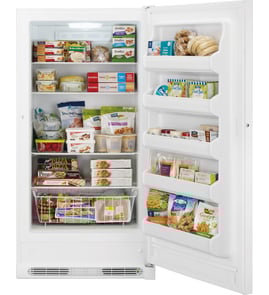

What is the disadvantage of an upright freezer?
An upright freezer like the Wc F20WCE is easier to organize, but its main disadvantage is efficiency: when you open the door, cold air spills out quickly, so the compressor often runs more and temperatures can fluctuate more than in a chest freezer.
Common disadvantages (upright vs. chest)
- Higher energy use in real life: frequent door openings dump cold air, especially in busy kitchens.
- Less forgiving in outages: many uprights warm faster during long power losses because cold air escapes more easily.
- More frost risk (some models): manual-defrost uprights can build frost on shelves and walls if the door is opened often or the seal leaks.
- Less flexible storage: fixed shelves and bins can make it harder to fit very bulky items (large boxes, big cuts of meat).
- More dependent on door sealing: a worn gasket can cause temperature swings, frost, and longer run times.
What to check if your upright freezer seems to struggle
If your F20WCE is running a lot, frosting up, or not holding temperature, these checks usually find the cause:
- Make sure the door closes fully and nothing is blocking it.
- Inspect the door gasket for gaps, tears, or hardened sections.
- Confirm the freezer is level so the door self-closes properly.
- Keep air vents clear inside so cold air can circulate.
- Avoid loading warm food; pre-chill items in the refrigerator when possible.
Quick comparison
| Feature | Upright freezer | Chest freezer |
|---|---|---|
| Organization | Better (shelves/bins) | Harder (stacking) |
| Cold air loss when opened | Higher | Lower |
| Bulky item storage | Sometimes limited | Usually easier |
| Power outage hold time | Often shorter | Often longer |
Why it matters
Cold-air loss and temperature swings can increase energy costs and raise the chance of freezer burn over time. Good door sealing and smart loading habits help an upright freezer perform closer to its best.
For general DIY safety and planning before troubleshooting electrical components, use our are diy appliance repairs safe guide.
Last updated: February 2026
What's the average lifespan of an upright freezer?
Most upright freezers last 10 to 15 years in normal home use. For the Wc F20WCE upright freezer, lifespan depends most on steady temperatures, good airflow around the cabinet, clean condenser surfaces, and door seals that keep warm air out.
Typical lifespan ranges
- Average: 10 to 15 years
- Well maintained: 15 to 20 years
- Shortened lifespan is common when: the freezer runs hot, is overpacked, or has restricted ventilation
| What you do | What it helps prevent | Why it matters |
|---|---|---|
| Keep vents and airflow clear | Overheating and long run times | Heat is the enemy of compressors |
| Keep the door gasket sealing | Frost buildup, warm spots | Leaks force constant running |
| Defrost when ice gets thick | Poor cooling, fan strain | Ice blocks airflow |
| Keep temps steady | Food thawing, compressor stress | Cycling extremes wear parts |
Maintenance that extends upright freezer life
- Leave space around the freezer for ventilation (especially behind and above).
- Keep the interior organized so air can circulate; avoid packing items tightly against vents.
- Check the door gasket for gaps, tears, or areas that do not “grab” a dollar bill.
- Defrost if frost buildup starts reducing usable space or blocking airflow.
- Keep the freezer level so the door closes squarely and seals evenly.
Signs your freezer is nearing end of life
- Runs almost constantly or gets unusually loud
- Temperature swings (soft ice cream, thawing food, refreezing)
- Heavy frost returning quickly after defrosting
- Moisture around the door or visible gasket damage
Why it matters
A freezer that is struggling to maintain temperature can waste energy and put food safety at risk. Catching airflow issues, gasket leaks, and frost problems early usually adds years of reliable service.
For help identifying the exact model number on your unit before ordering parts, use how to find your appliance model number (and what it means for parts).
Last updated: February 2026
Why is the upright freezer not freezing?
If your Wc F20WCE upright freezer is running but not freezing, the most common causes are restricted airflow (overpacked shelves or blocked vents), heavy frost from a door seal leak, dirty condenser areas, or a failed fan or defrost component. Start with airflow and frost checks first.
Quick checks we recommend first
- Confirm the temperature control is set colder and give it 24 hours to stabilize.
- Make sure packages are not blocking interior air vents; leave space around the back wall.
- Check the door gasket for gaps, tears, or areas that do not grip paper when the door is closed.
- Look for heavy frost on the back interior panel (a strong sign of a defrost problem).
- Listen for the evaporator fan (inside) and condenser fan (near the compressor, if equipped).
- Clean dust from the condenser area (rear or bottom) and ensure good room ventilation.
What the symptoms usually mean
| What you notice | Most likely cause | What to do next |
|---|---|---|
| Freezer runs constantly, weak cooling | Dirty condenser area or poor ventilation | Clean condenser area; allow airflow around cabinet |
| Heavy frost on back wall, warmer temps | Defrost system issue or door not sealing | Defrost fully, then recheck; inspect gasket and door alignment |
| No fan sound inside, warm cabinet | Evaporator fan motor issue | Check for ice blockage; test fan motor and wiring |
| Compressor runs, no cooling improvement | Sealed system or refrigerant issue | Stop DIY and have a technician diagnose |
Step-by-step: fast troubleshooting order
- Unplug the freezer and remove items from the back wall so air can circulate.
- Inspect the door seal and hinges; correct any sagging door or debris on the gasket.
- Check for frost buildup; if the back panel is iced over, do a full manual defrost (unplug, doors open) until all ice is gone.
- Clean the condenser area and confirm the unit has several inches of clearance for airflow.
- Test electrical components (fans, defrost heater, defrost thermostat, control) using a multimeter.
Why it matters
An upright freezer that is not freezing is usually losing heat through a poor door seal or cannot move cold air due to frost or airflow restrictions. Fixing those early prevents food loss and reduces strain on the compressor.
For help identifying the correct replacement parts for model F20WCE, use the model lookup on how to find your appliance model number (and what it means for parts).
Is it worth getting an upright freezer?
Yes, an upright freezer is worth it when you want easy day-to-day access and better organization. For the Wc Wood upright freezer model F20WCE, the biggest advantages are shelf-style storage and a smaller footprint than many chest freezers; the tradeoffs are typically higher cost and slightly higher energy use.
Upright vs. chest freezer: quick comparison
| Feature | Upright freezer | Chest freezer |
|---|---|---|
| Organization | Shelves, bins, door storage | Open cavity, baskets |
| Access | Eye-level, less bending | More bending, stacking |
| Floor space | Smaller footprint (vertical) | Larger footprint (horizontal) |
| Power outages | Warms faster when opened often | Holds cold longer |
| Frost | Many are frost-free | Many are manual defrost |
When an upright freezer is the better choice
- You want to see food at a glance and avoid “lost” items.
- You open the freezer frequently for daily meals.
- You have limited floor space but can use vertical space.
- You prefer shelves and door bins for smaller packages.
- You want faster access without unloading stacked items.
When a chest freezer is the better choice
- You store bulk meat, large boxes, or seasonal items long-term.
- You want the best cold retention during power interruptions.
- You want the lowest typical purchase price for the same capacity.
- You do not mind using baskets and rotating stock to stay organized.
What to check before you buy
- Capacity needs: Most households do well with roughly 5 to 9 cu. ft. per person (adjust for bulk buying).
- Defrost style: Frost-free is convenient; manual defrost is usually more efficient.
- Location: Garages and basements can be great, but confirm the space stays within the freezer’s recommended ambient temperature range.
- Noise and airflow: Leave clearance around the cabinet for ventilation.
Why it matters
The “worth it” decision comes down to how you use frozen food. Uprights reduce food waste through visibility and organization, while chest freezers usually win on long-term storage efficiency and cold-holding performance.
For model-number accuracy when shopping parts or comparing specs, use our guide: how to find your appliance model number (and what it means for parts).
Last updated: February 2026
What is the most reliable brand of upright freezer?
No single brand is “most reliable” for every home; reliability comes from a solid sealed cooling system, a tight door gasket, and stable operating conditions. For your Wc F20WCE upright freezer, the most reliable choice is the unit that matches your space and is maintained to prevent frost, airflow restrictions, and temperature swings.
How we judge upright-freezer reliability
These are the real-world factors that most often separate a dependable upright freezer from a problem unit:
- Consistent temperatures near 0°F with normal door openings
- Even door gasket seal all the way around (no gaps, tears, or warping)
- Good airflow inside the cabinet (vents not blocked by food packages)
- Clean condenser area so the compressor can shed heat
- Defrost performance that prevents heavy frost buildup (if frost-free)
What to compare when choosing a brand or model
Instead of relying on a universal “best brand” list, compare features and build details that directly affect reliability.
| What to compare | Why it matters | What to look for |
|---|---|---|
| Temperature stability | Prevents thawing and refreezing | Audible/visual temp alarm, steady readings on a thermometer |
| Door sealing and hinges | Stops frost and warm air leaks | Door closes easily, gasket sits flat, hinges feel tight |
| Defrost approach | Controls frost and airflow | Frost-free convenience vs. manual-defrost simplicity |
| Room conditions | Prevents compressor strain | Adequate clearance, stable ambient temperature |
Habits that make any upright freezer last longer
These steps reduce the most common causes of “unreliable” performance (warm temps, frost, and compressor overheating):
- Keep clearance around the cabinet for ventilation
- Clean dust from the condenser area regularly
- Do not overpack; keep air channels open near vents
- Check the gasket for rips, hardening, or sections pulling loose
- Verify temperature with a freezer thermometer and adjust as needed
Why it matters
Most upright-freezer failures customers notice first are temperature-related; they are often triggered by poor airflow, dirty condenser surfaces, or a leaking door seal. Comparing the right features and maintaining the freezer protects food quality and reduces wear on the compressor.
For help confirming you are comparing the right unit and shopping the correct parts by model, use how to find your appliance model number (and what it means for parts).
Last updated: February 2026