Owner’s manual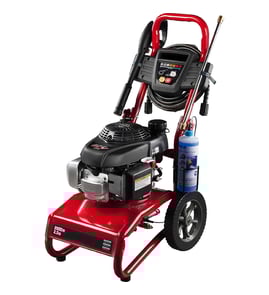



What is a good PSI for a gas pressure washer?
A good PSI depends on what you’re cleaning. For the Briggs & Stratton 020228 gas pressure washer, the owner’s manual lists a maximum outlet pressure of 2,200 PSI, which is a solid range for most household cleaning when you choose the right nozzle and keep proper distance (see the 020228 owner’s manual).
In general, gas pressure washers are chosen by PSI (cleaning force) and GPM (rinsing speed). Here’s a practical guide:
- 1,500 to 2,000 PSI: cars, patio furniture, grills, light siding rinse
- 2,000 to 3,000 PSI: driveways, sidewalks, decks (most common “homeowner” range)
- 3,000 to 4,000+ PSI: heavy concrete cleaning, paint stripping (higher risk of damage)
Your 020228 is rated up to 2,200 PSI and about 2.2 GPM in the manual, so it fits best in the “most household tasks” category.
The 020228 uses quick-connect nozzles that change spray pattern and effective cleaning force.
| Nozzle type | Typical use | Risk level |
|---|---|---|
| Detergent (low pressure) | applying soap/chemicals | Low |
| 40° (delicate) | vehicles, gentle rinse | Low |
| 15° (general) | decks, siding, general cleaning | Medium |
| 0° (max/pinpoint) | spot cleaning only | High |
Even with a 2,200 PSI washer, technique is what keeps you from etching concrete or stripping paint.
- Start with a wider fan nozzle (40° or 15°) before moving to a tighter spray
- Keep the spray tip 8 to 24 inches from the surface for most cleaning
- Test in an inconspicuous area first, especially on wood, painted siding, and older concrete
- Avoid using a 0° pinpoint stream on glass, soft wood, or fragile surfaces
- Use a turbo nozzle carefully; it concentrates cleaning power and can mark surfaces
Choosing “good PSI” is really about matching pressure to the surface. Too little PSI wastes time; too much PSI can gouge wood, force water behind siding, or damage seals and finishes.
Last updated: January 2026
Can I use 87 gas in my pressure washer?
Yes. For the Briggs & Stratton 020228 gas pressure washer, regular unleaded gasoline (87 octane minimum) is the correct choice for normal operation; premium is not required. Use fresh fuel and follow the fueling and storage steps in the 020228 owner’s manual to help prevent hard starting and carburetor varnish.
Use these practical guidelines for reliable starting and steady pressure:
- Use fresh, clean, regular unleaded gasoline (87 octane minimum).
- Avoid using old fuel; don’t keep gasoline sitting in the tank for long storage periods.
- If your pump sits unused for 30+ days, follow the storage steps (including pump protection) in the manual.
- Keep the fuel cap sealing properly; a damaged cap can contribute to leaks and evaporation.
- Fill outdoors with the engine off and cooled down; do not overfill.
We cannot identify an ethanol requirement that is unique to model 020228 from the model-specific information provided, but these general rules apply to most small gas engines:
| Fuel type | OK to use? | Best practice |
|---|---|---|
| 87 octane E10 (most pump gas) | Yes | Use fresh fuel; add stabilizer if it will sit |
| 87 octane ethanol-free | Yes | Helpful for seasonal storage and infrequent use |
| Premium (91-93) | Not necessary | Use only if your engine manual specifically calls for it |
Fuel-related storage is where most “won’t start” problems begin. For model 020228, follow the storage procedure in the 020228 owner’s manual, especially if it will sit more than 30 days.
Common storage steps to plan for:
- Run the unit as directed to flush detergent from the chemical injection system.
- Shut down and relieve pressure at the spray gun.
- Store in a clean, dry area.
- Treat the pump for freeze and corrosion protection as instructed.
Using 87 octane is fine, but fresh fuel and correct storage matter more than octane. Old gasoline and long idle periods can cause hard starting, rough running under load, and fuel-system deposits.
Last updated: January 2026
Why is there no pressure in my gas pressure washer?
If your Briggs & Stratton 020228 gas pressure washer runs but has little or no spray pressure, the most common causes are a clogged or wrong (low-pressure) nozzle, air trapped in the pump, or a restricted water supply. Start with the nozzle and inlet screen checks in the 020228 owner's manual.
- Verify you are using a high-pressure nozzle (not the black detergent nozzle).
- Turn the water on fully; use cold water only (under 100°F).
- Purge air: with the engine OFF, squeeze the spray gun trigger until water flows smoothly.
- Inspect and clean the inlet screen at the water inlet.
- Check for kinks, leaks, or internal blockage in the high-pressure hose.
- Nozzle selection and clogging: Remove the nozzle and clear debris; then backflush the nozzle/extension with a garden hose.
- Inlet restriction: Disconnect the garden hose and check the inlet screen for grit or mineral buildup.
- Water supply: This model needs a strong supply; a weak spigot, long hose run, or partially closed valve can prevent pressure from building.
- Hose and gun leaks: A leaking spray gun or damaged hose can dump pressure before it reaches the nozzle.
- Unloader valve behavior: If pressure surges, drops, or never builds, the unloader system may be sticking or worn.
| Symptom | What to inspect | Related part (if replacement is needed) |
|---|---|---|
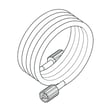
| Pressure is weak and hose shows damage or leaks | High-pressure hose | Pressure washer hose 84006753 |
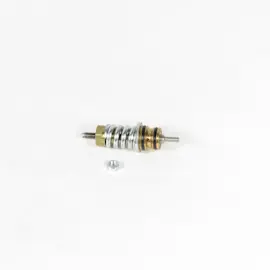
| Pressure pulses or won’t build after nozzle and inlet checks | Unloader system components | Generac pressure washer unloader valve seat 190630GS |
Running the 020228 with restricted water flow or trapped air can overheat and damage the pump. Getting the nozzle, inlet screen, and water supply right helps the pump build pressure and protects internal seals and pistons.
Last updated: January 2026
How to tell if your pressure washer pump is bad?
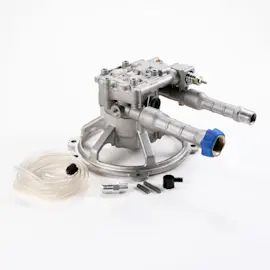
On the Briggs & Stratton 020228 gas pressure washer, a bad pump is most often indicated by little or no pressure, pressure that surges or chatters, or water leaking at the pump even after you confirm correct nozzle selection and good inlet water flow. Use the 020228 owner’s manual to verify setup and operating checks.
Many “bad pump” symptoms are caused by restrictions, air leaks, or the wrong nozzle.
- Confirm steady water supply; the manual calls for more than 3.2 GPM and at least 20 PSI at the washer end.
- Make sure a high-pressure nozzle is installed (not the low-pressure detergent nozzle).
- Purge air: turn water on, squeeze the trigger until flow is steady.
- Inspect and clean the nozzle and the in-line filter screen in the wand.
- Check the water inlet screen; do not run if the inlet screen is damaged.
If the checks above pass, these symptoms point more strongly to internal pump wear or damage:
- Pulsing/erratic pressure that does not improve after cleaning the nozzle and purging air
- Low pressure plus low water volume with a known-good water supply
- Leaks from the pump body or persistent seepage at the pump oil cap area
- Pump oil looks milky or contaminated, or the pump oil level is low (this model has a pump oil change procedure)
| Symptom | Common non-pump cause | More likely pump issue when… |
|---|---|---|
| Pulsing pressure | Clogged nozzle, dirty in-line filter | Pulsing continues after cleaning and air purge |
| No/low pressure | Low-pressure nozzle installed, blocked inlet | Setup is correct and pressure still will not build |
| Leaks | Loose fitting, worn seal | Leak is from pump housing or won’t stop after resealing |
If the issue is at connections or the spray line, inspect these first:
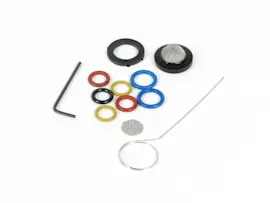
- O-ring 190584GS (seals connections; a nicked O-ring can leak and pull air)
- Pressure washer hose 84006753 (leaks, kinks, or internal restriction can reduce pressure)
- Wand nozzle and in-line filter screen (clean first; replace if damaged)
Running the 020228 with restricted water flow, a clogged nozzle, or without water can overheat and permanently damage the pump.
Last updated: January 2026