Installation guide
 Owner’s manual
 Error Codes


Is 4.8 cubic feet a large capacity washer?
Yes. A 4.8 cu. ft. washer is considered large capacity, which means it can handle bigger loads and bulky items with fewer cycles. For Whirlpool top-load washers like model WTW4850XQ1, 4.8 cu. ft. sits in the large-capacity range (extra-large is typically 5.0 cu. ft. and up). See your WTW4850XQ1 owner's manual for the exact rated capacity and loading guidance.
What “large capacity” means in real use
Large-capacity tubs are designed to reduce the number of loads you run and improve turnover on items that take space.
Common examples that fit better in a large-capacity washer:
- King or queen comforters (check the care label and balance the load)
- Bulky towels and bath mats
- Mixed family loads (jeans, sweatshirts, towels)
- Bedding sets (sheets plus pillowcases)
How to load a 4.8 cu. ft. washer for best results
Even with a large tub, overloading is the fastest way to get poor cleaning, out-of-balance spinning, and extra wear.
We recommend:
- Load loosely to the top of the basket; do not pack items down
- Keep heavy items balanced (for example, pair a comforter with a few towels)
- Use the correct water level or cycle selection for the load type
- If the washer bangs or walks, re-level it using the steps in the WTW4850XQ1 installation guide
Quick capacity comparison
| Washer capacity | Common label | Best for |
|---|---|---|
| 3.5 to 4.4 cu. ft. | Medium to large | Everyday loads, smaller households |
| 4.5 to 4.9 cu. ft. | Large | Families, towels, bedding |
| 5.0+ cu. ft. | Extra-large | Frequent bulky loads, fewer cycles |
Why it matters
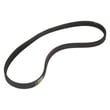
Choosing the right capacity helps you wash bulky items without stressing the drive system and suspension. If loads are consistently too heavy or unbalanced, you can see symptoms like poor agitation, slipping, or noisy spinning that may eventually involve parts such as the washer drive belt WPW10006384 or suspension W10780046.
Last updated: February 2026
What is the life expectancy of a Whirlpool washing machine?
A Whirlpool washing machine like model WTW4850XQ1 typically lasts 10 to 14 years with normal household use. Consistent care (proper installation, correct loading, and routine cleaning) is what most often determines whether it lands closer to 10 years or pushes past 14.
What affects washer lifespan the most
- Overloading the basket, which strains the drive system and suspension
- Unbalanced loads (bulky items) that increase vibration and wear
- Water quality and hose condition, including leaks and restricted flow
- Drain performance, especially if the pump or drain hose is partially blocked
- Leveling and floor support, which reduces excess noise and vibration
Maintenance habits that extend life
We recommend these practical habits for the WTW4850XQ1:
- Keep the washer level to reduce vibration and component wear (see the installation guide).
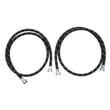
- Replace inlet hoses every 5 years and inspect for bulges, kinks, cuts, wear, or leaks.
- Use the right amount of detergent; too much can cause residue and performance issues.
- Avoid repeated heavy, off-balance loads; redistribute items before spin.
- Address early symptoms (no drain, no spin, loud noise) before they damage the gear case or belt.
Common “wear items” vs. major repairs
| Type | Examples on this model | What it usually means |
|---|---|---|
| Wear/maintenance items | Belt, lid lock, hoses | Often a straightforward repair that can extend service life |
| Drive system components | Cam, actuator, gear case | More involved repair; cost and condition guide the decision |
If you are troubleshooting performance issues that could shorten lifespan, parts commonly involved include the washer drive belt WPW10006384, washer actuator WPW10006355, and washer lid lock assembly W10404050.
Why it matters
A washer that is installed correctly and kept level runs with less vibration, which reduces stress on the suspension, drive belt, and gear case. That directly impacts how long your Whirlpool top-load washer stays reliable.
Last updated: February 2026
What is the most common problem with Whirlpool washers?
The most common Whirlpool washer problems are failure to drain or spin, water leaks, and agitation issues. On a Whirlpool top-load washer like model WTW4850XQ1, these symptoms are often tied to drain hose or pump restrictions, out-of-balance loads, or wear in drive components; confirm operating and installation basics in the installation guide.
Most common symptoms and what they usually point to
- Won’t drain or leaves water in the tub: kinked/clogged drain hose, restricted standpipe, or a failing pump
- Won’t spin or spins weakly: unbalanced load, lid lock not engaging, worn belt, or drive system wear
- Leaks: loose inlet hose connections, worn fill hoses, or drain hose issues
- Won’t agitate or poor wash action: worn agitator components or drive system problems
- Excess vibration or walking: washer not level, floor slope, or suspension wear
Quick checks we recommend first (fast, high-impact)
- Level the washer: An unlevel cabinet increases vibration and can affect spin performance. The install instructions call out leveling as important for reducing noise and vibration.
- Check water supply basics: Use hot and cold faucets with 20 to 100 psi water pressure; verify both hoses are connected and flowing.
- Inspect hoses for age and condition: Replace inlet hoses about every 5 years and replace sooner if you see bulges, kinks, cuts, wear, or leaks.
- Confirm proper hose connections: Tighten couplings correctly and avoid overtightening; do not use tape or sealants on the valve connections.
Common parts that match these problems on WTW4850XQ1
| Symptom | Commonly involved part | What it does |
|---|---|---|
| Won’t drain | Washer drain pump assembly WPW10276397 | Pumps water out during drain/spin |
| Won’t spin or agitate | Washer drive belt WPW10006384 | Transfers motor power to the drive system |
| Won’t start or won’t spin with lid closed | Washer lid lock assembly W10404050 | Confirms lid is locked for operation |
| Loud banging, off-balance | Suspension W10780046 | Helps stabilize the tub during spin |
Why it matters
Drain, spin, and leak problems can look similar from the outside, but the fix changes a lot depending on whether the issue is installation (leveling, hoses, pressure) or a worn component (pump, belt, lid lock, suspension). Starting with the installation checks prevents unnecessary part replacement.
Last updated: February 2026
How to tell if a Whirlpool drain pump is bad?
On a Whirlpool WTW4850XQ1 washer, a bad drain pump shows up as water left in the tub, very slow draining, or loud humming or grinding during drain. We confirm it by ruling out drain-hose and standpipe setup issues first, then checking pump operation.
Quick symptoms checklist
- Water remains in the basket after the cycle ends
- Washer pauses or stops when it should be draining
- Steady hum but little or no water flow
- Grinding or rattling (debris hitting the impeller)
- Draining is much slower than normal
Rule out drain setup problems first (common on this model)
A drain setup issue can mimic a failed pump. The WTW4850XQ1 installation requirements include:
- Standpipe height: 39 in. minimum, 96 in. maximum (from bottom of washer)
- Standpipe diameter: 2 in. minimum
- Drain hose insertion: no more than 4.5 in. into the standpipe or laundry tub
- Secure the drain hose so it cannot fall out during pumping
Use the WTW4850XQ1 installation guide to verify standpipe height and drain hose routing.
Simple checks before testing parts
- Unplug the washer.
- Check the drain hose for kinks, crushing, or clogs.
- Confirm the household drain is not backing up.
- Run a drain or spin cycle and look for a strong, steady discharge.
What your test results mean
| What you observe | Most likely cause |
|---|---|
| Strong hum, weak or no flow | Pump jammed or impeller damaged (often debris) |
| No pump sound at all | Lid lock, wiring, control, or pump not being powered |
| Drains only sometimes | Intermittent pump motor or partial blockage |
When replacement is the fix
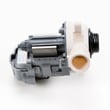
If the drain path is clear and the pump is noisy, seized, or not moving water, replace the pump with the model-correct washer drain pump assembly WPW10276397.
Why it matters
A failing drain pump can prevent spinning, leave dirty water in the tub, and contribute to odors and repeat cycle interruptions.
Last updated: February 2026