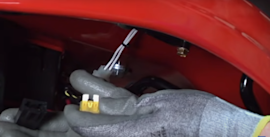
Installation guide
 Owner’s manual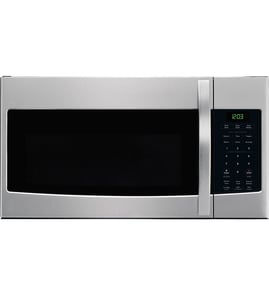



How big is a Kenmore microwave model 40185042310 in inches?
The Kenmore microwave/hood combo model 40185042310 is designed to fit a standard 30-inch-wide space between cabinets and install over a range up to 30 inches wide. For the exact overall exterior width, height, and depth in inches, use the dimension section and templates in the 40185042310 installation guide.
The installation instructions for model 40185042310 specify key fit constraints that determine whether it will physically fit your cabinet and range setup:
- Cabinet opening between side cabinets must be 30 inches wide and unobstructed
- Intended for installation over ranges up to 30 inches wide
- Bottom of the cabinet needs to be 30 inches or more above the cooking surface
- The microwave must be secured to at least one wall stud
- The unit must be installed level (templates help set mounting plate position)
Over-the-range microwaves often have a 30-inch class width, but the exact height and depth vary by model and venting configuration. For model 40185042310, the most reliable place to pull the exact numbers is the installation guide’s measurement and template pages.
| Measurement you need | Best place to look | Why it matters |
|---|---|---|
| Overall width | Installation guide specs/templates | Confirms cabinet-to-cabinet fit |
| Overall height | Installation guide specs/templates | Confirms clearance to upper cabinet |
| Overall depth | Installation guide specs/templates | Confirms door swing and front clearance |
| Mounting clearances | Installation guide | Prevents cord, duct, and leveling issues |
Getting the exact width, height, and depth prevents common install problems like cabinet interference, blocked venting, and improper clearance above the cooktop. It also helps you confirm the correct mounting plate position before drilling.
Last updated: January 2026
How many CFM is a microwave hood?
Most microwave/hood combos (including Kenmore model 40185042310) are designed for light-to-moderate ventilation and commonly run around 200 CFM. For the exact CFM rating for your unit and the correct venting setup (recirculating vs outside vent), follow the 40185042310 installation guide.
Even when two units have similar “CFM,” real-world performance depends on the installation and airflow restrictions.
- Venting type: recirculating (ductless) vs outside top exhaust vs outside back exhaust
- Duct size and length: long runs and small ducts reduce airflow
- Elbows and transitions: each turn adds resistance
- Damper operation: a stuck damper can choke airflow
- Filter condition: grease buildup reduces air movement
Microwave/hood combos usually move less air than dedicated range hoods.
| Ventilation product | Typical CFM range | Best for |
|---|---|---|
| Microwave/hood combo | ~150 to 300 CFM | Everyday simmering, light frying |
| Dedicated range hood | ~200 to 600+ CFM | Frequent high-heat cooking |
We recommend these practical checks before assuming the fan is “weak.”
- Confirm you selected the correct installation type (A recirculating, B vertical duct, or C horizontal duct)
- Make sure any shipping tape is removed and the damper pivots freely
- Seal duct joints with duct tape to prevent air leaks
- Clean or replace the grease filter regularly; use the correct fit such as the microwave grease filter DE63-00196A
- Keep the vent grille clear of grease and dust buildup
Choosing the right CFM and venting method helps control smoke and odors, reduces grease buildup on cabinets, and improves comfort while cooking. A correct ducted installation typically performs better than recirculating for heavy cooking.
Last updated: January 2026
Is Kenmore a good microwave?
Kenmore microwaves are a solid choice for most kitchens because they typically deliver reliable everyday heating and good value for the price. For the Kenmore 40185042310 microwave/hood combo, long-term satisfaction depends most on correct installation, proper ventilation setup, and routine filter cleaning as outlined in the 40185042310 installation guide.
A microwave/hood combo has to do two jobs: cook and ventilate. In real-world use, customers tend to judge it on these points:
- Heating performance for reheating and defrosting
- Vent fan effectiveness for smoke and steam capture
- Noise level (fan and turntable)
- Ease of use (controls, presets, light)
- Durability of high-wear items (door switches, filters, lights)
This model is designed to support three ventilation setups, and choosing the right one is a big part of getting “good” performance from the hood side:
- Recirculating (ductless)
- Outside top exhaust (vertical duct)
- Outside back exhaust (horizontal duct)
We also recommend following the installation safety basics: use a properly grounded 3-prong outlet, keep the unit level, and use two people for mounting (all covered in the installation instructions).
| What you want most | Best focus | Why it helps |
|---|---|---|
| Better odor removal | Outside venting | Moves air out of the kitchen instead of filtering and returning it |
| Easier install | Recirculating | No ductwork changes required |
| Less vibration/rattle | Level mounting and correct plate support | Reduces cabinet stress and fan noise |
If a Kenmore microwave seems disappointing, these are the most common causes we see:
- Grease filter clogged, restricting airflow (start with the microwave grease filter DE63-00196A)
- Door not closing cleanly, causing intermittent operation (door switch alignment can be involved)
- Weak or no heat (often tied to high-voltage components)
- Excessive noise (fan area or turntable drive components)
- Poor venting due to incorrect duct configuration
A microwave/hood combo can feel “great” or “bad” based on airflow and installation details, not just cooking power. When it is installed level, supported correctly, and vented the right way, it performs more consistently and tends to last longer.
Last updated: January 2026
How many watts is a Kenmore 1.1 cu ft countertop microwave?
Kenmore model 40185042310 is a microwave/hood combo, not a countertop microwave. For this model, the electrical rating in the installation instructions is 1.5 kW (1,500 watts) input power at 120V, 60 Hz. For a true Kenmore 1.1 cu ft countertop unit, use the rating label to find the cooking output watts.
Microwaves list two different “watts,” and they are not interchangeable.
| Spec | What it tells you | Where to find it |
|---|---|---|
| Cooking output (W) | Heating performance and cook times | Rating label, owner information |
| Input power (W or kW) | Electrical load and circuit planning | Installation instructions, rating label |
Use these numbers when planning power and installation for the Kenmore 40185042310 over-the-range unit:
- Input power: 1.5 kW (1,500 W)
- Electrical supply: 120V AC, 60 Hz
- Dedicated circuit guidance: separate 20-amp branch circuit
See the exact wording and electrical requirements in the 40185042310 installation guide.
If you have a Kenmore 1.1 cu ft countertop microwave (a different product than model 40185042310), the most accurate way to get wattage is the appliance rating label.
- Open the door and check the frame area for a label that lists Output
- Look specifically for “Output: ____ W” (that is cooking watts)
- If you only see “Input” or kW, that is power draw, not cooking output
- Match the model number on the label to the correct Kenmore manual
Cooking output watts determine how fast food heats and how you adjust recipes. Input watts determine whether the outlet, grounding, and circuit capacity are correct for safe operation.
Last updated: January 2026