Owner’s manual
 Error Codes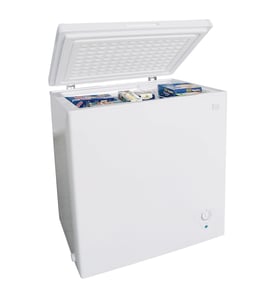




Is 1 or 7 the coldest setting on a deep freezer?
On the GE FCM7SUBWW chest freezer, 7 is the coldest setting and 1 is the warmest. GE’s manual describes the temperature control as a 1 to 7 range, with 7 providing the coldest freezing; we typically start at 4 and adjust one step at a time.
Recommended setting and how to adjust
GE recommends starting at 4 for normal use, then fine-tuning based on how full the freezer is and how often the lid is opened.
- Start at 4 after setup
- Let the freezer run at least 4 hours before loading food
- Change the dial one number at a time
- Wait several hours after each change for temperature to stabilize
- Use a freezer thermometer to confirm performance (target is typically around 0°F for frozen storage)
For the exact operating guidance for your model, use the FCM7SUBWW owner's manual.
What the numbers mean (quick reference)
| Dial setting | What it generally does | When to use it |
|---|---|---|
| 1 to 2 | Warmest range | Light loads, cool rooms, short-term use |
| 3 to 5 | Normal range | Most day-to-day frozen storage |
| 6 to 7 | Coldest range | Heavy loads, frequent openings, warm locations |
Why it matters
Setting the control correctly helps protect food quality and reduces temperature swings. If the dial is set too warm, food can soften or partially thaw; if it is set colder than needed, you can waste energy and increase frost buildup.
If the freezer still is not cold enough
If you are already near 6 to 7 and temperatures are still high, these checks solve most issues:
- Make sure the lid is fully closing and nothing is propping it open
- Reduce long or frequent lid openings
- Confirm the outlet has power and the plug is fully seated
- Allow time after adjustments for the temperature to stabilize
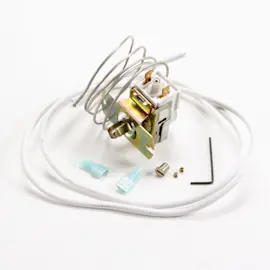
- If the control feels loose or does not respond, the freezer temperature control thermostat WR50X10085 is the part that regulates cooling
Last updated: February 2026
What is the life expectancy of a GE chest freezer?
A GE chest freezer like model FCM7SUBWW typically lasts 12 to 20 years with normal household use. Consistent temperatures, a tight lid seal, and regular cleaning and defrosting are the biggest factors that help you reach the high end of that range; see the FCM7SUBWW owner's manual.
What affects lifespan the most
- Heat and airflow: Keep the freezer where it can breathe and avoid blocking ventilation areas.
- Defrosting and cleaning: Manual-defrost models last longer when frost buildup is kept under control.
- Lid seal condition: A leaking gasket forces longer run times and adds wear.
- Power quality: Frequent outages or low voltage can stress the compressor.
- Loading habits: Avoid overloading with warm food; the manual notes the freezer is designed to freeze about 3 lb (1.5 kg) per cubic foot at one time.
Maintenance checklist (best practices)
- Unplug the freezer before cleaning or changing the light bulb.
- Wipe the interior with a mild baking soda solution; avoid abrasive cleaners.
- Keep an open box of baking soda inside to absorb odors; replace about every 3 months.
- During extended power failures, keep the lid closed; food typically stays frozen about 24 hours if warm air is not admitted.
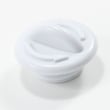
- Replace small wear items when needed (for example, a missing drain plug can make defrosting messy); the drain stopper WR01X28051 is a common replacement part for this model.
Quick guide: what “normal” looks like vs. early wear
| What you notice | Usually normal | Often shortens lifespan |
|---|---|---|
| Run time | Longer runs after adding food | Constant running with little cooling |
| Frost | Light, gradual buildup | Heavy frost quickly (possible air leak) |
| Temperature | Steady freezing | Wide swings (possible control issue) |
| Noise | Low hum, occasional clicks | Loud buzzing, repeated clicking, or no start |
Why it matters
A chest freezer’s compressor and sealed system are built for long service, but they wear faster when the unit runs hot, runs constantly due to air leaks, or is forced to recover from frequent warm-ups. Simple care and cleaning helps protect the sealed system and keeps food safely frozen.
Last updated: February 2026
Is the GE chest freezer 7 cu ft any good?
Yes. The GE FCM7SUBWW 7 cu. ft. chest freezer is a solid choice when you want dependable extra frozen storage in a compact footprint; it is designed for steady temperature control and typical chest-freezer tradeoffs like manual defrost and occasional frost buildup (especially with frequent lid openings). See the owner's manual for operating details and care.
What “good” looks like for this model
A 7 cu. ft. GE chest freezer like FCM7SUBWW is a good fit when you want efficient bulk storage and simple controls.
- Holds temperature well when the lid stays closed (important during short outages)
- Simple mechanical temperature control (easy to set and maintain)
- Manual defrost design (less to fail, but you will remove frost periodically)
- Works best when not overfilled and when air can circulate around packages
- Storage is easier with a basket; this model uses a compatible freezer basket WR21X10208
Pros and tradeoffs (quick comparison)
| What you want | How a 7 cu. ft. chest freezer typically performs | What to plan for |
|---|---|---|
| Low operating noise | Usually quiet | Some compressor sound is normal during run cycles |
| Strong freezing power | Freezes best when loaded correctly | Limit large “warm” loads at once |
| Easy organization | Good for bulk items | Use baskets and grouping to avoid digging |
| Low maintenance | Fewer electronics | Manual defrost and wiping moisture/frost |
Tips to get the best performance
These steps make a bigger difference than most people expect.
- Keep the lid closed as much as possible; frequent openings add moisture and frost
- Avoid packing items tightly against walls; leave small gaps for airflow
- If you notice temperature swings, check the control setting and confirm the lid is sealing
- During extended power loss, keep the lid closed; the manual notes food can stay frozen about 24 hours if warm air is not admitted
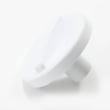
- If the control knob is cracked or missing, replace it with the correct freezer temperature control knob WR02X12190
Why it matters
Chest freezers are efficient because cold air stays inside when you open the lid, but that same design means organization and lid-opening habits directly affect frost buildup, temperature stability, and how easy it is to find food.
Last updated: February 2026