Installation guide
 Owner’s manual
 Error Codes

How many cubic feet is a Kenmore Model 11022102312 washer?
The exact tub capacity (cubic feet) for Kenmore washer model 11022102312 is listed in the product specifications section of the 11022102312 owner's manual. Most Kenmore 110-series top-load washers are typically in the 3.2 to 3.6 cu. ft. range, depending on the exact platform and basket design.
How to find the capacity for model 11022102312
We recommend using the manual because it ties the capacity to your exact model number and configuration.
- Open the 11022102312 owner's manual
- Look for “Specifications”, “Capacity”, or “Washer dimensions” sections
- Check for wording like “IEC cu. ft.” or “tub capacity”
- If the manual lists multiple variants, match the model number and type shown on your washer label
Typical capacity ranges (for context)
Here is what we commonly see across similar Kenmore top-load designs:
| Washer type | Typical capacity range | What it means for loads |
|---|---|---|
| Standard top-load (agitator) | 3.0 to 3.6 cu. ft. | Good for everyday mixed loads |
| Large-capacity top-load | 3.8 to 4.5+ cu. ft. | Better for bulky items |
Why it matters
Capacity affects how much you can wash per cycle and how well the washer can circulate water and detergent. Overloading a smaller-capacity basket can lead to poor cleaning, out-of-balance spinning, and extra wear on drive components like the belt and suspension.
Related setup detail that can affect performance
Even with the correct capacity, performance depends on proper installation and leveling. The 11022102312 installation guide explains how to level the washer to reduce vibration and “washer walk.”
Last updated: February 2026
How to identify a Kenmore washer model?
Your Kenmore washer model number is printed on the appliance ID label; for Kenmore model 11022102312, check under the lid opening (top-load) first, then the rear panel if you do not see it. Use the full model number exactly as shown to match the correct Kenmore washer parts and manuals.
Where to look on a Kenmore washer
Most Kenmore top-load washers like 11022102312 place the model and serial label in one of these spots:
- Under the lid, around the tub opening or on the underside of the top panel
- On the back of the washer cabinet (often near the power cord area)
- Along the cabinet rim near the lid hinge area
- Inside the console area (less common, but possible)
What the model number looks like (and why it matters)
Kenmore washer model numbers often start with 110 and are typically 11 digits. Using the exact model number helps us match the correct diagrams, fit-tested parts, and procedures in the 11022102312 owner’s manual.
Quick ID checklist
- Copy the model number exactly (all digits, no spaces)
- Record the serial number too (helps with production variations)
- Take a clear photo of the label before ordering parts
Model number vs. serial number
| Label item | What it tells you | When you need it |
|---|---|---|
| Model number (example: 11022102312) | The exact washer design family | Always, for parts lookup |
| Serial number | Build date and production run details | Helpful when parts vary |
Why it matters
A single digit difference can change the correct lid lock, water inlet valve, or drive system parts. Confirming 11022102312 first prevents ordering the wrong component and avoids repeat repairs.
Last updated: February 2026
What is the average lifespan of a Kenmore washer?
A Kenmore washer typically lasts 10 to 15 years. For Kenmore model 11022102312, correct installation (level floor, proper spacing, and the right water pressure) plus routine care helps you reach the longer end of that range; chronic overloading and vibration shorten it. See the 11022102312 owner's manual for the care schedule and operating tips.
Typical lifespan and what affects it
Most washers fail early due to wear, vibration, or water-related issues. These factors have the biggest impact:
- Load size and balance (frequent overloading wears the drive system faster)
- Installation quality (level floor, stable base, correct drain setup)
- Water conditions (high sediment can stress the inlet valve)
- Usage frequency (multiple loads daily reduces service life)
- Maintenance habits (periodic cleaning and inspection)
Installation basics that protect the washer
Your installation guide for model 11022102312 calls out several requirements that directly reduce noise, “washer walk,” and long-term wear.
| Item to check | Good target | Why it matters |
|---|---|---|
| Water pressure | 20 to 100 psi | Low pressure can cause fill problems; high pressure can stress valves |
| Floor slope | Max 1 in. under washer | Prevents vibration and out-of-balance spinning |
| Clearance | 0 in. sides tested; 1 in. recommended | Reduces noise transfer and makes service easier |
| Temperature | Above 32°F | Prevents freeze damage to residual water |
For the exact spacing and hookup steps, use the 11022102312 installation guide.
Parts that commonly wear as the washer ages
When performance drops, these are common wear items on many Kenmore top-load designs:
- Drive belt: slipping, squealing, weak spin
- Lid lock: won’t start or stops mid-cycle
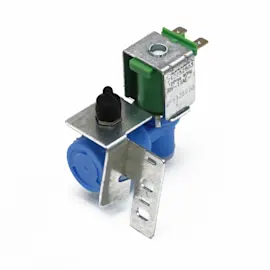
- Water inlet valve: slow fill, no fill, or leaking
- Suspension/damper parts: banging, walking, frequent off-balance
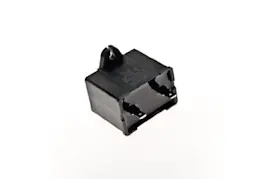
If you are troubleshooting a no-start or lid-related symptom, the lid lock W10404050 is a common fix on this model.
Why it matters
Knowing the typical 10 to 15 year lifespan helps you decide whether to repair (often best for a single failed part) or plan a replacement when multiple major components (gear case, tub, motor) start failing.
Last updated: February 2026