Error Codes

What year is the Kenmore sewing machine model 38518230790?
We treat Kenmore sewing machine model 38518230790 as part of the long-running Kenmore 385 series; most machines in this family were sold from the late 1960s through the 1990s, with some variants extending into the early 2000s. The exact build year for 38518230790 is best confirmed by the machine’s serial number and identification label details.
How to pinpoint the exact year (what to check)
Use these quick checks on your Kenmore 38518230790 sewing machine:
- Serial number plate: typically on the back, underside, or near the power cord area.
- Model and prefix format: Kenmore “385” models were produced across many years; the remaining digits help narrow the era.
- Internal date marks: some machines have stamped codes on the motor, control board, or frame.
- Original paperwork: purchase receipt, service tag, or accessory list often includes a date.
- Feature set: computerized stitch selection and error displays generally indicate a newer production window than fully mechanical dials.
What “385” means for Kenmore sewing machines
Kenmore used 385 as a model prefix across many generations. That’s why two Kenmore 385 machines can be decades apart in age even though they share the same prefix.
Typical age ranges by type
| Machine type (common in Kenmore 385 family) | Typical era | Quick identifiers |
|---|---|---|
| Mostly mechanical | Late 1960s to 1980s | Dial controls, minimal electronics |
| Electronic (non-computerized) | 1980s to 1990s | Push buttons, basic boards |
| Computerized | 1990s to early 2000s | Display, error codes, more sensors |
Why it matters
Knowing the production year helps us match the right replacement parts, choose compatible needles and bobbins, and use the correct troubleshooting steps (especially for electronic or computerized versions).
If your machine shows an error code
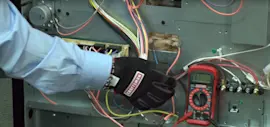
If your Kenmore 38518230790 displays an error code, use our model-family troubleshooting reference: Kenmore 385 error codes.
Last updated: February 2026
How do I know what model my sewing machine is?
Your Kenmore sewing machine’s model number is usually printed on an identification plate or sticker on the machine body. On Kenmore models like 38518230790, it’s commonly found on the back, right side, underside, or near the base (close to the power cord or foot pedal connection).
Where to look on a Kenmore sewing machine
Check these spots first (use a flashlight and tilt the machine safely if needed):
- Back of the machine near the lower base
- Right side panel near the handwheel area
- Underside of the base (sometimes on a metal plate)
- Near the power switch, power cord inlet, or foot controller jack
- Inside an accessory compartment or behind a removable cover (on some models)
What the model number looks like
Kenmore model numbers are typically numeric and often start with 385 (a common Kenmore sewing machine prefix). The full model number is longer than a simple 3 to 4 digit style name.
| Item | What it’s used for | What it can look like |
|---|---|---|
| Model number | Identifies the exact machine version for parts and diagrams | 38518230790 |
| Serial number | Tracks production; not used as often for parts lookup | Letters and numbers (varies) |
| Style/name | Marketing name; not reliable for parts | Short name or series label |
Why it matters
Using the exact model number helps us match the correct parts list, diagrams, and repair information for your specific Kenmore sewing machine. That prevents ordering the wrong items and speeds up troubleshooting.
If you’re seeing an error code
If your display shows an error code, use our model-family troubleshooting info to narrow the issue quickly: Kenmore 385 error codes.
Last updated: February 2026
How to determine the value of an old sewing machine?
The value of an older sewing machine like the Kenmore 38518230790 depends on what it is, how well it sews, and how complete it is. Most machines sell based on condition and local demand; clean, fully working machines with accessories consistently bring more.
What drives value the most
Use this checklist to estimate value before you spend money on repairs or list it for sale:
- Exact model identification: confirm the model number (38518230790) and any serial or production markings
- Working condition: stitches form correctly, feed dogs move fabric, needle bar moves smoothly
- Completeness: original foot pedal, power cord, bobbins, presser feet, attachments, case, and any accessories
- Cosmetic condition: cracks, missing knobs, corrosion, heavy paint wear, or yellowed plastic lower value
- Service history: recently cleaned and oiled machines typically sell faster and for more
- Rarity and demand: some vintage models are collectible; many common household machines are valued mainly as practical tools
Quick at-home value test (no special tools)
Before pricing, we recommend doing a basic function check:
- Turn the handwheel toward you; it should rotate without binding
- Sew a test line on woven cotton; check for skipped stitches and balanced tension
- Verify reverse works (if equipped)
- Confirm the bobbin winds and the bobbin thread does not snarl
- Listen for knocking or grinding that suggests worn gears or a dry hook area
Common condition tiers
| Condition tier | What it usually means | Typical impact on value |
|---|---|---|
| As-is / not sewing | Won’t run, jams, or missing key parts | Lowest value; often parts-only |
| Runs but needs service | Sewable but noisy, stiff, or inconsistent tension | Mid-low; service cost matters |
| Fully working | Smooth operation, good stitch quality | Strongest resale |
| Fully working + complete | Working plus accessories, case, manuals, attachments | Highest for most non-rare machines |
Why it matters
A sewing machine’s resale price is often limited by the cost and availability of parts and service. If the machine needs a motor, belt, or switch, the repair cost can exceed what buyers will pay, even when the machine is otherwise solid.
Helpful next steps
- If your machine shows an error code, start with Kenmore 385 error codes
- If fabric is not feeding, use sewing machine fabric not moving to narrow down likely causes
- If the motor will not run, follow sewing machine motor won't run for targeted checks
Last updated: February 2026
When did Kenmore stop making sewing machines?
Kenmore sewing machines are discontinued; Kenmore-branded machines were made for Sears by outside manufacturers (commonly including Janome for many 385-series models), and production for the Kenmore label ended years ago as Sears’ sewing machine lineup was phased out.
What “Kenmore stopped making them” really means
Kenmore was a brand label, not the factory. Over the years, different manufacturers built Kenmore sewing machines for Sears, so there is not one single “stop date” that applies to every Kenmore series.
Common Kenmore model families you may see:
- 385. series: widely associated with Janome-built machines
- 148/158 series: many were built by Japanese manufacturers (varies by model)
- Later Kenmore-branded machines: sold through Sears until the sewing machine assortment was discontinued
How to estimate the era of your Kenmore 38518230790
For model 38518230790, the 385 prefix is the biggest clue. Use these quick checks to narrow down the timeframe and parts compatibility:
- Look for a data plate (rear or underside) and note any additional codes
- Check whether it uses a front-load or top-load bobbin system
- Confirm whether it is low-shank or high-shank (presser foot style)
- Match the needle system (commonly 15x1/HAx1 on many household machines)
- Compare the machine’s features to Kenmore 385-series listings and diagrams
Why it matters for parts and repairs
Knowing the series and build style helps you avoid ordering the wrong items (for example, bobbin case style, needle plate, feed dogs, or presser feet). Even when a Kenmore sewing machine is discontinued, many wear items are still replaceable if you match by model and configuration.
Quick guidance: what usually wears out first
| Area | Common symptom | Typical fix |
|---|---|---|
| Bobbin area | Jams, birdnesting | Clean lint, rethread, inspect bobbin case |
| Feed system | Fabric not moving | Check feed dogs, stitch length, presser foot pressure |
| Drive system | Sluggish or no movement | Inspect belt, motor, foot control |
| Needle/thread path | Skipped stitches | New needle, correct threading, tension check |
Helpful troubleshooting resources
If your machine is showing a code or acting up, we use these guides to pinpoint the next step:
Last updated: February 2026
Is it worth repairing an old sewing machine?
Yes, repairing an older Kenmore sewing machine like model 38518230790 is usually worth it when the machine has a solid metal drive train, stitches consistently, and the repair is limited to common wear items (belt, motor brushes, wiring, or cleaning and lubrication). It is typically not worth it when the machine has major internal damage or repeated electrical failures.
Quick way to decide (cost vs. value)
Use this checklist before you spend money on parts or service:
- Repair it if it still forms a good stitch but has issues like sluggish running, fabric not feeding, or intermittent power.
- Repair it if you sew regularly and want a dependable machine for denim, canvas, or long sessions.
- Repair it if the fix is a common service item (drive belt, motor, foot control, on/off switch).
- Skip the repair if the handwheel will not turn even after cleaning and the machine stays locked up.
- Skip the repair if it trips breakers, smells like burning insulation, or the motor overheats quickly.
Common “worth it” repairs on Kenmore 385 machines
Many older Kenmore 385-series machines respond well to basic mechanical service and a few parts.
| Symptom | Most common cause | Typical fix |
|---|---|---|
| Fabric not moving | Feed dogs not engaging, lint jam, incorrect presser foot pressure | Clean feed area; verify feed setting; adjust basics using a symptom guide |
| Machine locks up | Thread jam in hook area, seized old grease, bent needle damage | Clear jam; clean and re-lube; inspect hook/needle path |
| Motor will not run | Bad foot control, worn motor, switch issue | Test power path; replace switch or motor if needed |
| Runs sluggish | Old grease, belt slipping, motor wear | Clean and lubricate; replace belt; evaluate motor |
Why it matters
A well-maintained Kenmore 38518230790 can deliver stable stitch quality and strong piercing power for years. Spending on the right repair (instead of repeated “trial and error” adjustments) prevents timing damage, broken needles, and stripped gears.
Helpful troubleshooting resources
When you are diagnosing whether a repair is minor or major, we use these guides to narrow it down fast:
Last updated: February 2026