Installation guide
 Owner’s manual
 Error Codes



Does KitchenAid make a 33 inch wide refrigerator?
Yes. KitchenAid makes 33-inch wide refrigerators in multiple configurations (such as French door and bottom-freezer). Your KitchenAid KSCS23INSS01 is a counter-depth side-by-side model; for exact fit planning, we recommend confirming the published width and required clearances in the KSCS23INSS01 owner's manual.
What “33-inch wide” means for fit
A “33-inch” refrigerator is typically marketed by nominal width; the actual cabinet width and the space you need can differ once you account for door swing, handles, and airflow.
When measuring your opening, check:
- Cabinet opening width at the front and back (walls are not always square)
- Clearance for door swing and handle depth
- Clearance above and behind for ventilation
- Space for the water line if you have an ice maker or dispenser
- Flooring transitions (tile to wood) that can affect leveling and door alignment
Quick comparison: common KitchenAid 33-inch options
| Style | Typical width class | Typical capacity range | Common reasons people choose it |
|---|---|---|---|
| French door | 33-inch | ~20 to 23 cu. ft. | Wide shelves, fresh-food access at eye level |
| Bottom freezer | 33-inch | ~20 to 23 cu. ft. | Simple layout, freezer drawer convenience |
| Side-by-side (like KSCS23INSS01) | Often 33 to 36-inch classes | ~20 to 25 cu. ft. | Narrow door swing, easy freezer access |
Why it matters
Choosing the right width class helps avoid installation problems like doors that hit cabinets, poor airflow that reduces cooling performance, or a refrigerator that cannot be leveled correctly. The best results come from matching the refrigerator’s published dimensions and clearance requirements to your exact opening.
Related parts that affect installation and performance
If your KitchenAid side-by-side uses a water/ice system, keeping filtration and water flow in good shape helps prevent slow dispensing and ice maker issues.
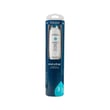
- Refrigerator water filter EDR3RXD1 (replacement filter option for this model)
- Refrigerator water filter cap (black) WP2260518B (cap that secures the filter)
- Refrigerator inlet valve W10247725 (controls water flow to dispenser and ice maker)
Last updated: January 2026
What is the most common problem with a KitchenAid refrigerator?
For the KitchenAid KSCS23INSS01 counter depth side-by-side refrigerator, the most common customer-reported issues are ice maker and dispenser problems and cooling complaints (warm fresh food section, temperature swings, or unusual noise). These symptoms often trace back to airflow, defrost, or water-supply related causes; see the KSCS23INSS01 owner's manual for model-specific checks.
Most common issues we see (and what they usually point to)
- Ice maker not making ice: water supply restriction, clogged filter, or inlet valve issue
- Ice dispenser not dispensing: auger drive/coupler wear, ice clumps, or dispenser mechanism binding
- Fresh food section warm but freezer cold: airflow restriction, evaporator fan/defrost issue, or diffuser/damper problem
- Water leaking: filter housing/cap not seated, tubing connection leak, or drain/ice maker fill leak
- Noises (buzzing, clicking, rattling): fan blade interference, ice maker cycling, or normal compressor/inverter sounds becoming louder
Quick checks before replacing parts
- Confirm controls are set to normal temps (typical targets: 37°F fridge, 0°F freezer).
- If ice is slow or hollow, replace the water filter and purge air from the line.
- Inspect for frost buildup on the freezer back wall (often signals a defrost/airflow problem).
- Make sure vents are not blocked by food packages.
- Check the door seals for gaps and confirm doors close fully.
Parts that commonly solve these symptoms on KSCS23INSS01
| Symptom | Common part to inspect | Why it matters |
|---|---|---|
| Ice tastes bad or ice production slows | Refrigerator water filter EDR3RXD1 | Restricted flow reduces ice maker fill and can affect taste/odor |
| Water won’t dispense or ice maker won’t fill | Refrigerator inlet valve W10247725 | A weak or stuck valve limits water to the dispenser/ice maker |
| Dispenser runs but ice won’t move | Refrigerator auger motor coupler WP2220458 | A worn coupler can prevent the auger from turning under load |
Why it matters
Ice and cooling problems are usually connected to airflow and water flow. Fixing restrictions early helps prevent secondary issues like frozen lines, ice clumping, temperature swings, and excess frost that can strain the sealed refrigeration system.
Last updated: January 2026
How do I find the model number on my KSCS23INSS01?
For your KitchenAid KSCS23INSS01 counter depth side-by-side refrigerator, the complete model number and serial number are printed on the model and serial number label inside the fresh food (refrigerator) compartment; check the inside wall and copy the numbers exactly as shown.
Where to look (fast checklist)
- Open the refrigerator (fresh food) door, not the freezer door
- Look along the inside wall of the refrigerator compartment
- Check near the crisper area and side walls where labels are commonly placed
- Use a flashlight; the label can be small or partially shadowed
- Write down both the model number and the serial number
What the label information is used for
Having the full model and serial number helps us match the correct diagrams and parts for your exact configuration (doors, dispenser, ice maker, and trim options).
| You need | Why it matters | Example |
|---|---|---|
| Model number | Identifies the exact product version for parts fit | KSCS23INSS01 |
| Serial number | Helps identify production details when needed | Varies by unit |
Tips to avoid common mistakes
- Copy every character (letters, numbers, and any suffix) in order
- Do not use the number from a filter, shelf, or ice maker as the model number
- If the label is worn, take a clear photo and zoom in to verify characters
Why it matters
KitchenAid side-by-side refrigerators often have multiple versions that look similar; using the exact model number prevents ordering the wrong water filter, ice maker assembly, or door hardware.
For the official location details, see the owner's manual.
Last updated: March 2026