Owner’s manual
 Error Codes


How much does it cost to replace a heating element in a Kenmore dryer?
Replacing a heating element in a Kenmore dryer typically costs $150 to $350 total (part plus labor). For Kenmore gas dryer model 11070902990, “no heat” problems are often caused by gas-heat parts (igniter, coils, sensors, fuses) rather than an electric heating element; use the 11070902990 owner's manual to confirm your heat type and checks.
Typical cost breakdown
- Service call / diagnostic: $75 to $125
- Labor (install): $75 to $200 (often 1 hour)
- Part cost:
- Electric dryer heating element: commonly $40 to $120
- Gas dryer heat components (common “no heat” fixes): commonly $10 to $60 each
| Dryer type | What “heats” the air | Most common replaceable heat parts | Typical total cost |
|---|---|---|---|
| Electric dryer | Heating element | Element, thermal fuse, thermostats | $150 to $350 |
| Gas dryer (like 11070902990) | Burner assembly | Igniter, valve coils, radiant sensor, thermal fuse | $150 to $400 |
If your 11070902990 is not heating, check these first
These parts are common causes of “runs but won’t heat” on Kenmore gas dryers:
- Dryer thermal fuse WP3390719 (opens if the dryer overheats)
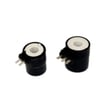
- Dryer valve coil kit 279834 (burner may light once, then stop heating)
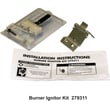
- Igniter 279311 (no ignition)
- Lint screen and exhaust vent for restrictions (poor airflow can trip safety devices)
- Gas supply shutoff valve fully open and correct cycle/temperature selected
Why it matters
Pricing depends on whether you truly need an electric heating element or a gas-heat component. On gas models, replacing the wrong part wastes money; confirming the heat system and doing a quick airflow and safety check often points to the right repair.
Last updated: February 2026
What size is a Kenmore 90 series dryer?
For Kenmore 90 Series gas dryers like model 11070902990, the standard cabinet size is 27 inches wide; most units in this platform are roughly 38 inches tall and 29 to 31 inches deep (depth varies with the door and exhaust setup). For exact measurements for your unit, use the 11070902990 owner's manual.
Typical size you can plan around
Most Kenmore 90 Series 27-inch gas dryers fit the same footprint, which helps when replacing an older dryer or building a laundry alcove.
- Width: 27 inches (standard full-size)
- Height: about 38 inches
- Depth: about 29 to 31 inches
- Door swing clearance: plan extra space in front for loading
- Vent clearance: allow room so the vent is not crushed or kinked
Quick sizing table
| Measurement | What you should use for planning | What can change |
|---|---|---|
| Width | 27 in | Rarely changes on this series |
| Height | ~38 in | Leveling legs and flooring |
| Depth | ~29 to 31 in | Door style, rear vent elbow, periscope vent |
How to confirm the exact dimensions for your dryer
Use these checks to avoid a tight fit:
- Verify the 27-inch platform in the 11070902990 owner's manual.
- Measure your current space at floor level and mid-cabinet height (walls are not always square).
- If you use an offset or periscope vent, include that depth in your measurement.
- Make sure the dryer can sit level; leveling affects final height slightly.
Why it matters
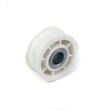
Correct sizing prevents installation problems like a kinked exhaust vent (poor airflow and longer dry times) and makes it easier to service common wear items such as drum support rollers and the idler pulley.
Last updated: February 2026
How do I tell what model my Kenmore dryer is?
Your Kenmore dryer’s model number is printed on the model and serial number plate. On Kenmore model 11070902990, you’ll use that plate to record the complete model and serial numbers for parts lookup, service, and manual-specific instructions (see the 11070902990 owner's manual).
Where to find the model number plate
Check these common locations on Kenmore dryers:
- Inside the dryer door opening on the cabinet frame
- On the back of the dryer cabinet near the top
- Along the door opening edge where the door closes
- Occasionally behind the lower access panel (if your design has one)
What to write down (and why)
We recommend copying the information exactly as shown on the plate:
- Model number (example: 11070902990)
- Serial number
- Date of purchase (if listed or known)
Why it matters
The full model number ensures you get the correct Kenmore gas dryer parts (timer, igniter, thermal fuse, drum support rollers) and the right troubleshooting steps for your exact configuration.
Quick ID checklist
Use this table to match what you see to what you need:
| What you find | What it’s used for | When you’ll need it |
|---|---|---|
| Model number | Correct parts diagrams and compatible parts | Ordering parts, checking fit |
| Serial number | Production details and service reference | Warranty and service calls |
| Plate location | Confirms you’re reading the official ID | When multiple dryers are present |
If the label is hard to read
Try these practical steps:
- Wipe the plate gently with a damp cloth to remove lint and residue
- Use your phone camera and zoom in to read faded print
- Shine a flashlight across the plate at an angle to highlight embossed characters
Last updated: February 2026
What would cause a Kenmore dryer to not dry?
For Kenmore gas dryer model 11070902990, the most common reasons it will not dry are restricted airflow (clogged lint screen or vent), incorrect cycle or temperature selection (cool down or air setting), or a gas-heat failure such as weak valve coils, a bad igniter, or a blown thermal fuse. See the 11070902990 owner's manual for cycle and troubleshooting details.
Quick checks that fix most “not drying” complaints
- Clean the lint screen before every load; confirm strong airflow at the outside vent hood.
- Make sure the exhaust vent is not crushed, kinked, or packed with lint.
- Verify you are not on an air-only setting; confirm the timer is on a drying cycle.
- Avoid overloading; overcrowding causes uneven drying and longer dry times.
- On Auto Moisture Sensing cycles, remember the dryer may switch to low heat, then tumble with no heat during cool down.
Airflow problems (most common)
Restricted air movement keeps moist air trapped in the drum, so clothes stay damp even if the burner is working.
| What you notice | Likely cause | What to do |
|---|---|---|
| Long dry times, hot cabinet | Vent restriction | Clean/shorten vent run; remove lint buildup |
| Lint on clothes, weak exhaust outside | Lint screen or vent clogged | Clean lint screen; clear vent and outside hood |
| Dryer runs but load stays damp | Overloaded drum | Dry smaller loads; mix large and small items |
Gas heat system causes (runs but no heat or weak heat)
If airflow is good and the dryer tumbles normally, focus on the heat circuit.
- Intermittent heat: replace the dryer valve coil kit 279834.
- No ignition: check the igniter 279311 and the flame sensing circuit.
- No heat with good airflow: test and replace the dryer thermal fuse WP3390719 if open (also correct the vent restriction that caused overheating).
Why it matters
A clogged vent or failed safety device can stop drying performance and can also overheat the dryer. Restoring proper airflow and correct cycle settings protects the burner system, drum seals, and clothing.
Last updated: February 2026