Owner’s manual
 Error Codes


Can I run my Kenmore refrigerator without a water filter?
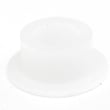
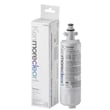
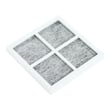
Yes, you can run your Kenmore Elite refrigerator model 79574043412 without the filter cartridge installed, but you must install the water filter bypass plug in its place. Operating the refrigerator with neither the filter nor the bypass plug installed can cause leaks and dispenser issues (see the owner's manual).
- Remove the old filter cartridge.
- Install the water filter bypass plug (it replaces the filter in the housing).
- Make sure the filter cover closes and clicks into place.
- If water flow is weak after any filter change, flush the system by dispensing water in short cycles.
- Replace the filter as soon as you can to protect water quality and help prevent mineral buildup.
Your manual recommends flushing 2.5 gallons of water to clear trapped air and contaminants. Dispense in cycles to avoid overloading the system:
| Step | What to do | Typical time |
|---|---|---|
| 1 | Dispense water | 30 seconds ON |
| 2 | Pause | 60 seconds OFF |
| 3 | Repeat until flushed | About 5 minutes total |
The filter housing is part of the sealed water path feeding the dispenser and ice maker. Using the bypass plug when the filter is out keeps the water circuit properly sealed and helps maintain normal water flow and ice production.
Most disposable refrigerator water filters should be replaced every 6 months, or sooner if you notice reduced flow or taste/odor changes. For this model, the compatible replacement is the genuine Kenmore refrigerator water filter 9690 AGF80300801.
Last updated: February 2026
Where to find model number on Kenmore Elite fridge?
On your Kenmore Elite refrigerator model 79574043412, the model number is printed on the rating label inside the cabinet. The most common spots are on an inside wall of the fresh food section or freezer, or on a label just behind the lower crisper drawer area; confirm the exact location in the 79574043412 owner's manual.
- Inside the fresh food compartment on a side wall (open the right door and scan the liner)
- Inside the freezer compartment on a side wall
- On the wall behind or just above the lower crisper drawers (remove drawers to see the label)
- Along the door frame area (near the hinge side)
- Behind the lower front kick plate or toe grille (if your unit has one)
The rating label is usually a white or silver sticker/plate with multiple lines of information. Look for:
- Model (example format: 795.7404xxxx)
- Serial number
- Electrical ratings (volts/amps)
| Item | What it tells you | When we use it |
|---|---|---|
| Model number | The exact refrigerator design and parts list | Ordering parts like a water filter or door gasket |
| Serial number | The production run and build date info | Service history and identifying age |
Using the exact model number prevents ordering the wrong part for your bottom-mount refrigerator. Even small model variations can change parts like the water filter, ice maker, or door gasket.
Last updated: February 2026
What size is Kenmore refrigerator model 79574043412?
For Kenmore Elite refrigerator model 79574043412, the exact exterior dimensions (width, depth, height) are listed in the specifications section of the 79574043412 owner's manual. This model is a bottom-mount style in the 795.7402_/7404_ family, so measuring your installation opening is the best way to confirm fit before moving or replacing the unit.
Use these steps to confirm the correct dimensions for your installation:
- Check the specifications/dimensions section in the 79574043412 owner's manual.
- Measure the refrigerator width at the widest point (often the doors or hinges).
- Measure height from floor to the top of the hinge cover (if present).
- Measure depth two ways: cabinet only, and to the front of the handles.
- Confirm required clearances (top, sides, and back) so doors can open fully and airflow is not restricted.
| Measurement | What to include | Why it matters |
|---|---|---|
| Width | doors/hinges at widest point | prevents binding in the opening |
| Height | floor to top hinge cover | avoids hitting cabinets |
| Depth | with handles and without handles | confirms walkway and counter alignment |
| Door swing | door clearance in front | ensures drawers and doors open fully |
Most Kenmore 795-series bottom-mount refrigerators are about 33 inches wide and around 68 inches tall, with depth varying based on handles and door design. Use the manual specs and your tape-measure numbers to confirm the exact fit for model 79574043412.
A refrigerator that is even 1 inch too tall, too deep (especially with handles), or too wide at the hinges can prevent proper installation, restrict airflow, and make door alignment and sealing harder.
Last updated: February 2026
What are the common problems with Kenmore Elite refrigerators?
Common problems on the Kenmore Elite 79574043412 bottom-mount refrigerator include weak or warm cooling, frost buildup that blocks airflow, unusual fan or compressor noise, and water or ice dispenser issues (no ice, slow water, leaks). Many of these trace back to airflow, defrost, or water-supply components.
- Not cooling or warm fridge section: dirty condenser area, failed fan, sealed-system issue
- Frost or ice buildup on the back wall/freezer: defrost sensor or defrost system problem
- Loud humming, buzzing, or rattling: condenser fan area obstruction, failing fan motor, compressor noise
- Water leaking or puddles: clogged defrost drain, loose water line connection, valve seepage
- No ice or slow water dispensing: clogged water filter, low water pressure, inlet valve issue
For model 79574043412, these are frequently involved in the symptoms above:
| Symptom | Common part involved | Example part on this model |
|---|---|---|
| Slow water, no ice, bad-tasting water | Water filter | Genuine Kenmore refrigerator water filter 9690 AGF80300801 |
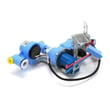
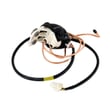
| No ice, weak fill, leaking at valve | Water inlet valve | Lg refrigerator water inlet valve AJU72992603 |
| Frost buildup, warming, long run times | Defrost sensing | Refrigerator defrost sensor assembly 6615JB2005R |
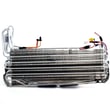
| Warm temps, poor heat release | Condenser coil | Refrigerator condenser coil ACG73645004 |
- Confirm temperatures: set freezer near 0°F and fresh food near 37°F; allow 24 hours to stabilize.
- Check airflow: make sure vents are not blocked by food packages.
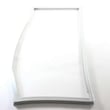
- Inspect door sealing: look for gaps, torn gasket areas, or doors not closing fully.
- Look for frost patterns: heavy frost in the freezer often signals a defrost-related issue.
- For dispenser problems: replace the filter first, then verify household water pressure and line kinks.
Cooling, defrost, and water-delivery problems can cascade. For example, a defrost failure can ice over the evaporator area, restrict airflow, and make the refrigerator section warm even when the freezer still seems cold.
Your troubleshooting steps, temperature settings, and water line connection guidance are laid out in the owner's manual.
Last updated: February 2026
Why is my refrigerator not getting cold at the bottom?
If your Kenmore Elite refrigerator model 79574043412 is warm at the bottom, the most common causes are restricted airflow (blocked vents or an iced-up evaporator area), dirty condenser coils, or a control/defrost issue that prevents cold air from circulating properly. Use the checks in the owner's manual to confirm control settings and operating conditions.
- Make sure food packages are not blocking air vents; move items away from the back wall.
- Reduce long or frequent door openings; warm, humid air raises compartment temperature.
- Confirm doors close fully and seal tightly (a poor seal lets warm air in continuously).
- Wait about 30 minutes after a defrost cycle; temperatures can rise slightly during/after defrost.
- If the unit is in a hot area, improve room ventilation; the manual notes performance can suffer in high ambient heat.
Cold air is produced at the evaporator and then moved through the refrigerator by fans and ducts. When the bottom is warm, it often means cold air is not reaching the lower section.
| What you notice | Likely cause | What to do next |
|---|---|---|
| Top shelves cooler than bottom | Airflow blocked by food or bins | Reorganize to clear vents and return paths |
| Frost buildup, weak airflow | Defrost problem (sensor/heater/control) | Inspect for heavy frost; consider replacing the refrigerator defrost sensor assembly 6615JB2005R |
| Temps drift, then recover | Normal defrost cycle | Recheck temps after 30 minutes |
Dirty condenser coils reduce heat removal, which lowers overall cooling capacity and can show up as warm zones (often first noticed in the fresh food section). If the coil is damaged or heavily corroded, replacement may be needed; this model’s listed option is the refrigerator condenser coil ACG73645004.
A warm lower section can push food above safe storage temperatures and also forces the compressor to run longer. Fixing airflow restrictions and keeping coils clean restores even cooling and reduces wear on sealed-system components.
Last updated: February 2026