 Owner’s manual
 Error Codes




How many cubic feet is my Kenmore Elite washer?
Your Kenmore Elite washer model 11049962603 is a front-load style machine; most Kenmore Elite front-load washers of this generation are about 3.5 to 4.5 cu. ft. Use the exact capacity listed in the 11049962603 owner's manual when you need a precise match for stacking, pedestals, or replacement planning.
We recommend using the model-specific documentation because capacity can vary within the Kenmore Elite lineup.
- Check the Specifications section in the 11049962603 owner's manual
- Look for wording such as “capacity,” “tub volume,” or “cu. ft.”
- If you are comparing washers, match front-load vs. top-load first
- If you plan to stack, confirm the washer is approved for stacking and use the correct kit
- If you are adding a pedestal, account for the added height (the manual notes 10 in and 15.5 in pedestal options)
If you are shopping before you have the manual in hand, these ranges help narrow choices.
| Washer type | Typical capacity range | Best for |
|---|---|---|
| Compact front-load | 2.0 to 2.8 cu. ft. | Small loads, tight spaces |
| Full-size front-load (common Kenmore Elite) | 3.5 to 4.5 cu. ft. | Most households |
| Extra-large front-load | 4.6 to 5.0 cu. ft. | Bulky items, large families |
Capacity affects how much you can load without overfilling, cycle performance, and whether accessories fit correctly. For example, stacking requires the correct hardware; this model uses the laundry appliance stacking kit 8541503 when stacking is supported and you have the matching dryer setup.
Last updated: February 2026
How to force a Kenmore Elite washer to drain?
To force-drain a Kenmore Elite washer model 11049962603, we first cut power, then manually release water through the drain path (pump cleanout or drain hose) and clear the most common blockage points so the drain pump can run normally again. See the 11049962603 owner's manual for your model’s drain and safety guidance.
- Unplug the washer (or switch off the breaker) before opening any drain path.
- Protect the floor with towels and use a shallow pan.
- Check the drain hose routing: it should not be kinked, crushed, or forced too far into the standpipe.
- Create an air gap at the standpipe or laundry tub so water does not siphon back.
- If your washer has a pump filter access, open it slowly to control the flow.
Most no-drain problems come from a restriction or a failing pump.
- Coins, lint, or small items stuck in the pump or hose
- A kinked or improperly installed drain hose (too deep in standpipe, no air gap)
- A loose or leaking connection at the tub-to-pump hose
- A drain pump that hums but does not move water
- A door that will not lock (some cycles will not drain/spin if the lock is not made)
| Symptom | Most likely area | Part to consider |
|---|---|---|
| Water stays in tub, pump noisy | Drain pump | Pump 280187 |
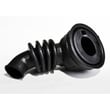
| Slow drain, intermittent drain | Hose restriction/leak | Washer tub-to-pump hose WPW10467168 |
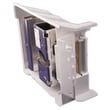
| Won’t proceed to drain/spin | Door lock not engaging | Washer door lock WP8183270 |
Your manual’s installation guidance calls out proper drain hose routing to prevent leaks and backflow. A hose that is straightened, forced into the standpipe, or missing an air gap can cause poor draining and water returning to the tub.
- Restore power and run a Drain/Spin (or a rinse and spin) with the washer empty.
- Watch the standpipe or laundry tub for strong flow.
- Recheck for leaks around the pump and hoses.
Last updated: February 2026
How to hard reset kenmore washer?
For the Kenmore Elite washer model 11049962603, the most reliable “hard reset” is a power reset: unplug the washer (or switch off the breaker) for 5 minutes, restore power, then select POWER and start a new cycle. This clears many control glitches.
- Press STOP/CANCEL once to end the current cycle.
- Unplug the washer (or turn the breaker off).
- Wait 5 minutes.
- Restore power.
- Press POWER, choose a cycle, and press START.
- If the washer will not start a new cycle, open and close the door once, then try again (this model requires the door to be opened and closed after a cycle before a new cycle can begin).
Use this sequence to safely get back to a ready state:
- Press STOP/CANCEL.
- Wait for the door to unlock.
- If ADD CLOTHES is lit, select STOP so the door can be opened.
- Open the door, then close it firmly.
- Press POWER and reselect your cycle.
| Symptom | Reset helps? | What to check next |
|---|---|---|
| Control panel acting “frozen” | Yes | Power reset, then door open/close |
| Cycle will not restart after finishing | Yes | Door must be opened then closed |
| Won’t drain or drains slowly | Sometimes | Drain pump, hoses, clogs |
| Door will not lock | Sometimes | Door lock, latch alignment |
A hard reset clears temporary control logic errors, but it will not correct a mechanical failure. If the washer still will not drain, lock, or spin after a reset, the issue is usually in a component such as the drain system or door lock.
- Pump 280187 (drains water out of the tub)
- Washer tub-to-pump hose WPW10467168 (can clog with debris)
- Washer door lock WP8183270 (prevents starting if the door is not locked)
- Washer motor control board WP8183196 (controls motor functions and some cycle actions)
For control operation details (POWER, cycle selection, canceling a cycle, and door behavior), follow the 11049962603 owner's manual.
Last updated: February 2026
What does F35 mean on a Kenmore Elite washer?
On Kenmore Elite washer model 11049962603, the F35 code means the washer is not getting a correct water-level signal from the analog pressure sensor system (water-level pressure switch and its air hose). The cycle may stop to prevent overfilling or improper draining.
- Unplug the washer for 1 minute, then restore power and try a Rinse/Drain and Spin cycle.
- Make sure the washer is level and not rocking; out-of-balance movement can trigger multiple faults.
- Check that the drain hose is installed correctly and not shoved too far down the standpipe.
- Use the correct HE detergent amount; oversudsing can confuse water-level sensing.
- If the tub is full of water, run Drain/Spin and listen for the drain pump.
| What’s wrong | What you’ll notice | Common fix |
|---|---|---|
| Pressure switch not reading correctly | F35 returns quickly, even with normal fill | Replace the water-level pressure switch |
| Air hose to pressure system pinched, loose, or clogged | Intermittent F35, odd fill levels | Reseat/clear the air hose and check for kinks |
| Drain problem causing incorrect water-level readings | Slow drain, water left in tub | Check pump, hoses, and clogs |
| Wiring/control issue | Random errors, won’t complete cycles | Inspect harness connections; test components |
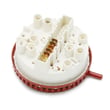
If you confirm a water-level sensing failure, the most directly related part for this model is the water-level pressure switch: washer water-level pressure switch WPW10514214.
If the washer is not draining well (which can also lead to water-level sensing problems), check the drain path components: pump 280187 and washer tub-to-pump hose WPW10467168.
The pressure-sensing system helps the washer control fill level and protect against overflow. When the control cannot trust that signal, it may stop the cycle to prevent water damage and to protect the motor and drain system.
For cycle behavior, detergent guidance, and basic care steps, use the 11049962603 owner’s manual.
Last updated: February 2026
What is the average lifespan of a Kenmore washer?
Most Kenmore washers last 10 to 15 years with normal household use and basic maintenance. For the Kenmore Elite 11049962603, regular cleaning, correct detergent use, and avoiding overloads are the biggest factors in reaching the high end of that range; see the 11049962603 owner's manual for model-specific care steps.
- Load size and balance: frequent overloading and unbalanced loads increase wear on the drive system and suspension.
- Water quality: hard water and sediment speed up buildup in the tub, hoses, and pump path.
- Detergent habits: too much HE detergent can cause excess suds and residue.
- Drain performance: slow draining strains the drain pump and can leave standing water.
- Routine care: periodic cleaning and hose inspection helps prevent leaks and corrosion.
- Run a monthly cleaning cycle (or hot wash) and wipe the door boot dry.
- Leave the door slightly open between loads to reduce odor and mildew.
- Check inlet hoses yearly for bulges, cracking, or seepage.
- Clean the dispenser area and seals to prevent buildup.
- Keep the washer level to reduce vibration and bearing stress.
| Symptom | What it often points to | Example part for this model |
|---|---|---|
| Won’t drain or drains slowly | Drain restriction or failing pump | Pump 280187 |
| Loud thumping, walking | Suspension wear or leveling issue | Washer suspension components |
| Door won’t lock or won’t start | Door lock or alignment issue | Washer door lock WP8183270 |
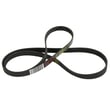
| Burning rubber smell, no spin | Belt or pulley wear | Washer drive belt WPW10388414 |
Once a washer is past about 10 years, small issues (leaks, vibration, slow drain) can quickly turn into bigger repairs. Catching symptoms early often keeps your Kenmore Elite 11049962603 running closer to the 15-year mark.
Last updated: February 2026
What model is my Kenmore Elite washer?
Your Kenmore Elite washer’s model number is printed on a rating label on the cabinet. On Kenmore Elite front-load washers like model 11049962603, the label is most often in the door opening (door jamb) or just behind the door; it can also be on the back or side of the cabinet.
- Open the washer door and check the door jamb around the opening
- Look just behind the door on the front frame
- Check the back of the control panel area
- Inspect the side of the main cabinet near the bottom front
- If the washer is stacked, use a flashlight and check the front frame before pulling it out
Kenmore model numbers are typically a 3-digit prefix + more digits. For this Kenmore Elite series, you may see a format similar to:
| What you see on the label | What it means |
|---|---|
| 110.4996XXXX | Kenmore model family (110 prefix) plus the specific model digits |
| Serial number | Unique ID for your exact washer (not the model number) |
- Write down the full model number and serial number exactly as shown
- Include any dots (for example, 110.4996...) if they appear on the label
- Use the model number when ordering parts like a door boot, door lock, or drain pump
The correct model number ensures we match the right parts and troubleshooting info for your exact Kenmore Elite washer. Small differences in the model can change fitment for items like the washer door boot WP8182119 or washer door lock WP8183270.
For label locations and model identification details specific to this washer series, use the 11049962603 owner’s manual.
Last updated: February 2026
When was Kenmore Elite made?
Kenmore Elite is a premium Kenmore product line that has been produced across multiple years (not a single “made in” year). For your Kenmore Elite washer model 11049962603, the exact manufacture date is typically tied to the unit’s serial number; we use the 11049962603 owner's manual to identify where to find model and serial information and how the washer is intended to be installed and maintained.
Kenmore Elite is a series name used on higher-end Kenmore appliances (including washers). It does not indicate one specific production year.
Common ways customers interpret “made”:
- Product line era: when the Elite line was sold (spans many years)
- Your washer’s build date: determined from the serial number, not the model name
- Purchase date: shown on your receipt, not on the appliance label
We recommend using the washer’s model and serial tag, then decoding the serial number using Kenmore/Whirlpool-style date coding (common on many Kenmore 110-prefix washers).
Steps:
- Unplug the washer for safety.
- Open the door and inspect the door opening area and front frame for the model/serial label.
- Write down the full serial number exactly as shown.
- Use the serial number to determine the manufacturing week and year (format varies by series).
| Item | What it tells you | Where it comes from |
|---|---|---|
| Model number (11049962603) | Design family and parts compatibility | Appliance label, parts diagrams |
| Serial number | Build date code | Appliance label |
| Purchase date | When it was bought | Receipt or retailer record |
Knowing the build date helps us match the correct replacement parts (like a washer door lock WP8183270 or pump 280187) and confirm which version of a component your washer uses.
Last updated: February 2026
Where is the drain pump filter on a Kenmore Elite washer?
On the Kenmore Elite washer model 11049962603, the drain pump filter is accessed from the lower front of the washer, behind the bottom access panel (kick plate). You typically drain residual water first, then unscrew the filter cap to remove lint, coins, and debris; see the 11049962603 owner's manual.
- Unplug the washer (safety first).
- Remove the lower front access panel (kick plate) to reach the pump area.
- Place a shallow pan and towels under the pump.
- Use the small drain hose (if equipped) to drain water slowly before opening the filter.
- Turn the filter cap counterclockwise, remove it, and clean out debris.
- Reinstall the cap snugly (hand-tight), then run a quick rinse/drain to check for leaks.
Opening the pump filter usually releases water from the tub and sump. If the washer stopped mid-cycle or shows a drain problem, the amount can be significant.
| What you see | What it usually means | What to do |
|---|---|---|
| Coins, lint, hair pins | Normal blockage | Clean filter and pump cavity |
| Small socks, strings | Load item migrated | Remove item; check door boot for tears |
| Grit or sludge | Detergent buildup | Clean filter; run a cleaning cycle |
| Filter cap hard to turn | Debris jammed or cross-threading | Drain first; turn slowly and evenly |
If cleaning the filter does not restore draining, we usually check the drain path components next:
- Pump 280187 (drain pump motor and housing)
- Washer tub-to-pump hose WPW10467168 (sump hose that can trap debris)
- Clamp WP285655 (hose clamp that can leak if not secured)
A clogged pump filter is one of the most common causes of slow drain, standing water, and drain-related error conditions. Keeping it clear helps protect the pump, improves spin performance, and reduces odor.
Last updated: February 2026




