


What is the life expectancy of a Whirlpool dryer?
A Whirlpool gas dryer like model WGD5010LW3 typically lasts 10 to 13 years. With consistent airflow maintenance (lint and vent cleaning) and prompt repair of wear items, many dryers reach about 15 years of service.
- Vent restriction (long runs, crushed flex duct, clogged hood) increases heat and wear
- Lint buildup inside the cabinet reduces airflow and stresses the burner and motor
- Overloading strains the drum support system and belt
- High-heat cycles only can shorten life compared to mixed use (timed, lower heat)
- Delayed repairs (squeals, thumps, slow drying) often lead to bigger failures
- Clean the lint screen every load
- Check drying time; if loads suddenly take longer, inspect and clean the vent path
- Vacuum lint around the door opening and lint screen housing regularly
- Keep the dryer level to reduce drum and roller wear
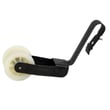
- Address noise early; a worn belt or idler can fail and stop the drum
| Symptom | Most likely wear area | Typical fix approach |
|---|---|---|
| Squealing or chirping | Belt and idler system | Replace belt and idler together when practical |
| Thumping | Drum support components | Inspect drum support surfaces and related hardware |
| Drum not turning, motor runs | Belt broken or slipped | Replace the belt |
| Dryer stops mid-cycle | Overheat protection triggered | Restore airflow; inspect thermal cut-off components |
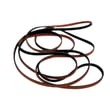
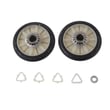
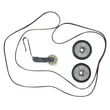
If you are doing a proactive refresh on WGD5010LW3, we commonly see customers start with the belt 341241 and, when noise is present, consider a broader maintenance bundle like the dryer repair kit 4392065.
A dryer that is drying slowly is not just inconvenient; restricted airflow raises operating temperatures, which shortens the life of key components (motor, burner system, and safety thermostats) and can turn a small maintenance issue into a no-heat or no-run failure.
Last updated: January 2026
How to tell if a gas valve is bad on a dryer?
A bad gas valve on a Whirlpool WGD5010LW3 gas dryer usually shows up as no heat or heat that starts briefly and then stops, even though the drum tumbles and airflow is good. The most reliable clue is burner behavior during a heat call, combined with basic electrical checks.
- Confirm the dryer tumbles normally and the cycle is set to a heated setting.
- Check that airflow is strong at the outside vent; poor airflow can mimic gas valve problems.
- Listen and watch for a normal ignition sequence: click, igniter glow, flame, then steady heat.
- If the flame lights and then drops out repeatedly, the gas valve coils are a common cause.
- If the igniter never glows, the issue is often elsewhere (thermal fuse, door switch, control, wiring).
| What you see | Most likely cause | What to check next |
|---|---|---|
| Igniter glows, flame lights, then quits after a short time; repeats | Gas valve coils weakening when hot | Coil resistance and heat-cycle behavior; consider replacing the valve assembly if coils are not serviced separately |
| Igniter glows but no flame at all | Gas supply issue, valve not opening, radiant sensor issue | Gas shutoff, supply pressure, dryer radiant sensor WP338906 |
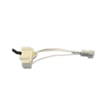
| No igniter glow, no flame | Safety device open or no power to heat circuit | Dryer thermal cut-off fuse kit W11050897, wiring, control |
- Unplug the dryer and shut off the gas supply before accessing internal components.
- Inspect wiring at the burner assembly for loose terminals or heat damage.
- Use a multimeter to check coil resistance (compare readings between coils and look for an open circuit).
- If resistance is normal but the dryer only heats when cold and fails as it warms up, treat that as a strong gas valve coil failure indicator.
- Use how to use a multimeter to test electrical parts video to set your meter correctly and confirm continuity/resistance readings.
A failing gas valve can stop heat mid-cycle, causing long dry times and repeated ignition attempts. Confirming airflow and burner sequence first prevents replacing parts that are not actually causing the no-heat condition.
Last updated: January 2026
What is the most common problem with whirlpool dryers?
For Whirlpool gas dryers like model WGD5010LW3, the most common problems are no heat and won’t start or won’t tumble. In many homes, restricted venting overheats the dryer and trips safety parts, while normal wear can break the belt or stop the motor from running.
- Dryer runs but no heat: ignition system issue (igniter, radiant sensor), gas valve issue, or temperature sensing problem
- Dryer won’t start: door not sensed as closed, failed thermal safety device, or control issue
- Dryer starts but won’t tumble: broken belt, seized drum support parts, or motor problem
- Long dry times: clogged lint screen housing, crushed or long vent run, blocked exterior hood
- Burning smell or very hot cabinet: airflow restriction causing overheating
- Confirm airflow: run a timed dry cycle and check for strong air at the outside vent hood.
- Clean the lint screen and housing: lint below the screen can reduce airflow.
- Inspect the vent path: look for kinks, crushed flex duct, or heavy lint buildup.
- Check the door closure: if the door doesn’t click shut firmly, the dryer may not start.
- Listen at startup: a hum with no drum movement often points to a belt or motor load issue.
| Symptom | Likely part to check | What it affects |
|---|---|---|
| Won’t tumble | Belt 341241 | Turns the drum |
| Won’t start (door issue) | Dryer door switch WP3406107 | Proves the door is closed |
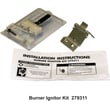
| No heat (gas ignition) | Igniter 279311 | Lights the burner |
| No heat or cycles heat oddly | Dryer thermistor WP8577274 | Senses temperature |
| Stops from overheating | Dryer thermal cut-off fuse kit W11050897 | Safety shutoff |
Most “dryer problems” start as airflow problems. Poor venting makes a gas dryer run hotter, dry slower, and can trigger thermal safety devices, which then looks like a “no heat” or “won’t run” failure.
Last updated: January 2026
What is a WGD5010LW3?
The WGD5010LW3 is a Whirlpool residential gas dryer model. It is the specific model number used to identify the exact version of the dryer so you can match the correct replacement parts (like a drum belt, door switch, or igniter) and troubleshoot symptoms accurately.
For Whirlpool dryers, the model number WGD5010LW3 is the key to getting parts that fit and function correctly.
- Confirms you have a gas dryer (not an electric dryer)
- Narrows down the correct component versions used in production
- Helps match parts for common repairs like no heat, won’t start, or squealing
- Prevents ordering look-alike parts that do not mount or wire the same
If you are repairing this Whirlpool gas dryer, these are some of the most frequently replaced items for this model.
| Symptom | Likely area | Example model-matched part |
|---|---|---|
| Drum not turning, thumping | Drum drive | Belt 341241 |
| Dryer won’t start when door closes | Door circuit | Dryer door switch WP3406107 |
| No heat or intermittent heat | Burner/heat sensing | Igniter 279311 |
| Overheats or shuts off | Safety temperature limit | Dryer thermal cut-off fuse kit W11050897 |
Using the exact model number WGD5010LW3 helps us keep your repair safe and efficient because gas dryer parts (ignition, radiant sensing, thermal cutoffs) must match the correct burner and wiring design.
- Check the model tag on the dryer cabinet opening (door area)
- Match the full model number including the suffix (LW3)
- Use the model number when selecting parts like a drive motor, blower wheel, or idler pulley
Last updated: January 2026








