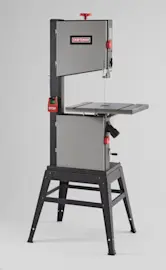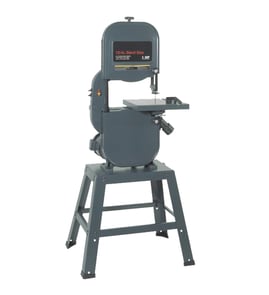


How do I know the size of my bandsaw blade?
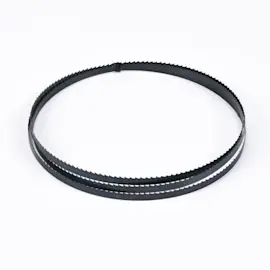
For your Craftsman 10324260 12" band saw, blade “size” usually means length, width, and thickness (plus TPI). The most reliable way is to measure the blade you have: measure its width across the teeth, then measure its total length by marking and rolling it one full loop.
What to measure (and what each number means)
- Blade length: total loop length; this must match your saw’s required blade length.
- Blade width: distance from the back edge to the tooth tips; affects curve-cutting vs straight cuts.
- Blade thickness (gauge): blade body thickness; affects tracking and wheel fit.
- TPI (teeth per inch): tooth count; affects cut speed and finish.
How to measure your blade accurately
- Unplug the band saw and open the wheel covers.
- Release blade tension and remove the blade (wear gloves).
- Measure blade width with a ruler or caliper across the widest point (back edge to tooth tips).
- Measure blade thickness with a caliper (common gauges are around 0.014 to 0.025 inches).
- Measure blade length:
- Lay the blade on the floor in a loop.
- Put a small mark on the blade with tape or a marker.
- Roll the loop one full revolution until the mark returns to the start.
- Measure the distance traveled; that is the blade length.
Quick selection guide (typical)
| If you want to... | Choose width | Choose TPI |
|---|---|---|
| Cut tight curves | Narrow (about 1/8 to 1/4 in.) | Higher (about 10 to 18) |
| General purpose | Medium (about 3/8 in.) | Medium (about 6 to 10) |
| Resaw or straight cuts | Wide (about 1/2 in. or more) | Lower (about 2 to 6) |
Why it matters
Matching the correct blade length for the Craftsman 10324260 prevents tensioning problems, poor tracking, and premature blade wear. Choosing the right width and TPI improves cut quality and reduces motor strain.
For more DIY help with testing and measuring, we recommend using a multimeter and basic tools from our guide: how to use a multimeter to test electrical parts video.
Last updated: February 2026
What is the 3-tooth rule for bandsaws?
The 3-tooth rule for a band saw means you choose a blade pitch (TPI) so at least 3 teeth are in the cut at all times. On a Craftsman 10324260 12" band saw, this helps prevent tooth snagging, reduces vibration, improves cut quality, and extends blade life.
How to apply the 3-tooth rule (quick method)
- Measure the material thickness (the direction the blade travels through).
- Pick a blade where 3 or more teeth span that thickness.
- Thicker stock needs fewer TPI (coarser teeth).
- Thinner stock needs more TPI (finer teeth).
- If the blade “hooks” or chatters, you usually need higher TPI.
- If the cut burns or loads up with sawdust, you often need lower TPI or a slower feed rate.
- For curves, use a blade width that matches the radius you need (narrower blades turn tighter).
Common TPI starting points (general guidance)
These are typical ranges many woodworkers use to satisfy the 3-tooth rule; fine-tune for your blade type and material.
| Material thickness | Typical blade pitch (TPI) | What you’ll notice |
|---|---|---|
| 1/8 in and under | 18 to 24 | Cleaner cut, less grabbing |
| 1/8 to 1/4 in | 14 to 18 | Good control on thin stock |
| 1/4 to 3/4 in | 6 to 10 | Faster cutting, less clogging |
| 3/4 in and up | 3 to 6 | Best chip clearance for thick stock |
Why it matters
Keeping 3 or more teeth engaged stabilizes the blade in the kerf. That reduces the chance of a tooth catching the workpiece, which can cause rough cuts, premature blade dulling, and unsafe kickback-like movement.
Safety and setup tips that support the rule
- Set blade tension correctly and track the blade on the wheels.
- Adjust blade guides and thrust bearing close to the blade (without rubbing constantly).
- Use a steady feed rate; do not force the cut.
- Use push sticks and keep fingers out of the line of cut.
For more DIY safety basics that apply to power tools like band saws, use our guide: are diy appliance repairs safe.
Last updated: February 2026
Why does my Craftsman bandsaw blade keep falling off?
On a Craftsman 10324260 12-inch band saw, a blade that keeps falling off is almost always caused by incorrect tracking or tension, or by wheel issues (out-of-coplanar wheels, worn tires, or bad guide bearings). Correcting tracking and verifying the wheels and guides are true usually stops the blade from walking off.
Quick checks that fix most “blade falls off” problems
- Unplug the saw before touching the blade, wheels, or guides.
- Set blade tension first; tracking adjustments do not hold if tension is too low.
- Track the blade on the upper wheel so it runs near the center of the tire.
- Back off the side guides and thrust bearing, then bring them back in after tracking is stable.
- Spin the wheels by hand with the guard open; the blade should stay centered without wandering.
Step-by-step: tension, tracking, then guides
- Tension the blade to a firm setting appropriate for the blade width (most 12-inch saws run best when the blade is not “floppy” and does not deflect easily).
- Adjust tracking using the tracking knob so the blade rides centered on the upper wheel tire.
- Re-check tension after tracking; small tension changes can shift tracking.
- Set the guides:
- Side guides: close to the blade but not rubbing continuously.
- Thrust bearing: just behind the blade so it only contacts under cutting pressure.
Common mechanical causes (and what to look for)
| Symptom | Most likely cause | What we do next |
|---|---|---|
| Blade walks forward or backward on wheel | Tracking misadjusted or low tension | Reset tension, then tracking |
| Blade won’t stay centered even by hand | Wheel tires hardened, glazed, or uneven | Inspect tires; replace if cracked or crowned unevenly |
| Blade pops off when you start cutting | Guides set too tight or misaligned | Reset guides after tracking |
| Blade oscillates side-to-side | Worn wheel bearings or guide bearings | Check for play, roughness, or binding |
Why it matters
A blade that won’t stay on the wheels can damage wheel tires, bend the blade, and create kickback risk. Getting tracking and guide alignment right improves cut accuracy and reduces premature blade wear.
Helpful DIY reference
If you need help confirming electrical safety checks (switch, cord, or internal wiring) while troubleshooting, use our guide: how to use a multimeter to test electrical parts video.
Last updated: February 2026