 Owner’s manual


Can I replace a dryer heating element myself?
Yes. On Kenmore dryer model 11062912100, replacing the heating element is a common DIY repair if you’re comfortable using basic hand tools and following safety steps. The key is disconnecting power, documenting wire locations, and reassembling the heater housing and safety devices correctly using the 11062912100 manual.
Safety first (do this every time)
- Unplug the dryer (or switch off the breaker) before removing any panels.
- Keep flammable vapors and materials away from the dryer area.
- Let the dryer sit a few minutes after shutting it off so components can cool.
- Never run the dryer with the lint screen loose, damaged, blocked, or missing.
- If you smell burning after repair, stop and recheck airflow and wiring.
What the job usually involves
Most Kenmore electric dryers of this design require you to access the heater housing, swap the element, and move any mounted safety parts (thermostat/thermal cut-off) to the new assembly if applicable.
Typical steps:
- Remove the rear panel (or lower access panel, depending on configuration).
- Disconnect wires from the element terminals (take a photo first).
- Remove mounting screws and pull out the heater housing.
- Install the replacement element, then reattach wires exactly as removed.
- Reassemble panels and run a short timed-heat test.
Parts that are commonly replaced together
If the old element failed due to overheating or restricted venting, we often see these checked or replaced at the same time:
| Part | What it does | When to consider it |
|---|---|---|
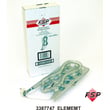
| Dryer heating element WP3387747 | Produces heat | No heat, broken coil, grounded element |
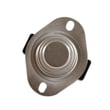
| Dryer thermal fuse | Safety shutoff | Dryer runs but won’t heat or won’t run (varies by design) |
| Dryer operating thermostat | Regulates temperature | Overheating, cycling issues |
Why it matters
A heating element can fail from normal wear, but poor airflow (lint buildup, crushed vent, clogged hood) can overheat the heater circuit and shorten the life of the element and safety fuses. Cleaning the lint screen and confirming strong exhaust airflow helps protect the repair.
Last updated: January 2026
What are signs of a bad dryer heating element?
A bad heating element in our Kenmore dryer model 11062912100 usually shows up as a dryer that tumbles normally but produces little to no heat, so clothes stay damp or take much longer to dry. You may also notice intermittent heat, a burning smell, or repeated breaker trips.
Common symptoms to watch for
- Dryer runs but there’s no heat (most common)
- Dry times suddenly get much longer
- Heat is inconsistent (hot, then cool)
- Burning odor during operation (beyond a brief “first-use” smell)
- Breaker trips or blown fuse when heat should turn on
- Visible damage on the element coil (breaks, hot spots, burn marks)
Quick checks before replacing parts
- Confirm airflow: A clogged lint screen or vent can mimic a bad element by overheating and shutting heat down.
- Verify power supply: Many electric dryers can still run the motor with a partial power issue, but won’t heat correctly.
- Check door and control settings: Make sure the cycle is a heated cycle and the door is fully closed.
- Inspect for “first-use” odor: Our manual notes a brief burning odor can be normal when the heating element is first used; it should go away quickly (see the 11062912100 owner's manual).
What to test (and what it usually means)
| What you observe | What it often points to | Parts commonly involved |
|---|---|---|
| Tumbles, no heat | Open heating circuit | Heating element, thermal fuse, thermostat |
| Heats briefly, then stops | Overheating or cycling issue | Venting, operating thermostat |
| Breaker trips when heat starts | Shorted element or wiring issue | Heating element, wiring |
Parts that commonly fix “no heat” on this model
If troubleshooting confirms the heater circuit is the issue, these are common replacements for Kenmore 11062912100:
Why it matters
Running a dryer that is not heating correctly wastes energy and can lead to overheating shutdowns if airflow is restricted. Catching the cause early helps protect the heater circuit and improves drying performance.
Last updated: January 2026
How to hard reset a Kenmore dryer?
To hard reset your Kenmore dryer model 11062912100, unplug the power cord (or switch the breaker off) for about 1 to 5 minutes, then restore power and try a cycle again. If it still will not run, the issue is usually a door, control setting, or airflow safety problem, not the reset.
Hard reset steps (safe and effective)
- Turn the Cycle Selector (timer) to OFF.
- Unplug the dryer (or turn OFF the 240V breaker).
- Wait 1 to 5 minutes.
- Restore power.
- Close the door firmly, select a timed or automatic cycle, then press PUSH TO START.
- If the dryer stops mid-cycle, open and close the door, then press PUSH TO START again.
For control locations and normal start behavior, use the 11062912100 owner's manual.
If a reset does not fix it, check these common causes
A “no start” complaint on this style of Kenmore electric dryer is most often caused by power, door, or safety cutout conditions.
- Power supply: verify the cord is firmly plugged in and the breaker is fully reset.
- Door switch/door closure: the dryer will not run if the door is not closed tightly.
- Timer/control not set to an ON cycle: confirm the selector is on a drying cycle or air setting.
- Airflow restriction: a clogged vent can overheat the dryer and open a safety fuse.
- Thermal fuse: if the dryer has power but will not run, check the dryer thermal fuse WP3390719.
Quick symptom guide
| What you see | Most likely area to check | What to do next |
|---|---|---|
| Nothing happens when you press start | Power, door, timer setting | Reset breaker, close door, set a cycle, press start |
| Dryer ran before, now will not start | Thermal fuse, airflow | Clear venting, test/replace fuse |
| Runs but shuts off early | Venting, overheating protection | Clean lint screen, inspect duct and outside hood |
Why it matters
A hard reset only clears a temporary control state. If airflow is restricted or a safety device like a thermal fuse opens, the dryer will not restart until the underlying overheating or electrical issue is corrected.
Last updated: January 2026
Is it worth replacing the heating element in a dryer?
Yes, it’s usually worth replacing the heating element in a Kenmore dryer like model 11062912100 when the dryer is otherwise in good condition, because the part cost is typically far less than replacing the whole dryer and it often restores normal heat and dry times.
When replacement makes sense
We recommend replacing the heating element when the dryer tumbles but does not heat, and basic checks point away from airflow or power-supply issues.
- The drum turns, but clothes stay cold or take much longer to dry
- You have good airflow at the outside vent hood (not restricted)
- The cycle and temperature settings are not on AIR DRY or AIR FLUFF
- The dryer is in solid overall shape (drum, motor, and controls working normally)
- You are prepared to also check the safety devices that protect the heater circuit
Check these first (often faster than replacing parts)
The 11062912100 manual notes several common “no heat” causes, including restricted venting and a tripped breaker or blown fuse (the dryer can run but not heat if only one side of the 240V supply is lost). Use the 11062912100 owner's manual for the exact troubleshooting steps and safety guidance.
| Symptom | Common cause | What to do first |
|---|---|---|
| Dryer runs, no heat | One house fuse blown or breaker tripped | Reset breaker, check fuses |
| Long dry times | Exhaust vent or hood clogged, vent kinked | Clean/replace venting with metal vent |
| Auto cycle ends early | Dryer not level, load not contacting sensor strips | Level dryer, avoid tiny loads |
Parts that commonly fail with a heater problem
If the heating element is open (burned out), it’s smart to test the protective parts in the same circuit so the new heater is not immediately taken out by an overheating condition.
- Dryer heating element WP3387747
- Dryer thermal fuse WP3390719
- Dryer operating thermostat WP3387134
- Cut-off kit 279769
Why it matters
A failed heater can be the symptom, not the root cause. Restricted airflow can overheat the heater housing and trip a thermal fuse or thermal cut-off; fixing venting at the same time helps prevent repeat failures and improves drying efficiency.
Last updated: January 2026








